
Welcome to the New Heights Shawn Education. I'm Pamela Clark, founder and director of the New Heights Education Group, and I'm here with David Smith, the founder of Silicon Valley High School, who has helped us get these podcasts produced and delivered to you. Yes, Pamela, when we saw the great things that you and your army of volunteers were achieving at New Heights, we wanted to get involved. We're happy to work with you to leverage the internet and make quality education accessible and affordable to everyone everywhere.
Thank you, David. We appreciate Silicon Valley High School helping us to get these podcasts out to the hundreds of thousands of listeners from all over the world. So I hope you enjoy the show. In this week's episode, we will discuss educational reform on mission.
Welcome back. You're only here with Buffy Williams. You have been listening to the New Heights Show on Education. We have been discussing the show's purpose on mission.
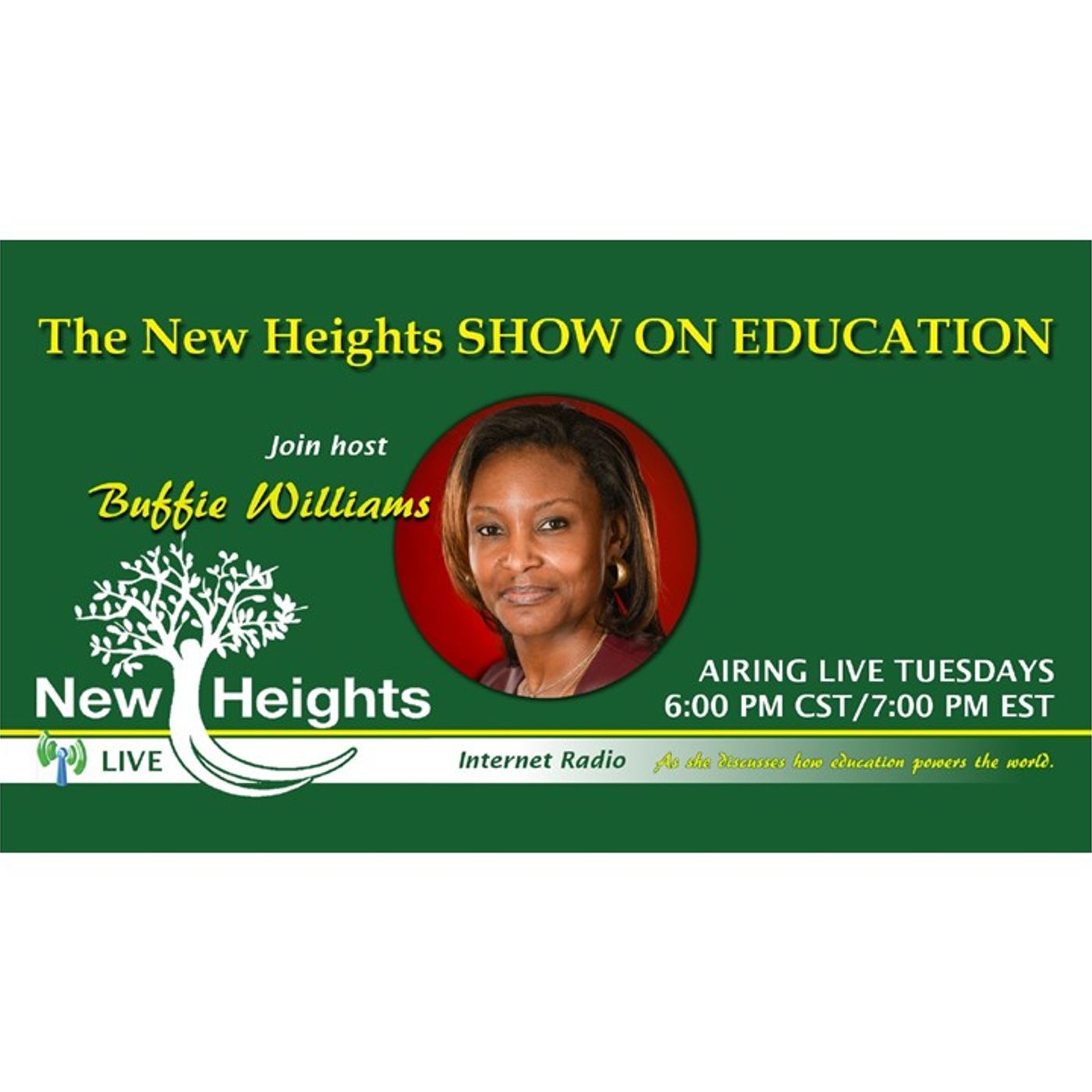
Good evening, ladies and gentlemen. This is your host, Buffy Williams, and you're listening to the New Heights Educational Group, the New Heights Show on Education. The topic is flipped classrooms. A recap on last week show we interviewed or reviewed the comments for the content within the 2020 Global Education Monitoring Report, which outlined an international framework for the global plan for education in 2030.
On tonight's episode, we are discussing one of the emerging trends in education flip classrooms. So join us as we discuss and tell us what you think about flip classrooms and your view on flip classrooms. You can call us at 917-948-7542, or put your comments in the chat or tag us on social media using the hashtag NHEG. As always, you can post your comments on Twitter at Buffy underscore Awaken or on speaker, Instagram, or YouTube.
Remember that my fellow New Heights host Erica Hanson show airs on Thursdays at 2 o'clock PM Mountain Standard Time, 1 o'clock PM Pacific Standard Time, and 4 o'clock Eastern Standard Time. I wanted to go back before we talk about flip classrooms to remind my audience about why I chose to do this particular show with the New Heights Educational Group and why I decided to volunteer. I think it's important that we periodically reflect on what our purpose is and our intention for the things that we do. And I wanted to share with you all, if you haven't listened to my previous broadcast, one of the things that I mentioned in my intro show was that one of the reasons why I've been so passionate about education is the fact that when I was in school, I feel that I wasn't necessarily given all the options that I wanted, or I wasn't in an environment where I could explore my academics in the way that I wanted to, or the way that would enhance me or allow me to expand my thinking beyond a certain level or explore different alternatives for learning.
And I would guess you would say a different type of learner, usually a visual and auditory learner, but I also like to engage in actual activity and hands-on things. And so when I do that, it allows me to, you know, things just kind of click for me when I put it into practice and application versus more of a lecture style. But I do tend to lean toward a varied approach, I guess you would say, as far as education is concerned. And I talked a little bit about unschooling and homeschooling and my reasons for wanting to do that as well.
And for that reason, I chose flip classrooms as one of the topics for the show because I feel like it approaches education in a different way. So even if this particular approach is in a public school setting or a homeschool setting, I feel that it's beneficial. And I want you also to know that the information for my sources, you know, you can read this information and get this information yourself. And I am providing all this content from my sources because I'm not an expert in the field.
And I'm just like most parents and grandparents out there. I'm very interested in education and the trajectory of our country as far as education is concerned and where we're going and what things we're going to teach our children in order to move our country forward. And so I like to look at varying approaches to education and kind of why we're doing what we're doing, not necessarily going through the motions, but kind of evaluating where we are, where we want to go. And kind of what we're doing at the moment.
And my sources for tonight's show are the educationnecks.org and also Vanderbilt University Center for Teaching. And again, I've had some time to reflect on what is the classrooms and how does it work. So just as a reminder of why I do the show and what my intention is, my intention is to just simply give people, everyday people who are just like me, more information, who may not have the time to research these articles at the moment, but maybe they'll drop them down. And go back and review them later.
But they're passionate about what we're actually offering our children and kind of what they can do, maybe even as a teacher, as an administrator, as an education system or district, what things can we do to better assist our or equip our students for the next chapter in their lives. So with that said, I hope that this show is something that you find useful as a parent, as a student, as a teacher, as an administrator. As an administrator, as a citizen of our world, and I hope that the things that I've offered to you in the past have been beneficial. I do have a quote tonight from Oprah Winfrey, and it reads, every time you state what you want or believe you are the first to hear it, it's a message that both you and others is a message to both you and others about what you think is possible.
So don't put a ceiling on yourself. So for the listeners out there, if you were reaching for new educational heights or you're looking for better ways to improve your students, don't set a limit on what they can achieve because if you set limitations, then that's as far as you can go. So when you talk about the concept of flip classrooms, Colorado's Pikes Peak Veteran at Veteran at the Woodland Park High School, a chemistry to chemistry teachers, actually Jonathan Bergman and Aaron Sam's, they kind of stumbled on the idea of flip classrooms. They were struggling to find time to teach a particular lesson after a lot of students have been absent.
So they put $50 together to buy a particular software that allowed them to record a lesson and annotate the lesson and then post them online. And when they did that, they found that this was a tool that they could use online that was very useful, and it was mostly used to kind of review the lesson and kind of reinforce the lesson that was actually taught within the classroom. But what they realized was that it gave them an opportunity to rethink how they use their classroom time. And so the flip classroom is what they called it was introduced.
And so there's no one particular model or core idea for flip classrooms or the flip classroom instructional approach. And teacher, it's centered around a teacher creating a video and an interactive lesson that can be viewed by the student at home and accessed prior to the student coming to the classroom. So in advance of them coming to the classroom. And then the classroom becomes a place where they can kind of work through the problems and talk about advanced concepts and engage in collaborative learning and look at all aspects of instruction and maximize their classroom time.
So flip classroom teachers almost always, they look at not only the instructional component, but they also integrate different aspects to it. So when they look at it, they look at it and they think about, well, when students come in, if they view the information prior to coming to class, it's a good way for them to maybe ask better questions or more insightful questions and think more deeply about the content. And they can more easily, they found that they could more easily query the students on, you know, what concepts they had learned and what were the misconceptions about the actual content that they were involved in. And they could clear up any incorrect notions.
And so with that particular format, you know, in the video lessons, they think that the students can think more independently and individually, you know, be able to come up with ways to engage and ask questions within the classroom. And so the students that may be struggling or may have acted out in the past because the instruction was given prior to the class, they felt that they could give more attention to the students who were struggling. And so once the classroom time came, the more advanced students had more freedom and more independent learning environment, but the students who were struggling could receive more of a better engaged process with the teacher, whereas maybe in the past, those students wouldn't actually speak up and say, I'm struggling with a particular area. They found that those students were the ones that tended to ask more questions.
And so they felt like it prostered a better relationship and a greater student engagement and provided also a higher level of motivation because the more advanced students felt, okay, I see the concept. I heard the concept. I got the concept. And now I can assist my peers with understanding the material and also the teacher had more time to work with those students who were struggling.
And so students and teachers from across the country started using these lessons and then they had a particular school in DC that focused on different aspects of the flip classroom where it was most used to craft maybe like four to six minute videos that really focused on clearing concise bite sized chunks of content so that the videos will be focused and that the students could pay attention to the details and the nuances of the instruction. So what they decided was that they focused on the pace of the videos and used visual representation and also develop assignments and practices that went along with the lessons that it would be more useful. So not only did they do like the initial instructors, you know, just presenting the information. So this group of teachers in DC, they actually presented the information and then they had a quiz or an assignment or practice associated with that particular video.
And they felt like that was a more beneficial way for the students to be able to learn the concepts and the instruction and also for them to be able to kind of test their learning and reasoning before they actually came to the classroom. So we're talking about flip classrooms today and I'm your host Buffy Williams and we're going to take a short break and I will be with you after the break. Right now, you might be struggling through your classes or even failing them. You might be worried that you may not finish high school.
There might have even been a thought that you may not be smart enough. Well, the New Heights Education Group begs to differ. We not only think you're smart enough, but with our help, you will complete your high school diploma. The New Heights Education Group strives to improve your academic success through its tutoring services.
To learn more, please visit newhiteseducation.org and contact us. New Heights Educational Group. Educational resources to help reach your goals. This podcast is brought to you by Silicon Valley High School.
The world's fastest growing, video-based, self-paced, teacher-supported, fully accredited online school. That's recommended by more than 96% of students. Take individual courses at just $95 each or earn your high school diploma at any age. Check us out at svhs.co.
Welcome back. I'm your host Buffy Williams and you're listening to the New Heights Educational Group, the New Heights Show and Education, and tonight's topic is flip classrooms. And we were talking about flip classrooms in another method of utilizing flip classrooms before the break. But also, flip classrooms is coming into the mainstream.
And I know that this is a term that maybe some of you have already heard because it kind of started back in 2013. So, of course, you know, they've had a number of years to kind of move this into mainstream. So, Bergman and Sam's have actually completed a book that kind of helps teachers. And so it helps educators.
And so they go to conferences, education conferences, and they present information on flip classrooms. And they train teachers on how to utilize this method and pilot it within their schools. And so this particular platform teachers everywhere have created ways to share videos as well. So that's an emerging trend so that maybe a teacher has a particular subject.
And so they're looking at ways that teachers can maybe not even create the content themselves. But you utilize content that's already been created. And so the emergence of Khan Academy, which is a free resource that is a philanthropy mission that is free to all students. They're also looking at incorporating because Khan Academy has this plethora of online instructional material and media that possibly will build gates said that this particular tool can be integrated within the flip classroom.
So instead of the instructor actually teaching the course themselves, they can embed the video that's already been created and use that as a new instructional approach. But they also caution that the real danger is that it may be a reduction in the number of students. It could just be a fad and students may not gravitate towards it naturally. But they also caution that with any concept and that's what all of us, it takes some time to actually understand the inner workings of a new concept.
You've been doing something for so long. So there are going to be critics out there no matter what you do. But they also find that the ideas behind flip classrooms is not new. The National Center for Academic Transformation also had colleges that kind of experimented with this idea in the areas of math, science and English and a couple of other disciplines.
And they thought that it led to improve learning and the students seem to be re-engaged and improve their motivation and also set proper expectations for monitoring the student throughout the process. And so many of these courses were redesigned and they focus on incorporating more project based learning opportunities. And they do also say that some of the dangers of this is that there's a battle between the teacher and the technology and how are you going to balance that. But also looking at the fact that when you recruit and train teachers that you need to make sure that you support your quality teachers so that they are able to utilize this method.
And there's not such a, they call it, de-professionalism. So it's like you don't have the actual professional teaching the course, you actually have technology teaching your students. And so there's got to be a balance there. And so in some ways, you know, these criticisms can help build a program because it shows you maybe where your weaknesses may be, right?
And so with that you can utilize that information and not look at it in a negative sense but use it to enhance your instructional process if you're thinking about incorporating flip classrooms. Within your classroom structure. And so with those instructional videos and interactive simulation, there are, you know, different ways that educators and administrators can control that process and then make it more adaptive to their particular school. And also, you know, guide the educators through making, you know, smart decisions as it relates to transforming a classroom into a potential flip classroom.
And so it may be a buzz word now but one of the things is that it just focuses on how do students gain their first exposure to new material outside of the classroom. And so you have this one method where, you know, it's via reading or lecture videos and then the students use their time to do the harder work in the actual classroom doing problem solving or simulating discussion or it could be debate over a particular topic. And so that means that the lower level cognitive work takes place outside of the classroom and then, of course, the more upper level thinking or regarding the traditional model would be in the classroom. And so if you think about it, they're really focusing on the higher cognitive area within the classroom, which is, you know, supporting the students through, you know, application and analysis of the material and then evaluating whether or not that actual material was retained.
And so, and looking at, you know, flip classrooms and focusing on the process, you know, and the part of learning that, you know, allows the students to kind of analyze the material, they gain that first exposure at home. And so it's just, I guess, a given that you think that these students are engaged that actually have a fundamental knowledge or an underlying knowledge of the content material because that's another critical point because all the students need to have an opportunity to provide, you know, proper feedback. But if they don't have the foundation secure, then that could be a flaw in the model. So that, you know, when you actually incorporate the flip classrooms in some way, you know, you're going to have varying results depending on the foundational knowledge of the student.
And so that's with any instructional model. You're always going to have a particular set that are going to instantly, you know, gravitate towards whatever knowledge is being proposed and then you're going to have those that struggle. So you're going to have to find a way to be able to do that. But the argument is that the students don't understand that knowledge that the teacher has more time to work with than one-on-one.
And so there are different types of exposure, first exposure. So you can have, you know, the students reading the textbooks, the lecture videos by the teacher, or you can have PowerPoint presentations with voiceovers. And you can also have printed PowerPoint slides. So those are like the first exposures.
And then this can ensure that the students are prepared with the concepts. And they can also complete a worksheet periodically and randomly judged by the teacher. So it encourages the student, they don't know what it's going to be graded. So the thought there is that they would pay more attention to the lesson because they don't exactly know what it's going to be collected.
And then they could use that class time and spend that on activities and process and application of actual lesson, whether that's through many lectures or small group discussions. And this tends to, they say, motivate the students more because of that first exposure. It's so varied. And so it tackles the student, like maybe me, who is a varied learner in learning approaches.
So it gives them different ways in which to retain the information. And then regarding their peer instruction, it's described as a form of, you know, it's kind of the peer instruction PI model and it requires the student to gain their first exposure prior to class using quizzes in case studies. And so then that would mean that they would be presented with the material and then they would actually receive a quiz to say that they have a conceptual learning of whatever the material is. And also another approach to that would be they come to class and all the students are given a clicker and they're given multiple choice answers in all the students at one time answer the question.
And if you have a large number of students that don't understand the question, then the teacher would have an opportunity to present to the class either in small groups. Or maybe they would have, you know, maybe typically 15, 13, 15 minutes to kind of discuss why it is that some of them pick this answer versus the correct answer. And then they would use that as an instructional model. And so, you know, Harvard has done studies on this and they have been other published studies on flip classrooms and, you know, lectures via this method and looking at whether or not the student and the instructor receive the proper feedback in order for this to be a workable model.
And so, you know, researchers are doing a lot of information on this and they have a lot of information in context for you to look at the framework and also look at opportunities to provide this to your students. And hopefully provide you with an alternative way of presenting your class material. Again, you know, there are key elements within this flip classroom method. You know, one is providing students an opportunity to gain more exposure prior to class.
Then providing an incentive for students to be prepared for class by doing like online quizzes and workshops worksheets and other assignments and then providing a mechanism for them to access student understanding. So the student is prepared. They have these pre classes, pre quizzes, and then it can be instruction just in time, right? So the students have activities that are focused on the key elements of where they're struggling because they've taken the quiz ahead of time so they know the areas in which that didn't resonate with them.
And they can pinpoint specific areas, if that makes sense to you guys. And so then the last one is that it provides in-class activities that focus on a higher level of cognitive activities. And so if the student has gained the basic knowledge outside of the classroom, then they need to spend the class time to promote deeper learning. But they also note that this is also dependent on the learning goals for this particular class and also the class culture of discipline.
And so we know that those are other factors that need to be considered. But if you want more information, you can look at the Chronicle of Higher Education for additional classroom information on flipped classrooms. And I hope that tonight's topic was interesting for you guys. And next week, we will be talking about K through 12 grading systems.
So thank you for joining us. We hope that you join us next week. That's our time. And you have been listening to the new high school education.
I'm your host. If you like what you've heard, search for us on your smart speaker and listen to us anytime. Thank you for listening. Good night.
Until we meet again, next Tuesday night, 6 p.m. Central Standard Time, 7 o'clock p.m. Eastern Standard Time. As we discuss next week's topic, enjoy expanded content from the New Heights Education Group host on Blog Talk, iTunes, SoundCloud, Sprigger, and Watch Know I Know.
We hope you enjoyed today's show. Don't forget to rate us and follow us on your podcast player. Check out our show page, Radio.New Heights Education.org for monthly announcements and other happenings.