
You have a reason to care. You know someone. You've lost someone. You've lived it.
The darkest times are no match for what we can do together. Join us for the CAMH Sunrise Challenge. From May 25th to 29th, Canadians are waking up with a sun to raise funds for a future where everyone can access the mental health care they need, the moment they need it. Get up with the sun.
Show up for CAMH and rise up for mental health. Register today at sunrisechallenge.ca. That's sunrisechallenge.ca. Welcome to the New Heights Shawn Education.
I'm Pamela Clark, founder and director of the New Heights Education Group. And I'm here with David Smith, the founder of Silicon Valley High School. He has helped us get these podcasts produced and delivered to you. Yes, Pamela.
When we saw the great things that you and your army of volunteers were achieving at New Heights, we wanted to get involved. We're happy to work with you to leverage the internet and make quality education accessible and affordable to everyone everywhere. Thank you, David. We appreciate Silicon Valley High School helping us to get these podcasts out to the hundreds of thousands of listeners from all over the world.
So I hope you enjoy the show. In this week's episode, we will discuss educational reform on mission. Welcome back. You're on the air with Buffy Williams.
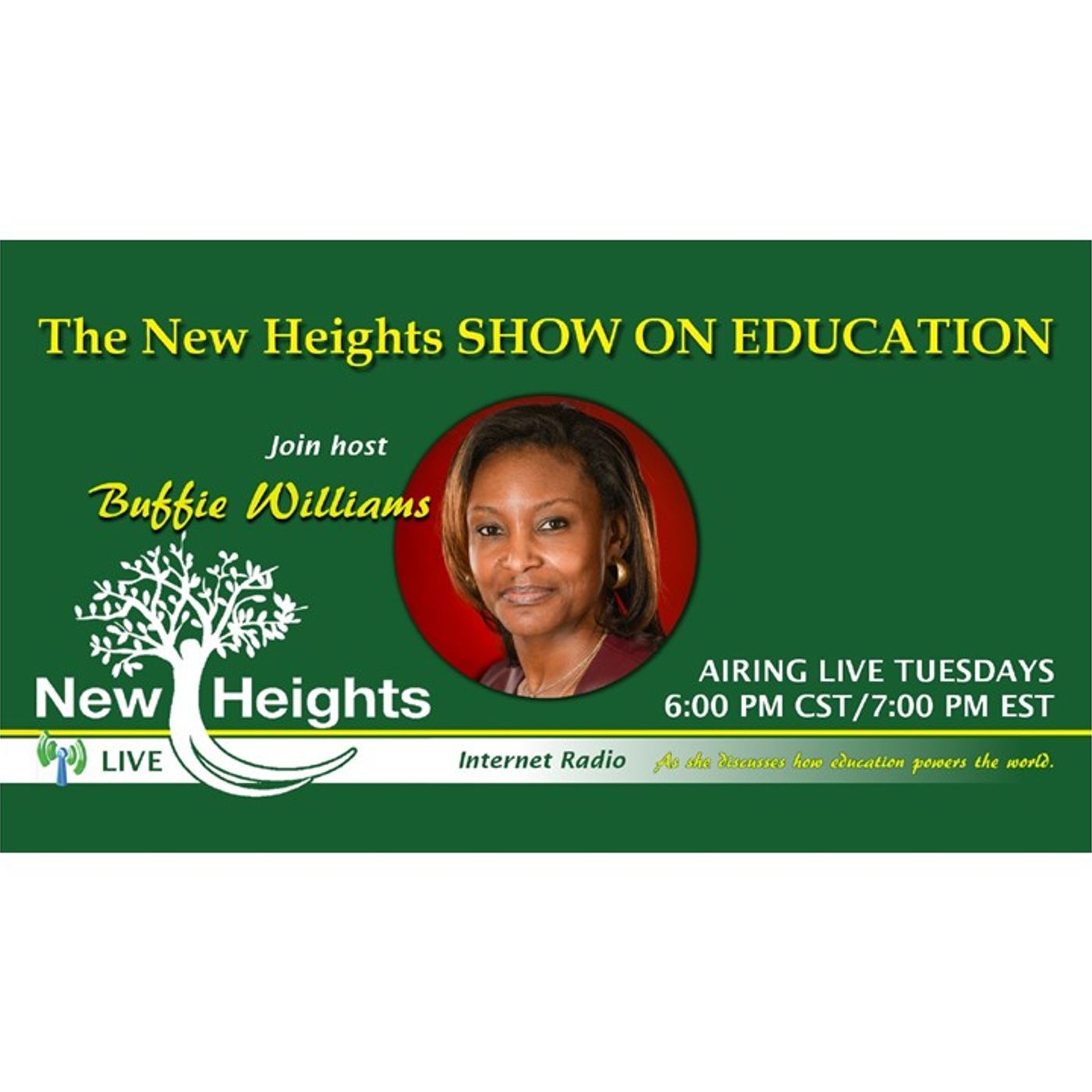
We have been listening to the New Heights Show on Education. We have been discussing the show's purpose for our mission. Good evening. This is your host Buffy Williams and you're listening to the New Heights Education Group, the New Heights Show on Education.
Tonight's topic is school selection. How do you choose the right school for your child? A recap on last week's show. We looked deeper into the myth versus statistics of classroom sizes and does it improve academic performance.
On tonight's episode, we are discussing school selection. What is the right fit for your child? Join us in the discussion. Call us at 917-948-7542 or drop your comments in the chat or tag us on social media using the hashtag NHEG or as always post your comments on Twitter at Buffy Underscore Awaken or on Swicker Instagram or YouTube.
Remember my New Heights fellow hosts Erica Hanson Show airs on Thursdays at 2 o'clock p.m. Mountain Standard Time, 1 o'clock p.m. Pacific Standard Time and 4 o'clock Eastern Standard Time. When we talk about school choice, this is something that has kind of grown over the years.
I can remember, of course, when I was in school, school choice was not even a part of the conversation for my particular community. I went to the school where I was zoned for. I'm sure that my parents did the best they could to put me in a good situation. But, you know, to even be in the position of having school choice is a privilege in today's age, and I don't know if we as a nation fully recognize the privilege that is bestowed upon many people to be able to have these choices or to be able to select a school or community in which they will life for their child to go to school.
But it has definitely become increasingly popular with the new push for charter schools and homeschooling and more parents sending their children to private schools. And then, of course, there are school vouchers for students to go to different schools and particular schools in their area, maybe even magnet schools. And I know that this is nothing that's new, but remember that I come from a modest background as far as economics for concerns. So, school choice was one of those things wherever you went to school.
You made the best of that opportunity. So, when we look at school choice, my reference tonight is coming from the U.S. Department of Education, and they have a lot of information on choosing a school for your child and giving your child and giving your families more opportunities to look at, you know, what is my expectation of my child's achievement as far as school is concerned and what learning choices do I have available to me and to my child as far as school selection is concerned and how do I go about looking at the steps for selecting the right school choice for my child? And also, you know, just with that, you probably can come up with a plethora of questions and question and answers on your own as to, you know, how do I choose the right fit for my child or even if you're in a position to even, you know, unclutter your mind long enough in today's climate to focus on, you know, what is the route that I want my family or my child to take.
And so, on the Department of Education's website, they have a few tips for parents to be able to look at the best choices for their family. And really, they're just, you know, simple steps in selecting a school for your child. And some of the things that definitely should be considered is, you know, am I choosing a public school or a private school? Is homeschooling the best fit for my family?
Whether or not you're willing to pay tuition, which requires some planning for some parents, or whether or not they can get on the voucher system or receive some type of scholarship for their child to go to the particular school in which they would like to go to. So, one of the recommendations is just simply just write down your thoughts about why you want your child to go to a particular school and what are your preferences. And in looking at that, just kind of write down about five things that you think are the most important things for you and your family in regards to selecting a school. What are your top priorities and, you know, what do you want the school selection process to look like?
You may want to add or revise some things as you listen to the information tonight that we want to present to you. Or as you're going through the process of those five things that are the most important to you, you may discuss that with your family and you may come up with different things that are more important than maybe they were initially for you when you decided to start looking at your school selection for your child. So, the first thing is that they ask that you consider, consider your child and your family. You know what your family makeup is and thinking about your educational needs and maybe even special languages that your child speaks.
What is it that your family makeup or your son or daughter needs and what's going to work best for someone with the needs that your family has? So, perhaps you might want to consider, you know, what are your child's needs first, right? So, do they need a more structured environment? Do they need a less structured environment?
And do they need a more challenging work environment? Or do they need more one-on-one attention? Do you think that they would thrive better in an environment like that? Or do they need additional help or on work assignments and what they need, you know, tutoring help at that particular school?
So, looking at your child's individual needs and fostering, you know, what's going to be best for your child in that particular environment and looking at your child's learning style and how they best learn and is it through activity? Is it through discussion? Is it through, you know, listening? Are they more logical or mathematical-minded?
If you're definitely, if you're looking at magnet schools, you want to look at, you know, are they musical or artistic? Do they learn better in groups? And thinking about the school location, still, in regards to your family and your child, do you want a school that's going to be in walking distance for your children? And is that particular school going to have activities that nurture my child's talents outside of school or in the neighborhood?
Do you have activities that you're trying to possibly participate in? And how far are you willing to drive? If, you know, if you don't want to be in walking distance, how far do you really want to drive to get your child to that particular school? And do you want your child to be out of school where they have friends at that school or is that just not an important factor and they can spend time with their friends, maybe on the weekends?
And another thing, still, under considering your child and your family needs, is their child care near that school or do they have an after-school program? Is it going to be close to your work or close to relatives if you have that privilege? Because again, if you know that may be something that you want to consider, you may or may not be near family. So in the second step, after you consider your family's personal needs, they ask that you, in this process, gather information about the school.
Do some investigation. This is something that most parents kind of do naturally. They make some phone calls to other friends and family, definitely looking at the internet and seeing, you know, what is the school's reputation, looking at the different report cards on the schools, and maybe even attending a school open house if you have an opportunity to, but definitely looking at the public report card of the school and looking at any reliable information that is online regarding the school. There is one site that they do offer as a reference.
It's called greatschools.net and then also schoolresults.org, where there's a resource booklet and information on particular schools throughout the nation. And also, in considering gathering your information, they ask that you explore what is the school's philosophy, because most people work off of whatever their mission is and they try to stay pretty close to that. And so looking at that and the school policy and the services that they offer within that school and do they operate with educational activities outside of the regular school day? Do they have programs during the summer vacation break or do they offer free tutoring outside of the regular class day?
And then also in gathering your information, looking at the curriculum. Is at curriculum, do they have a strong core program for their core academics? And do they offer any additional core academic subjects? Are they offering advanced placement or honors courses or dual enrollment courses for college courses?
Does the curriculum have a theme? And one key thing is that does the school have evidence that school is effective at teaching the students the information that they said that they're going to teach and do these enrichment programs? Are they across the board? Do they offer things for gifted students?
And if so, do they have support for these upper level courses? And is the curriculum supported by other sources within the school? Or do they have special learning programs for students who have special needs? And do they have accommodations to be able to meet those needs of those students?
And so also in approaching the learning environment for your child, what is the teaching style of most of the teachers? Do they generally do group projects? Do they do based on individual performance and the frequency of the testing within that particular school? And is this something that your child can adapt to?
And will they be supported with that? Are they provided with other opportunities to get extra help if needed? And then, you know, how are the teachers actually interacting with the students and providing that feedback to the parents? And does it match your expectations of what you are looking for in a school?
You know, what is their homework policy? And is the classroom size such that you feel like your child will get adequate instruction within that particular classroom? And does it affect the classroom performance? And, you know, is that classroom performance for that particular school and their test scores?
Are they continually rising? Have they declined any? And if so, kind of just getting feedback from the administrators as to what they think the reason for the decline may be not necessarily running away from that school. Just looking at, you know, what, you know, achievements they may have made as far as their test scores have been or anything that they feel they may need to work on or any special recognitions that the schools may have.
And then looking at the behavior policy and, of course, the safety of the school. And so you want these are some things that follow under that second step of what you need to look for as far as trying to do school selection for your family. And so we're going to take a short break that we're talking about school selection and selecting a school that provides the things that your child or your family may need. So we're talking about school choice today.
And then we'll help both be Williams. And if you will, just stay with us and we'll be back after the break. Right now, you might be struggling through your classes or even failing them. You might be worried that you may not finish high school.
There might have even been a thought that you may not be smart enough. Well, the New Heights Education Group begs to differ. We not only think you're smart enough, but with our help, you will complete your high school diploma. The New Heights Education Group strives to improve your academic success through its tutoring services.
To learn more, please visit newhightseducation.org and contact us. New Heights Educational Group, Educational Resources to help reach your goals. This podcast is brought to you by Silicon Valley High School, the world's fastest growing, video-based, self-paced, teacher-supported, fully accredited online school that's recommended by more than 96% of students. Take individual courses at just $95 each or earn your high school diploma at any age.
Check us out at svhs.co. Welcome back. I'm your host, Buffy Williams. And you're listening to the New Heights Educational Group, the New Heights Show on Education.
And tonight's topic is school selection. And we were just discussing the second step of gathering information on schools. And we talked a little bit about some of the things that you need to be looking for and gathering that information. So again, under that topic, looking at special offerings that the school has, we talked about school safety and the facilities and services that the school may have.
But backing up a little bit on the behavior policy, because I know I kind of ran into that into the break. We talked about academics and looking at the school academic performance. But when you look at the behavior policy, I think that that's a big one. And I don't want to skim over it because I know parents have a lot of concerns.
I know that I should do RDA during this on this particular area. And all the areas have equal weight. But when you're looking at how a school was their discipline policy, and do they do things within the school to help the child develop character and citizenship, I think is very important. And then how do they handle the children when they misbehave?
And is there an issue with school safety and how is absentee policy? And how do they handle if they have issues with drugs or alcohol or anything like that? How is that handled? And of course, under discipline is also the dress code policy.
Do they wear uniforms? Is dress code something that they have issues with? And then in relation to school safety, again, how do they prevent problems with drugs and alcohol and tobacco, or bullying and harassment or things like that? So those are really important measures that you definitely want to see if they have a relationship with the local police and how they handle certain emergencies within the school and then how will they notify the parents?
So this is just looking at school selection. And then looking at if they have any special offerings, we talked about that a little bit, school trips or extra resources that are available to students and extracurricular activities. But you also want to look at the facilities and the services. So do they have a well-stocked library or place for research or interlibrary loans?
Do the students have access to the internet? And is that monitored? And how is that monitored? Again, with facilities and services, is there a nurse on duty?
Because your child may, you know, have a need to see the nurse throughout the day. Is that nurse on duty throughout the day, all day? Do they serve nutritional meals? And is it well balanced in the lunchroom?
Because you know, if everything else is well and then you feel like maybe the lunchroom area is lacking, you may provide your child lunch every day. And then if they have activities after school, is that supervised? And for children who may have limited mobility, it's a school accessible for that child. And so then also looking at, you know, attendance for the schools and then the admissions policy following the application process, you know, seeing if there's anything special that's required is a portfolio or an addition or a letter of interest.
Maybe even test scores that are required. And then additional things, if you're looking at going to a private school, you definitely want to consider a tuition. That was a big factor for me, for one of my children, for my son. Tuition was, you know, do they offer a sliding scale?
We did not, you know, in my case, receive a scholarship or anything like that. And so do they have a fee schedule or can it be paid on a payment plan? And then also, are there any particular religious requirements for that particular school? So again, in my case, I did have, you know, one of my children who had that requirement.
And then are there any special fees? So for your other children, you know, is there room and board associated with the lab fees and things like that, or activity fees that are necessary in order for your child to participate? So these are things that you might want to just ask these questions up front. And there's an additional question.
You know, if you're a home schooler, you know, is it, you know, you have to ask yourself because your child is being educated at home. Is there a suitable place for your child to study doing the instruction time? Do you have the adequate free time to be able to, you know, do this? Are there other home schoolers in your area?
Do they have support groups? Again, you know, just considering all the things that go into the special offerings of, you know, trying to select the best school for your child and looking at, you know, the curriculum of schools and learning approach for different things. There are so many things to explore when you're thinking about school selection. One of the third thing is make sure you visit the school and observe the school if possible.
But definitely you want to make an appointment. Schools are on schedule and you want to avoid visiting them, you know, during testing time or definitely during the first week or the last week of school. You want to get a sense of kind of how the school operates on a normal basis. And most schools will give you a tour.
And just so you can kind of get a feel for the culture of the school, you know, the school secretary, are they helpful? Are they friendly? Is the school orderly and neat? How do the bulletin boards look?
You know, just kind of walk through the hallways, do other students work on displayed within within the hallways? How do the students communicate in the hallways, you know, as you observe? And then how does the school communicate with the parents? Do they do it on a weekly basis?
Do they do it through a newsletter or on email or on a website? Do all the students appear to be happy and courteous for the most part and disciplined? And do they have a welcoming attitude, you know, towards parents and maybe even diverse learners or students who have diverse learning needs? And how helpful and friendly do the teachers see?
Principles have their own philosophy about education and their attitudes towards discipline. And definitely you want to talk with the principals about that or maybe even just browse the website to be able to see what their philosophy is. And, you know, you might also want to know if the principal observes the teacher's classrooms and how often does the principal do that? And, you know, kind of what does the principal think the school strengths and weaknesses and where they can improve upon, you know, what they're already doing great in the school?
Because, you know, we know that teachers have a hard job, so do administrators, and they're doing the best that they can. So if they're working on a particular area, that may be something that maybe parents can help advocate for them for. Because you want to also know if the principal and the teachers have high expectations for your child, so that your child can have, you know, a good and enriching school experience. So you may be able to attend parent-teacher conferences on a frequent vacation basis and also find out more about the homework and how rigorous is it, how frequent, and do the teachers, you know, have special staff that assists them throughout the school day or are they in the classroom alone with the students and what is the school policy on teachers responding back to parents and, you know, how quickly should that be.
But you also want to look at, you know, is there, you know, just a good field for the school? Is there a good school spirit? You know, do they usually take field trips? Do the students seem like, you know, they feel pretty safe at the school?
And then for parents, you will also look at community involvement in the reputation of the school. And then, do you want to move to a community to go to the school where you will best think that the best fit is for your child? And then also just simply applying for the school of your choice and doing it in a timely manner so that you know that you're meeting all the deadlines and double checking to make sure that all your information is accurate and that you have everything that you need prior to the deadline for the school. You want to know what the graduates are saying about the school and definitely, you know, what other parents in the local area are saying, but get a field for the school yourself and just kind of select more than one school if it's a very competitive school or if you think that there's a chance that your child may or may not get in trying to put all your eggs in one basket, but just follow up on your child's application and their status and definitely know the fine school if it's a very competitive school, if your child is planning it to attend or not.
And try to do the best you can in planning for what's going to best benefit your child because there are a lot of options for school choice now. The Department of U.S. Department of Education has a lot of information out there for parents if you want to learn more about school performance in school supplemental educational services or school profiles. Comparative data is out there on the schools and also there's a directory out there for homeschoolers on the U.S.
Department of Education's website. So I want to encourage my parents to there's even one for charter school information. So there is also a booklet on the U.S. Department of Education's website that's called choosing a school for your child that you can download.
I think if I remember correctly about 52 pages, so you may not want to print it, but you may want to actually download it onto your system so that you can use it as a guide. And I hope that these small practical tips will help you as far as your school choice for your child. But again, we talked about considering your child and your family and your family's needs, gathering the information from the schools, not only just hearsay, but actually factual data about the school visiting the school and observing just the school environment and getting the feel for it for you and your child, and then also applying to the school of your choice. And remember that you can download that booklet choosing a school for your child from the U.S.
Department of Education. I am your host, Buffy Williams, and I hope that you gleaned some additional information tonight that will be beneficial for you, your family, and your child. And again, during this time, my heart and prayers go out to everyone who may be going through a difficult time during this COVID-19 pandemic and also with the racial tensions that we're having in America. So God bless and stay safe.
Don't forget to rate us and follow us on your podcast player. Check out our show page radio dot new heights education dot org for monthly announcements and other happenings.