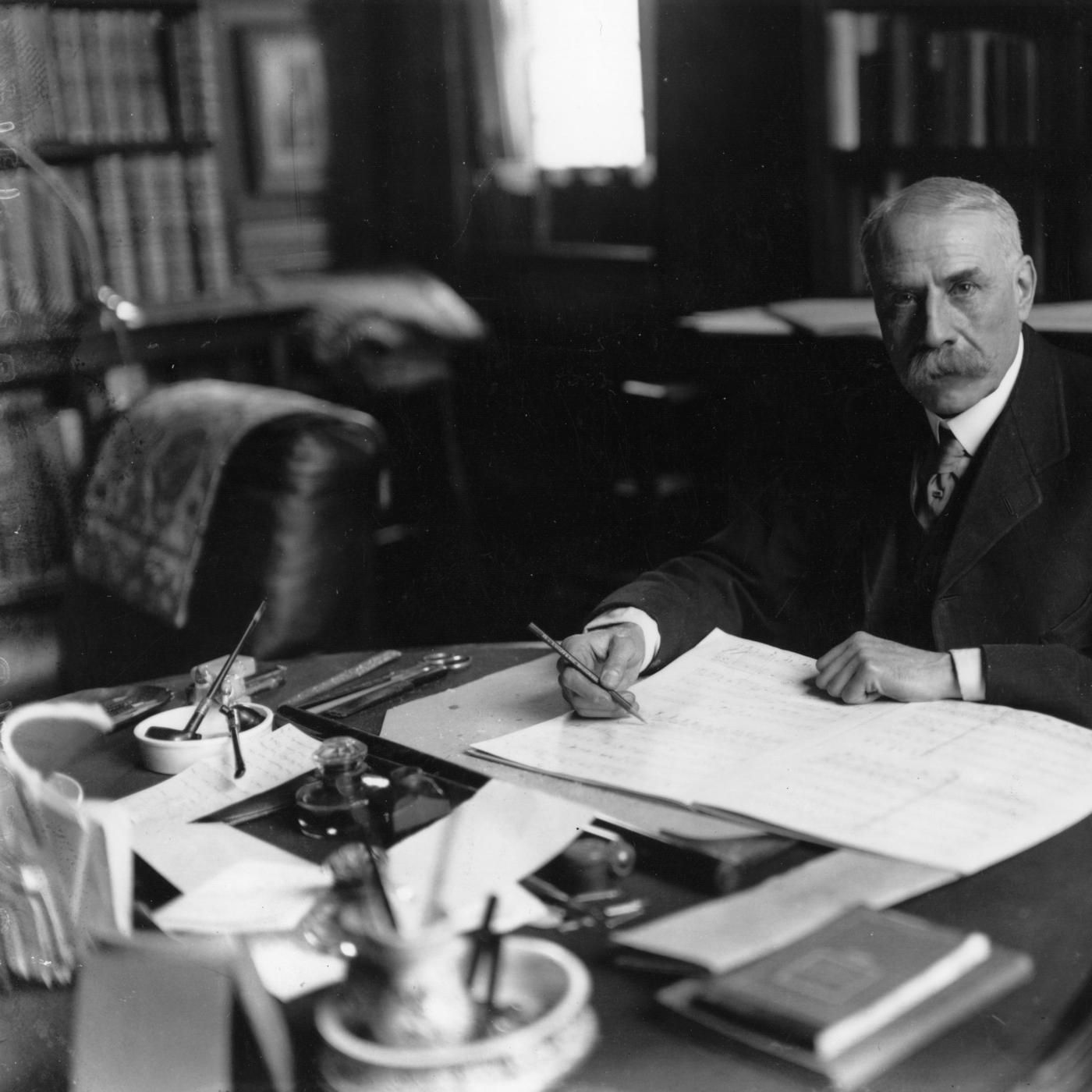
How Elgar's 'Pomp and Circumstance' Marched Its Way into Graduation Season episode artwork

EPISODE · May 23, 2025 · 1 MIN

How Elgar's 'Pomp and Circumstance' Marched Its Way into Graduation Season

from The latest stories from · host Noticias Hispanas

Graduation season is here, and that means the melody of Edward Elgar's "Graduation March" is in the air. It also means WQXR is celebrating the Class of 2025 with a very special feature!  We're asking listeners to tell us about a recent or soon-to-be graduate you’re proud of by writing to us at [email protected].  Then, starting from May 23 through the end of June, listen every weekday at 5 PM as we celebrate their achievements on air (on-air) with joyful music and your inspiring messages. Do you know the history of the "Graduation March?" It turns out that's not even its real name, even though it might as well be. Its actual title is March from Pomp and Circumstance No. 1. Elgar, who was born in England on June 2, 1857, wrote it in 1901 as an attempt to compose a military march that would win him more popular acclaim. When Elgar came up with this melody, he told a friend, “I’ve got a tune that will knock 'em flat.” And at its London premiere, it did. The crowd went wild. To this day, it’s the only time in the history of Proms concerts that the audience demanded — and received — a double encore of an instrumental piece. The soon-to-be King Edward VII liked it so much, he encouraged Elgar to set text to it. A year later it was performed at the king’s coronation. It’s almost a second national anthem in England today, where it's known as “Land of Hope and Glory.” So how did an English military march wind up being America’s go-to graduation tune? In 1906, Yale University gave Elgar an honorary doctorate at its commencement ceremony. The composer came in person, but his music was the star of the show. As the guests left the hall to Elgar’s Pomp and Circumstance March that day, the piece made such an impression that Princeton used it at its graduation next year. Chicago was next, then Columbia and Vassar and on and on. * Sophie Varon contributed to this piece.ESCUCHAR RADIO 👉https://widget.spreaker.com/player?episode_id=70730354&theme=light&playlist=show&playlist-continuous=true&chapters-image=true&episode_image_position=right&hide-logo=true&hide-likes=true&hide-comments=true&hide-sharing=true&hide-download=false&cover_image_url=https%3A%2F%2Fd3wo5wojvuv7l.cloudfront.net%2Fimages.spreaker.com%2Foriginal%2F28309762a15caddc03af1f60293a7f2d.jpg&color=eb144c%22%20width=%2210

Graduation season is here, and that means the melody of Edward Elgar's "Graduation March" is in the air. It also means WQXR is celebrating the Class of 2025 with a very special feature!  We're asking listeners to tell us about a recent or soon-to-be graduate you’re proud of by writing to us at [email protected].  Then, starting from May 23 through the end of June, listen every weekday at 5 PM as we celebrate their achievements on air (on-air) with joyful music and your inspiring messages. Do you know the history of the "Graduation March?" It turns out that's not even its real name, even though it might as well be. Its actual title is March from Pomp and Circumstance No. 1. Elgar, who was born in England on June 2, 1857, wrote it in 1901 as an attempt to compose a military march that would win him more popular acclaim. When Elgar came up with this melody, he told a friend, “I’ve got a tune that will knock 'em flat.” And at its London premiere, it did. The crowd went wild. To this day, it’s the only time in the history of Proms concerts that the audience demanded — and received — a double encore of an instrumental piece. The soon-to-be King Edward VII liked it so much, he encouraged Elgar to set text to it. A year later it was performed at the king’s coronation. It’s almost a second national anthem in England today, where it's known as “Land of Hope and Glory.” So how did an English military march wind up being America’s go-to graduation tune? In 1906, Yale University gave Elgar an honorary doctorate at its commencement ceremony. The composer came in person, but his music was the star of the show. As the guests left the hall to Elgar’s Pomp and Circumstance March that day, the piece made such an impression that Princeton used it at its graduation next year. Chicago was next, then Columbia and Vassar and on and on. * Sophie Varon contributed to this piece.ESCUCHAR RADIO 👉https://widget.spreaker.com/player?episode_id=70730354&theme=light&playlist=show&playlist-continuous=true&chapters-image=true&episode_image_position=right&hide-logo=true&hide-likes=true&hide-comments=true&hide-sharing=true&hide-download=false&cover_image_url=https%3A%2F%2Fd3wo5wojvuv7l.cloudfront.net%2Fimages.spreaker.com%2Foriginal%2F28309762a15caddc03af1f60293a7f2d.jpg&color=eb144c%22%20width=%2210

NOW PLAYING

How Elgar's 'Pomp and Circumstance' Marched Its Way into Graduation Season

0:00 1:50

No transcript for this episode yet

We transcribe on demand. Request one and we'll notify you when it's ready — usually under 10 minutes.

Frequently Asked Questions

How long is this episode of The latest stories from?

This episode is 1 minute long.

When was this The latest stories from episode published?

This episode was published on May 23, 2025.

What is this episode about?

Graduation season is here, and that means the melody of Edward Elgar's "Graduation March" is in the air. It also means WQXR is celebrating the Class of 2025 with a very special feature!  We're asking listeners to tell us about a recent or soon-to-be...

Is there a transcript available for this episode?

Yes, a full transcript is available for this episode. You can read the complete transcript on the episode page.

Can I download this The latest stories from episode?

Yes, you can download this episode by clicking the download button on the episode player, or subscribe to the podcast in your preferred podcast app for automatic downloads.
URL copied to clipboard!