
EPISODE · Jun 23, 2026 · 37 MIN
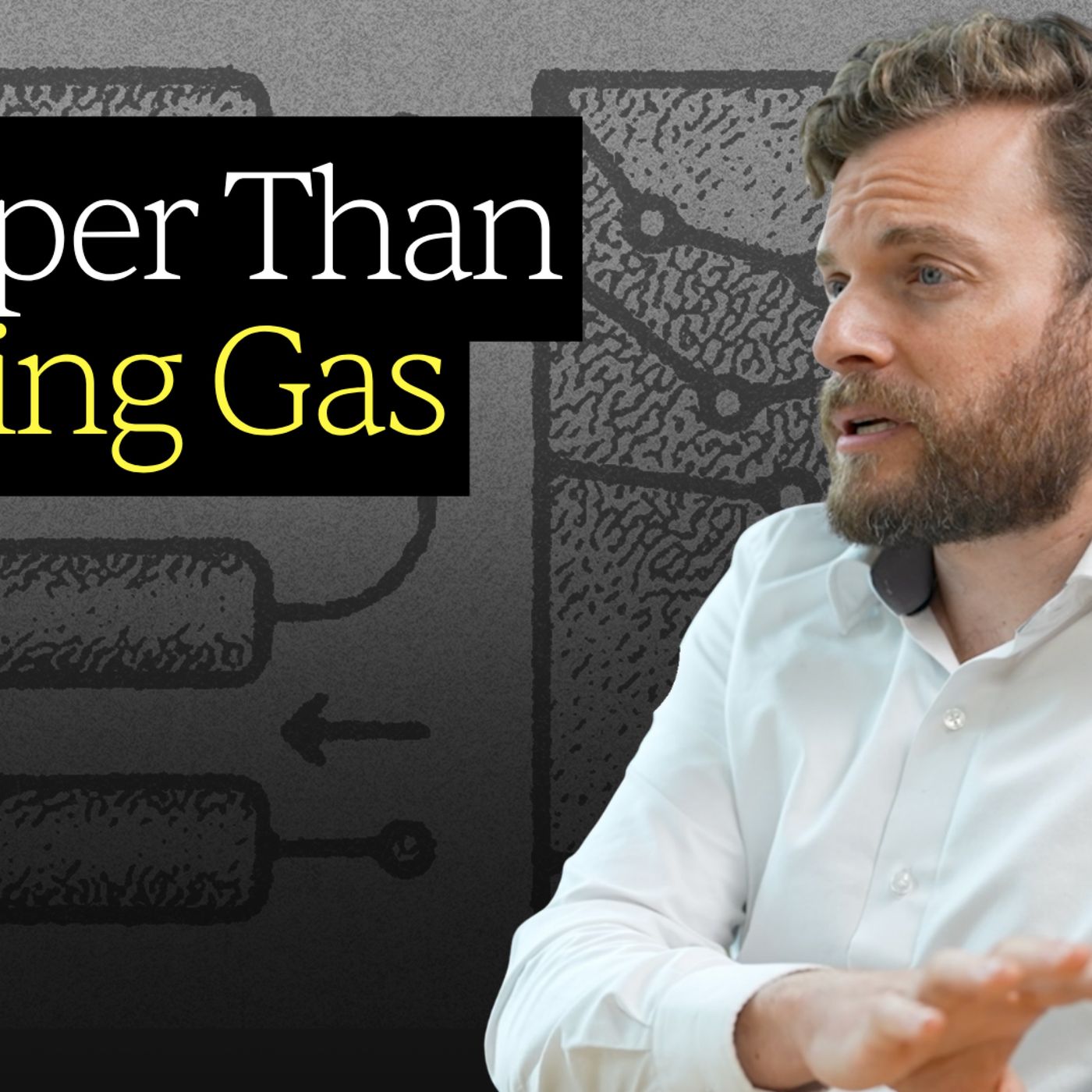
How Germany Decarbonises Industrial Heat - Energy Nest
from Transmission · host Ysabelle Swan
Two thirds of industrial energy demand is heat, not electricity, and most of it still runs on gas. Thermal storage converts cheap electricity into heat, stores it in concrete, and dispatches it when the factory needs it, undercutting the gas bill even though gas is cheaper per unit on average. Alex Robertson, CEO of Energy Nest, joins Ed Porter to explain how a thermal battery works, why it competes with lithium-ion on cost, and why grid connections - not the technology - are the real constraint on industrial decarbonisation.They cover:- Why thermal storage functions like a battery on the energy markets but stores heat one-way in optimised concrete.- The medium-temperature "frying, drying and applying" range (roughly 150 to 300C) that sits above heat pumps and below cement and steel.- How decoupling thermal demand from the electricity price typically can cut the gas bill by around 50%.- Why a 20-foot-container module stores about two megawatt hours, stacks three high, and loses only around 2% of capacity per day.- Why a flexible, interruptible asset is exactly what congested grids need - and why Germany still lacks the flexible connection framework the Netherlands is rolling out.Ask Ko, Modo Energy's AI analyst, any question from this conversation: [Ko link]Read the companion article: [URL placeholder]Modo Energy's solar and battery forecasts are live at modo.energy.You can watch or listen to new episodes every Tuesday. Transmission is a Modo Energy production. Your host is Ed Porter - Director EMEA & APAC at Modo Energy.Chapters 0:00 - Introduction0:11 - Industrial heat demand and the gas problem1:13 - One thing everyone gets wrong about thermal storage3:14 - How the concrete thermal battery works4:08 - Medium temperature heat and the customer profile6:56 - Why gas boilers still dominate German industry7:52 - Using storage to beat the gas price10:09 - Concrete versus lithium-ion: cost and supply chain13:10 - Degradation and the 25-year thermal capacity16:02 - Scaling up: module size and storage capacity16:40 - Daily cycling and storage duration economics19:50 - Seasonal variation and running gas in winter23:33 - Cost, savings and the five-year payback24:36 - The ideal customer and the grid connection test25:46 - Data centres, demand queues and grid congestion28:02 - Flexible connection agreements and the system design gap30:10 - Grid utilisation versus grid buildout33:34 - Heat as a service and unlocking investment36:04 - A contrarian view on industrial decarbonisationMusic licensed via Artlist.
Embed this episode
Ready to play
How Germany Decarbonises Industrial Heat - Energy Nest
No transcript for this episode yet
Similar Episodes
No similar episodes found.