We have a book coming out, Planet Money, a guide to the economic forces that shape your life. It's packed with stories and graphics that illustrate economic principles that can help you make smarter decisions. That's why we have special incentives for people to pre-order the book. I'll explain at the end of the show or go to planetmoneybook.com for details. NPR.
The US and Israel war with Iran has exposed a fascinating economic imbalance. The US has been launching big, multi-million dollar missiles at Iranian targets. Iran has fired back with wave upon wave of inexpensive drones, costing only thousands of dollars. And these drones don't look anything like your hobby drone that you might use to take photos on a hike. In the language of the military, the word drone basically means an unmanned aircraft.
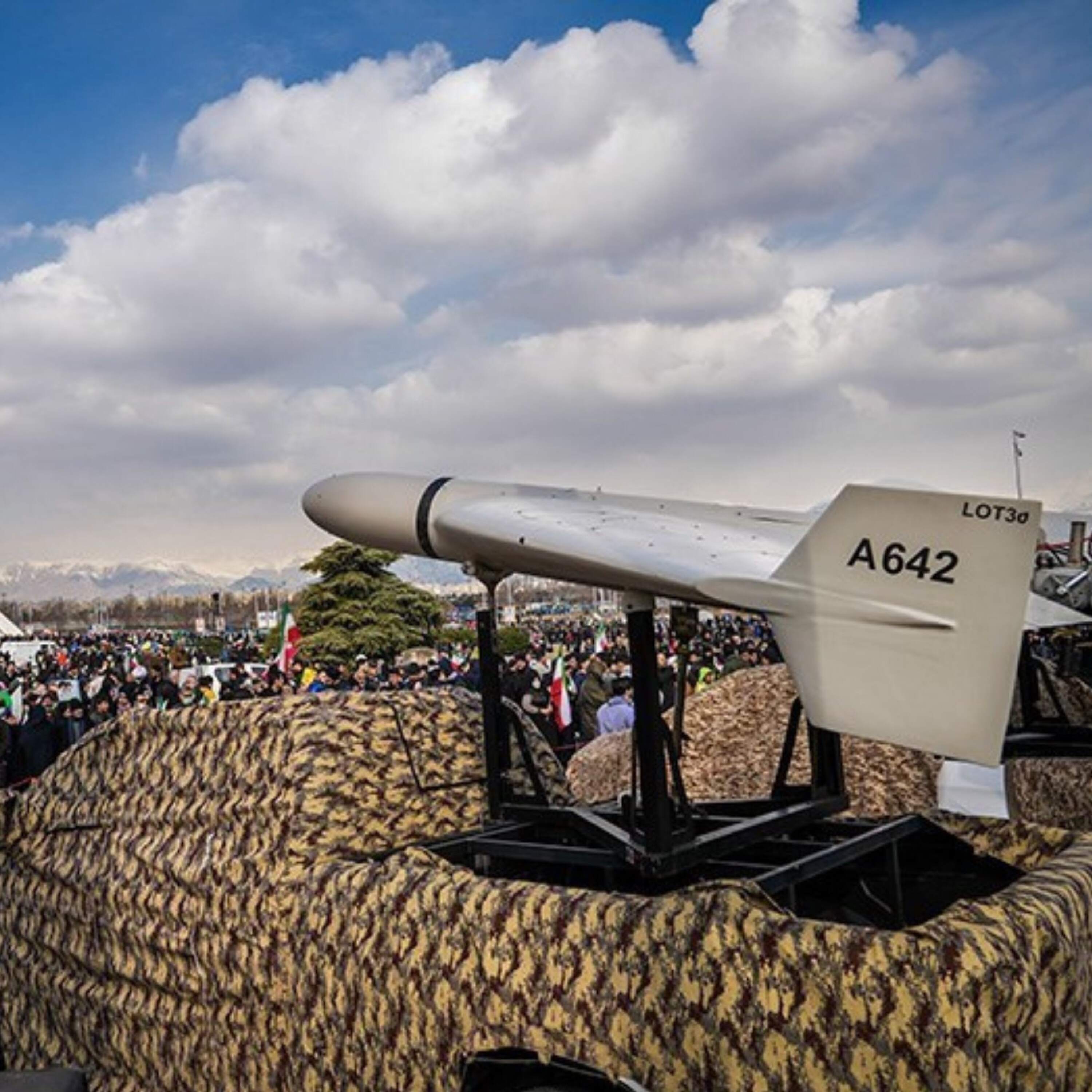
Iran's Shahhead 136s are typical of these low-cost drones. Picture a short missile with wide wings and a propeller at the end. It's about the size of a go-kart and buzzes like a moped scooter. It uses GPS to find a target and fly into it, blowing it up. Jerry McKinn is an expert on military supply, and he says this wave of drones is a deliberate strategy by Iran. They launch a lot of drones to try to have the U.S. kind of use their more exquisite weapons to knock them down and deplete our stores.
Last year, U.S. Defense Secretary Pete Hegseth was already concerned about the pace of the U.S. producing new munitions. This asymmetry in battlefield spending risks worsening the weapon supply further. This is The Indicator from Planet Money. I'm Whelan Wong. And I'm Darian Woods. Today on the show, drone warfare economics. We learn about why the U.S. spends so much on munitions and how it's starting to learn from Iran.
This week on the NPR Politics Podcast, the midterm elections are wrapping up and millions of people have already voted. We're taking one final check of the electoral pulse with a new NPR PBS News Marist poll. It shows Democrats still poised to make gains, but also with some warning signs for just how many. We'll explain on the NPR Politics Podcast. The countdown to the 2026 midterm elections is here. Voters will determine who controls the Senate, the House, and countless local offices.
All the election coverage you need to be found on the NPR app, from big picture political headlines to local stories that are curated just for you. Plus, live coverage as results come in on election night. Download the NPR app at npr.org slash 2026 election. This message comes from the NPR Wine Club, which has generated over $1.75 million to support NPR. Whether buying a few bottles or joining the club, learn more at nprwineclub.org. Must be 21 or older to purchase.
There is a mismatch between the U.S. and Iran in how they're fighting. It involves drones. The U.S. has a lot more firepower, yes, but Iran has figured out how to make the war expensive for the U.S. Now, the estimates vary, but it appears Iran has fired more than 2,000 traditional missiles in the current war. Most have been intercepted, according to Israel and Gulf countries. But what sets Iran apart is its intensive drone-making industry. Iran makes these drones in local factories, each with two backup sites in case they get bombs, according to Iranian authorities. Iran has exported the drones to countries like Russia and Sudan.
Estimates of how much they cost to make vary. It's anything between $4,000 and $50,000. That is a wide range, but the basic point remains that these drones are incredibly cheap compared to U.S.-guided missiles. Take the Tomahawk missile, or the Patriot, which is used to defend against missile or drone attacks. They are very exquisite weapons. They can cost a couple million dollars or more depending on the weapon to produce. Jerry McGinn is director of the Center for the Industrial Base at the Center for Strategic and International Studies. And that's a military term he's using. Exquisite weapons means top of the range.
The term really took off in the late 2000s when then-Defense Secretary Robert Gates critiques the Pentagon for buying too many high-end ships and jets. Jerry says the inventory of exquisite weapons takes years to build up. They take some time because they are very, very kind of almost handmade in some ways. So producing them at scale is kind of hard to do. Go to a tomahawk factory and you'll see workers in white lab coats drilling screws manually. Jerry says the U.S. has a sort of bias towards these types of weapons.
The challenge is that presidents like to use them. This is not just President Trump, but they're very precise, so they limit collateral damage. They're very effective, and they really destroy targets. And they don't create a lot of threats to our military forces. Of course, the missiles only limit collateral damage if the correct target is entered. Videos of the strike on the Iranian girls' school indicate that a U.S. Tomahawk missile was used. According to an NPR interview with a U.S. official who was not authorized to speak publicly, this killed at least 165 civilians, most of them children.
In this war, the U.S. has fired a lot of tomahawks and patriot missiles, billions of dollars worth. In the first three days of the war, the U.S. drained an estimated 10% of its tomahawk inventory. This gutted supplies so much that, according to the Washington Post, the Pentagon is moving parts of its missile defense system from South Korea and its patriots from the Indo-Pacific to the Middle East. This is the weapon supply shortage defense analysts like Jerry McGinn have been raising the alarm about for years. Westening the situation for the U.S. is the changing nature of warfare. Since the war in Ukraine, drones have become more prevalent.
The Pentagon has taken notice. It's now deploying anti-drone systems that don't require launching those exquisite missiles. These are basically cannons that can shoot down those Iranian drones. They've been quite effective in the sense that very few of the Iranian drones have gotten through. And the U.S. is trying to fight drones with drones. Last summer, the Pentagon announced what it called the Lucas drone. It's a $35,000 drone built by copying the Iranian drone we talked about at the start of the show. The Shah had 136. The Lucas drones are being used by the U.S. military for the first time in the current war in Iran.
Last year, the Pentagon also announced what it calls its Drone Dominance Initiative. It wants to buy 200,000 drones by 2027. That's firepower that's not prioritizing the stealthy, highly precise, exquisite weapons. So the U.S. is revving up its drone capability. But Jerry says the U.S. is starting a little on the back foot. Our level of maturity and the use of kind of particularly the smaller Shahed-type drones is less mature than the Iranians.
Jerry's advice for the military is to focus more on quantity and less on the highest, most exquisite quality. Get multiple companies making these low-cost munitions and allow Congress to pay for them over multiple years, which currently it can only do for the higher-value munitions. Mass munitions, I think, is a really good way to, you know, help build kind of significant mass and significant producibility capabilities. This would cost more in a typical year, but Jerry views it a bit like insurance, paying for extra capacity now so the country can scale up as needed in future conflicts. Doing that would enable the Department of Defense or Department of War to do longer-range, longer-term.
contracts with companies so then companies can invest more and you have an ability to produce faster and at larger scale. So the more of those kind of things that we can do, I think, would help us overall. Regardless of the approach the U.S. takes, the military is financially bleeding right now. And to staunch the blood, it'll need to figure out how to deal with thousands of wearing drones.
Weyland here again with more about our book and incentives. The book's called Planet Money, A Guide to the Economic Forces That Shape Your Life. And here's one incentive that shapes our lives as authors of the book. Pre-orders. They matter so much because every pre-order counts as a sale on day one. So if we can get a lot of you to pre-order, then we get a huge first week. That maybe gets us on bestseller lists and it signals to bookstores to put us in the window, which we hope creates a snowball of sales. So that's our incentive. Now what's yours? If you pre-order before April 7th, you get a free poster. And if you come to one of our live events, you get a...
The 26 midterm elections are upon us. On November 3rd, voters will determine what the next two years of their local leadership and the balance of national government will look like. Listen to the NPR News Now podcast for all the updates you need ahead of and after November 3rd from NPR News. This midterm election season, the NPR app is your single stop for clear, independent coverage. Stay on top of national and local storylines with news, stories, podcasts, and political analysis on demand. Download the NPR app and check out the Elections 2026 tab today. This message comes from the NPR Wine Club, which has generated over $1.75 million to support NPR. Whether buying a few bottles or joining the club, learn more at nprwineclub.org. Must be 21 or older to purchase.