From the New York Times, I'm Rachel Abrams, and this is the Daily. Since the war with Iran began, President Trump has gone from urging Iranians to take cover and protect themselves to threatening to annihilate them. But with the ceasefire set to expire this week, very little has been heard from the Iranian people themselves. Today, my colleague, Claire Tennesqueter, speaks to Iranians about how they view this war. It's Tuesday, April 21st.
To the great proud people of Iran, I say tonight that the hour of your freedom is at hand. The day the US and Israel launched its joint military operation against Iran, President Trump posted a video on true social. When we are finished, take over your government, it will be yours to take. This will be probably your only chance for generations. He urged the Iranian people to rise up against the government.
Now is the time to seize control of your destiny and to unleash the prosperous and glorious future that is close within your reach. This is the moment for action. Do not let it pass. But then bombs started to fall. People did not rise up.
And so I wondered, what did Iranians think of this new war? And the president's called action. So I started reaching out to them. In the first days of the war, I sent nearly 100 messages, mostly to residents of Tehran, the site of some of the heaviest bombing. Still, I heard nothing.
I could see most of my messages weren't even being opened. It wasn't that people didn't want to talk. They couldn't. Not only as an extremely dangerous for Iranians to speak to an American journalist, phone calls could be monitored by the regime. Iran has been in the dark for days forced into a near total internet blackout.
But the bigger problem was a communication blackout. Days have passed without word from family and friends. The Iranian government had effectively cut off the country from the rest of the world. The number I kept seen was 99%. 99% of Iranians who normally had access to the internet now didn't.
I was trying to reach the remaining 1%. These would be people with workarounds, like VPNs or enough money to afford satellite communications, like Starlink, that could get them online for even just a few minutes. And then almost a week into the war, my colleagues and I got a few replies. Hello? Some of them only had enough internet to send text messages.
But others were able to send short voice memos. I am in my own bedroom. I can say we've been through a lot lately. But what? We had a loud explosion.
I heard some loud phone noises. At that time, people were still reeling from the war's initial shocks. I woke up. And shortly after that, a huge cloud of smoke drifted into our classroom. Right now, the Iranian state media is telling the people of Iran that the Ayatollah has been killed.
Iran's Supreme Leader Ayatollah Ali Khamenei had just been killed in an airstrike. Many of the people I spoke with were critical of the regime, like the vast majority of Iranians. Their spirits seem high. People in the streets. We were chanting slogans and making the victory sign, saying military help from Israel and the United States.
It's here. It finally happened. They are here. Then, there were the Iranians who supported the regime. Many of those people were grieving.
But others were angry and pledged to fight against the American and Israeli invaders. When Iranian who supported the regime said he heard people chanting death to Trump. Every day the bombs are being dropped. When it came to Trump's call to overthrow the government, many of those opposed to the regime said it didn't make sense to take to the streets in protest. It was too dangerous.
One source told me her friend's daughter was shot and killed on the street by what she described as pro-regime forces. Another neighbor who was a civilian was killed in attacks. Another told me her neighbor was at work when he was killed by an airstrike. We weren't able to verify these stories. Still, there were other more complicated reasons people hadn't done the thing President Trump had imagined.
Reasons that were decades old and rooted in the very idea of resistance in Iran. I found two people who told me that much deeper story. Two people who have very different views on the war and the best way to change Iran. However you are comfortable, can you introduce yourself to me? What do they say?
I'm now living in Europe, but I'm living here by force. I've reached a source who I'm going to refer to by his first initial, C. He was at his aunt's apartment in Europe. He had left Iran just days before the war broke out. He initially tried to go back.
His wife, his family, they're all in Tehran. But at that time, with airstrikes ongoing, there were no flights back home. So you're stuck and waiting for us to see what happens next? Yeah, of course. You're right.
It was a strange position to be in, locked outside your country while it was under attack. But because he was in Europe, he felt for you to open up to me about his life in Iran. Can you tell me a little bit about your childhood? What it meant to you as a kid to be Iranian? I was a quiet person, both of my parents were outside and...
C was born in the late 80s, around the time when the Islamic Republic was just a decade old. He grew up in the outskirts of Tehran. Right at the border of a forest. His mom worked in office job and his dad was a mechanic. They would both work long hours.
We were alone for a long time during our childhood. So see you and her sisters spent a lot of time with their grandfather. And most of the time, we went to mosque. And they're chanting this through America, this through Israel. It was in the mosque that he heard people chant, death to America.
He said it was a sentiment that he heard in many places, in school, on TV. But it wasn't until he got a little bit older that he really started to fixate on those words. And I wondered why they're chanting these slogans. Why we are doing this. God can't be like this.
And for the starting point to questioning the whole system. See wondered why Iran hated the West. Why some people, including his government, claimed that believing in Islam and being a good Muslim meant being against non-Muslim people. But to even have these questions was scary to see. I was scared a lot.
He'd heard stories of people being hanged for not believing in the government's messages. They made us believe all the bad things will happen to you. So he tried to not have them at all. He already felt like an outsider. He was picked on and bullied at school.
So to quietly wonder why things were the way they were made and feel even lonelier. He thought maybe he was even born in the wrong place. I had to turn my feelings off to leave normal. He would often escape into his own world. He loved music and designing things.
He once built his own handmade guitar. I love creation and kind. But sees doubts, only grew harder and harder to ignore. My father. Like when he would ride in the car with his dad.
He'd listen to Queen or the Bee Gees. And we were watching American movies and... And see himself would watch movies and shows about Westerners. We could see how they're similar to us. So there wasn't the questions that America is our enemy.
One of his favorite things to watch was an anime adaptation of Anne of Green Gables. Try not to cut me, cut me. Try not to figure out. She was an outsider, just like him. I just sympathized because my appearance was similar to her.
And you noticed other things. Like in the school scenes, the boys and girls weren't separated. They were together, sitting side by side, interacting with each other. He wished his school was like that. So much so that before going to sleep at night, he would imagine himself sitting in that classroom.
As the years passed, C-slots shifted from doubts to disbelief. Disbelief in Islam, disbelief in its government, disbelief in the Supreme Leader, where, in his mind, all of this came from. Everything they told us from the beginning was a big lie. But he largely kept his feelings a secret. Until holding them in became unbearable.
Suddenly I had to do something to empty my mind from this. One night around midnight, when he was about 13 years old, he took a black spray paint bottle to a wall in his neighborhood. And he spray painted a message. I've decided to write this to how many. Death to the Ayatollah.
Because in my mind at that time, he was the reason for all our problems. They were scaring us most of the time. And he ruined my best times of my whole life. So it was kind of revenge for me. And also I tried to tell other people that you're not alone, thinking this way.
Right after he wrote the message, he was scared. If he was caught, he could be severely punished. But when that didn't happen, he started to feel lighter. I felt sense of relief. This was his first act of protest.
And as the years went by, he realized he wasn't alone. First in conversations with friends and even family. The first one was... But then later, during one of the last years, he was in high school. While he was on his way home from the grocery store, he accidentally came upon a mass protest.
It was the first moment I saw lots of people chanting anti-governmental slogans that was like the French Revolution. When he saw that, he realized many Iranians were keeping secrets like his. I felt I'm not alone. And most people like me, think like me, or feel like me. And many wanted change.
Lots of people were against this regime. So he eventually decided to join them. And for nearly every demonstration in Tehran after that, he says he protested too. I went to almost all of them. He was protesting for an end to the regime.
He wanted a democracy. Supporters of Iran's pro-performance candidate have taken to the streets of Tehran. And as the years went by, with new waves of crowds that formed over various issues, he thought that if enough people showed up, change would be possible. So this past January, when they were nationwide protest, he went out to the streets again in Tehran. He told me that he went to a bridge, and he looked out at these overwhelming crowds of people.
It was unbelievable. And we realized that we are a lot. We can defeat them. They can rule us forever. But after a few minutes, they started disheating people.
Iran security forces opened fire on protesters, in at least six different neighborhoods in Tehran. Shooting people into their heads. There were accounts of people being shot in the head, in the eyes. From rooftops. Similar massacres were unfolding in cities across the country.
Everybody were running and we were scared. It's unclear how many people were killed by security forces. One human rights organization estimates the number to be around 7,000, but it could be even larger. The killings squelched the protest in a matter of days. Later, sees all photos of some of the protesters who were killed.
And I saw people's faces, people like me, young people, beautiful people. People were fighting for a normal life. And I thought I could be one of them. Right. I'm so sorry.
See what's shaking. He decided it would take something bigger than protest to oust the regime. We couldn't find any other solution rather than war. So you were in some ways hopeful that there would be a war? I cannot call it hopeful.
It was out of desperation. And that's when the war started. I was waiting for that moment. Was he at his aunt's apartment in Europe? I was more expert in my family at first.
And I wonder what should I do next? Since he couldn't get safely back into the country, he watched the war from a distance. And his key leaders in the regime were killed one by one. Like many Iranians, he felt optimistic. But as days turned in a week, he also knew the war was taking a toll on Iranians.
I know hearing those missiles nearby. It can be horrible. He knew this from his own experience. And the 12-day war last summer, when nuclear facilities were bombed. But this war was different.
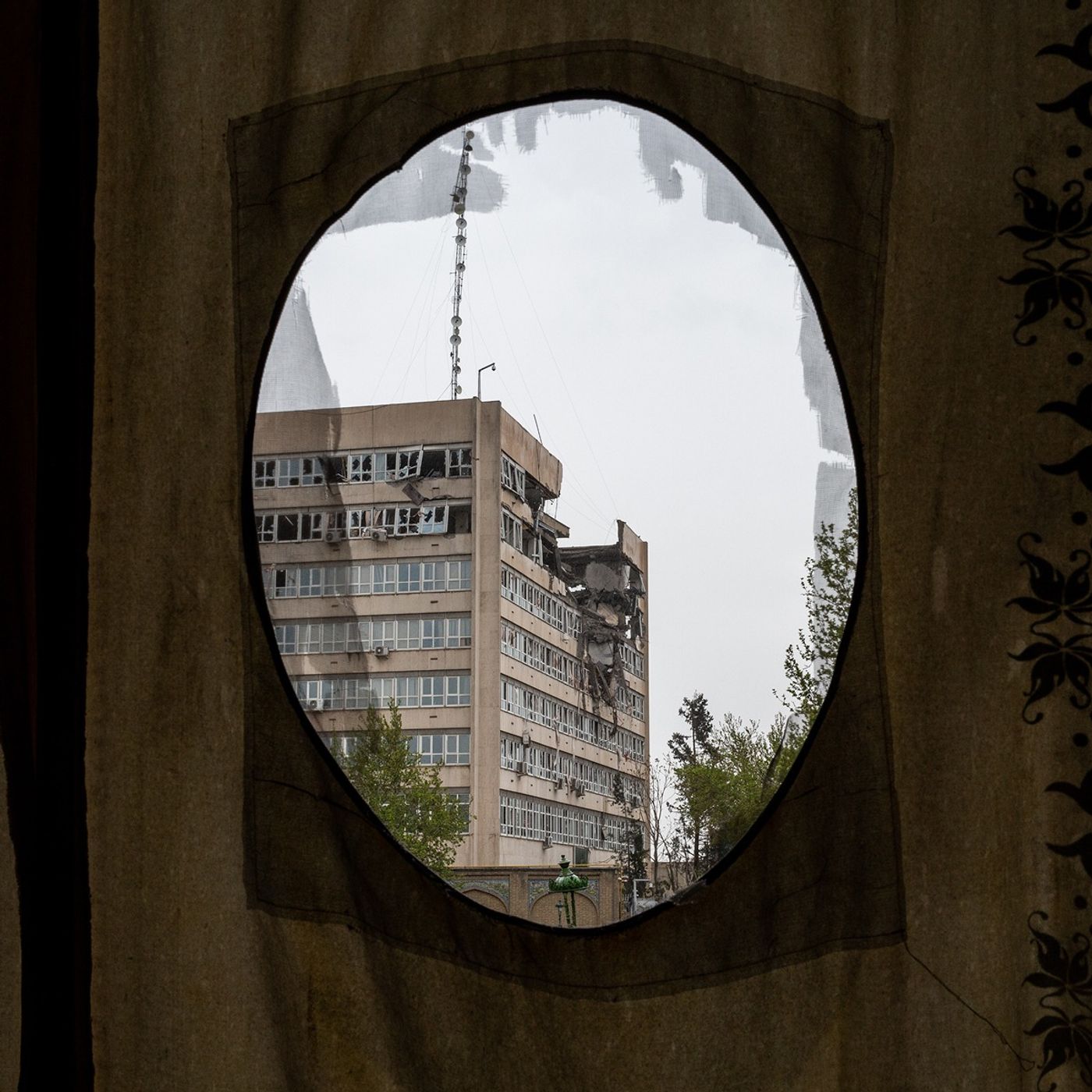
Intense US and Israeli bombardment had damaged and sometimes destroyed factories, schools, hospitals, and homes. Thousands of Iranians had lost their jobs, with estimates of more than a million people out of work. And more than 1,700 civilians had been killed. Now to the latest in the war with Iran, President Trump says a whole civilization will likely die tonight. And when President Trump threatened to end Iran's civilization, see what worried his family would be among them.
He also was having a hard time getting in touch with them since the war. The communications blackout kept their conversations short. My wife told him she was worried the US would drop a nuclear bomb on Iran. His wife disagreed with his hope around the war. So it became harder and harder to talk about.
She has different ideas acting against the regime. She always blamed people like me that wanted to get rid from this regime. You know, this is a new that people are suffering from war. If you didn't protest, everything could be better. Some people would be still alive.
See, once again finds himself in a lonely position. But I think this is the cost of getting rid of this regime. And we have to pay it. Urgent developments tonight, as President Trump announces he's agreed to suspend the bomb- And that's why, when news of this new fire came, and the regime was still standing, he felt mixed feelings. He's now on his way back home.
He's happy to get to return to his family, and his favorite things, like his guitar. But he doesn't quite know what Iran he's returning to, or what his role will be in shaping it. Do you still believe in protest as a way to achieve change? No, not at all. I think it doesn't work, and it's not a good time to protest.
He told me that he still holds on to the possibility, that maybe this ceasefire will fall apart, maybe the war will start up again. And while he's worried about what that might mean for the country and its people, he hopes that the US and Israeli militaries will accomplish what protest could end. I'm still hoping. I'm still hoping. After the break, Claire has the story of another Iranian, and what they've been thinking as they've seen the war unfold.
We'll be right back. Law transforms agreement into reality. A word becomes an agreement. An agreement becomes a contract. A contract becomes law.
Today, Harvey, the AI platform for legal work, is writing the next chapter. More than 200,000 lawyers are building with Harvey, accelerating review, sharpening negotiations, and more. This is how the future of agreements is being crafted now. Harvey, learn more at Harvey.ai. Harvey does not provide legal advice.
Users should always independently review and verify any output from Harvey. I'm Gilbert Cruz. This week on the Book Review Podcast, we have a special Halloween treat, or trick, or treat. Two hard riders recommend some titles that are sure to keep you up at night. I am a big fan of sentient houses in general.
I think this is one of the scariest books I've ever read. Listen to the Book Review, wherever you get your podcasts. That door shouldn't be open. Who left it open? I heard from another Iranian, who was going by F, to protect your identity.
I don't know why the road is so bad here. When I first got in touch, F was in her car, on the road in Turkey, after fleeing the war. We thought everybody's going out with the city, but actually no one's going out. She introduced herself to me in a voice memo. I'm just jumping quickly to the answers.
I hope that it will help you. F is about 40 years old. Translator from English to Farsi. She works as a book translator and musician. We are childless by Joyce.
And she lives with her husband in a well-afneighborhood in Tehran. At home, they didn't expect to leave. On the morning of February 28, F was getting ready to go to a yoga class, when she looked out her window. I was sitting on the third floor of my apartment, and I heard, like, a rocket or something. Then I realized that, OK, it started.
She gathered empty vodka bottles left over from parties she posted to fill with water. She read as much news as she could. I thought the internet will go away. And prepared to hunker down. But the sounds of the explosions became too much for Ed.
That's the sound of explosions. She told me it felt as if a trauma in her body had been awakened. And yeah, that's it. And later, when she was out of her car and getting ready to go to sleep, she told me about where those feelings came from. OK, so I now found time to reply to the rest of the questions.
How to put it? I didn't actually have a very rich childhood, because my parents were very ordinary people. When I was a child, her parents were both teachers, living on a modest income. They were supporters of the revolution that created the Islamic Republic in 1979. And a year later, when Iraq invaded Iran, they did what they could to back the regime and its war effort.
The government would give them a flat in. After F and her sister were born, her dad took a teaching job near the front lines, and the whole family moved away. My mom was so ideological and revolutionary that she insisted to my dad to go also to the front lines of the war. She said her dad even joined the fight for eight months. It was intense for a child.
Like, I remember running to the safe place in the garden, which was dug in the ground when the planes would come. But beyond a few flashbacks, F says she remembers very little without the war. And when it ended, she says she had a simple childhood. Her household and school were modeled around the regime and religion. F after went to Friday prayers and revolution anniversary.
Where had you always wore a hijab? And she always wore a hijab, like the girls in her class. There was also music. She was drawn to music. But music is totally like haram in a band.
But the regime effectively banned women from singing. To this day, women are not allowed to sing solo in public. So music was forbidden in our home because of religious reasons because there are some. So it was mostly absent at home. As a little girl, F remembers her mom quietly humming songs under her breath while working in the kitchen.
But not truly singing. What was allowed in their house was reciting the Quran. And F was good at it. I will recite the first surah, you know. It's the first time.
She still remembers many of the verses. You wash, man. You wash. He was really something that I like. F said she was so good that she was called into the school office every morning to recite the Quran during the school's flag raising ceremony.
They were so encouraging. And she said she competed in national Quran reciting competitions and she excelled. All of them love me. But it wasn't something she pursued as a career. The best was engineering.
She chose to study engineering. They were mostly boys. And for the first time, most of her classmates were boys. And I remember sometimes they would tell us not to take part in some things that were just boys thing. Surrounded by boys, she became proud of being a girl.
I didn't want to bow to the rules of, you know, boys are better, boys can do anything. And so it was the beginning of a transformation for her. Then I stopped doing trainers. She turned away from religion, stopped praying, and eventually stopped wearing the hijab. Then she took her values to the streets.
Yes, I went on the streets. In 2009, F told me she joined thousands of Iranians to protest the reelection of the conservative president at the time. In the so-called Green Movement. She watched that in the streets of Iran. At least seven people are reported to have been shot at.
The regime cracked down on the protest, killing dozens and arresting thousands. So then I think I realized that this is not the way. It was clear to F that the regime was too strong. It will not work. It will make things worse.
She no longer saw the point in protesting. I decided I don't want to actually waste my energy on something that I see it is not possible. F figured the best way to achieve change wasn't to overthrow the regime or even loudly protest it. It was to quietly resist what she disagreed with. It's about changing people's mindset.
And to F, that meant trying to model the Iran she wanted to live in in her own life. Some of our changes were small. Freedom of choice, clothing. Sometimes literally only measurable in inches. Longer shows up to knees a little bit down.
Or a subtle difference in material. A blouse which was mesh. F also said she changed the words in her marriage contract. For the divorce, we are able to include the right to get divorced. If I can little by little change this part of the society, which is very conservative and religious, that they accept that I am also a part of the society.
I accept they are also part of the society. Let's just get along with each other. This is the best way, I think, for Iran. Years passed. And she said she did see Iranian society change.
Then I really started to inspire others also. More women on the streets of Tehran were abandoning the hijab. When I saw that women are actually not wearing it on the street anymore, it was really amazing. She says male taxi drivers that used to refuse her as a customer for not wearing a hijab, now don't care. And she started to push boundaries through something she hadn't been able to explore as a kid, singing.
She started singing traditional Persian music. First, she sang at home. Then at parties with friends. Eventually, she started planning a solo concert, even though this was still forbidden as a woman. It was openly in a place that would hold private concerts, and the sounding system was really good.
And just as with her other acts of disobedience, F was pushing the boundaries without completely rebelling against the regime. Traditional music. For her concert, she planned to sing traditional Iranian music. Not pop, or other genres associated with the West. And she would have one man on stage with her, playing the kamancha, a traditional Persian instrument.
Also activist, a kind of musician. But she would be the soul singer, with a lineup of songs about women. All the poems and all the music was from women's movement. She said they sold tickets to about 80 people. We were ready to be captured.
The night of the show, she was nervous, thinking she might be arrested. But she stepped out on stage and sang. And really, everything was the way I wanted. She was able to have her concert. The first time, she ever got to sing like that.
And you know, it was all this hard to do. She looked into the audience and saw women and men. It was historical. I'm telling you, it was really something historical. To her, it felt like something big was happening.
And I can do much more than this, I know. To F, it was evidence that this kind of resistance works. And while F understands just how brutal the regime can be, she has come to believe that the only answer to perform around government is from within. Which is why when the threat to the regime came from the outside, through the US and Israel, she was especially against it. United States and Israel are launching air strikes across Iran.
So on that first morning, watching the strikes from her apartment window, F already had a clear opinion. She's happy to learn that Ayatollah Khamenei was killed. She even did a little dance. And yet, she completely opposed the war. And we filled in the car, the petrol, and then hit the road.
While in Turkey, I asked F if she had ever thought about leaving Iran for good. I could have gone all my life to other countries. She said she had many times in her life. But then, my husband and I, we think that we really belong to this country. But a few years ago, she decided she would stay.
No matter what. And as she watched the destruction of Iran and heard about President Trump's threat to destroy its civilization, she found herself even more committed to the country. She loves Iran deeply. And she decided she would rather live there than anywhere else in the world. It's so rich in every aspect that you cannot go leave somewhere else.
You know, we need meaning. And Iran is my meaning of life. I prefer a hard life with meaning to an easy life and to leave. So it's like this, you know, for me. So two weeks ago, just before the ceasefire was announced, F and her husband left Turkey and went back home to Tehran.
We arrived last night. I could hear the happiness in her voice. Can you hear this noise from the background? I'm at the Valia Square and what is going on here is like a ceremony, which I don't know if it is. She's not sure if this is the first time in the first time, but she's holding on to hope.
You know, there is this Arabic phrase. It says, it means we are doomed to have hope. And so long as it does, she thinks there's a chance to create change. Like, have you seen this greenery that grows on the corner of a sidewalk, even if it's only in the small spaces, or changes possible? Like weeds growing through cracks in the sidewalk.
It's really the sign of hope. It shows that you're hopeful that you stay alive and you stay safe and you keep growing. We'll be right back. Here's what else you need to know today. Apple Chief Executive Tim Cook said that he would step down after nearly 15 years, ending one of the most successful management runs in the history of American business.
Cook will move into a new role as Apple's executive chairman in September, and he'll be succeeded by John Turnus, who's currently the head of hardware engineering. During Cook's tenure, Apple's annual profit quadrupled to more than $110 billion, and its value ballooned more than tenfold to $4 trillion. And, Laurie Chavez-Deremer, President Trump's embattled labor secretary, stepped down on Monday amid a cloud of scandal and investigation, marking the third member of his cabinet to depart the administration in two months. Chavez-Deremer was pacing a whistleblower complaint of professional misconduct, including claims that she was having an affair with a member of her team and that she used department resources for personal trips.
The Labor Department's Inspector General's office found evidence that Chavez-Deremer and her staff misused federal funds to pay for luxury hotels, SUV rentals, and meals. Today's episode was recorded and produced by Claire Tennescatter. It was also produced by Jess Chung, Ricky Nabetsky, and Lindsey Garrison, with help from Michelle Bonja and Ben Calhoun, who was edited by Maria Byrne, Lindsey Garrison, and Michael Benoit, with research held from Susan Lee and Artemis Moschdagen, original music by Dan Powell and Alicia Beitou, additional music by Mary Elizano, Sophia Landman, Pat McCusker, and Leah Shaw Damiron.
Our theme music is by Wonderly. This episode was engineered by Chris Wood. Special thanks to the Farnaz Vassiki, Yaraa Butumi, Yegane Torbadi, Heron Baruis, Sheerin Hakim, and Adrian Carter. That's it for today, I'm Rachel Abrams. See you tomorrow.