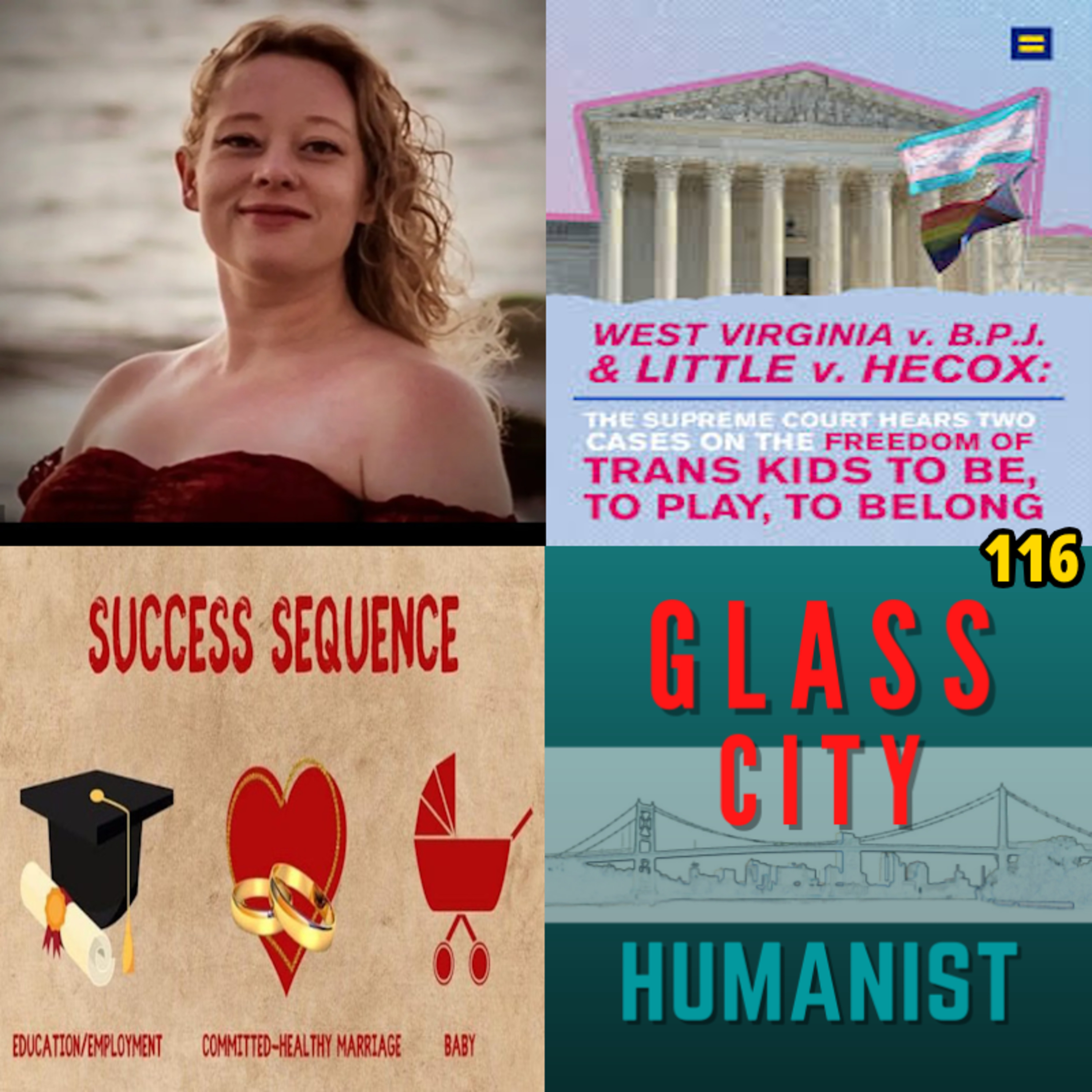
How Irrational Bans and Education Policy Are Weaponizing Systemic Injustice Against Marginalized Communities episode artwork

EPISODE · Jan 18, 2026 · 47 MIN

How Irrational Bans and Education Policy Are Weaponizing Systemic Injustice Against Marginalized Communities

from Glass City Humanist · host Douglas Berger - Humanist Advocate

We start by talking about the recent US Supreme Court hearing on cases challenging the bans on Trans women from playing on women's sports teams. The conservative justices questioned if such bans were really discrimination since the trans community is so small. We mention how they made the same arguments in upholding the bans on gender affirming care last year and how it is similar to the arguments used to support Jim Crow laws during the civil rights era. The sports bans are yet another attempt to erase trans people from the canvas of society and serves no rational reason just a religious bigotry reason.Next we look at the murder of Renee Good and how her death not only highlights the extreme measures government agents will take against individuals standing up for their neighbors but also points to a persistent narrative that resurfaces often: the dehumanization of individuals labeled as "other." There is an alarming tendency for authorities to shift blame onto the victims, rather than addressing the flawed systems that contribute to such violence. This hypocrisy and deliberate denial of accountability must be called out as it perpetuates cycles of injustice.Finally we examine the legislative moves by Christian nationalists aiming to influence public education through a proposed "success sequence" framework in Ohio. This initiative seeks to dictate personal and familial decisions by mandating that youth follow a three-step path of education, employment, and marriage before having children as a means to avoid poverty. While the intent may appear benign, but we find the underlying agenda and biases within this bill—one that seeks not only to uphold conservative values but to erase the economic realities faced by many in the lower socioeconomic strata. We also question the fundamental assumptions behind such a sequence, arguing that it ignores systemic barriers, such as race, socioeconomic status, and educational access.Full show notes & links usedSubscribe to our free newsletterCheck out our merch

We start by talking about the recent US Supreme Court hearing on cases challenging the bans on Trans women from playing on women's sports teams. The conservative justices questioned if such bans were really discrimination since the trans community is so small. We mention how they made the same arguments in upholding the bans on gender affirming care last year and how it is similar to the arguments used to support Jim Crow laws during the civil rights era. The sports bans are yet another attempt to erase trans people from the canvas of society and serves no rational reason just a religious bigotry reason.Next we look at the murder of Renee Good and how her death not only highlights the extreme measures government agents will take against individuals standing up for their neighbors but also points to a persistent narrative that resurfaces often: the dehumanization of individuals labeled as "other." There is an alarming tendency for authorities to shift blame onto the victims, rather than addressing the flawed systems that contribute to such violence. This hypocrisy and deliberate denial of accountability must be called out as it perpetuates cycles of injustice.Finally we examine the legislative moves by Christian nationalists aiming to influence public education through a proposed "success sequence" framework in Ohio. This initiative seeks to dictate personal and familial decisions by mandating that youth follow a three-step path of education, employment, and marriage before having children as a means to avoid poverty. While the intent may appear benign, but we find the underlying agenda and biases within this bill—one that seeks not only to uphold conservative values but to erase the economic realities faced by many in the lower socioeconomic strata. We also question the fundamental assumptions behind such a sequence, arguing that it ignores systemic barriers, such as race, socioeconomic status, and educational access.Full show notes & links usedSubscribe to our free newsletterCheck out our merch

NOW PLAYING

How Irrational Bans and Education Policy Are Weaponizing Systemic Injustice Against Marginalized Communities

0:00 47:48

No transcript for this episode yet

We transcribe on demand. Request one and we'll notify you when it's ready — usually under 10 minutes.

Frequently Asked Questions

How long is this episode of Glass City Humanist?

This episode is 47 minutes long.

When was this Glass City Humanist episode published?

This episode was published on January 18, 2026.

What is this episode about?

We start by talking about the recent US Supreme Court hearing on cases challenging the bans on Trans women from playing on women's sports teams. The conservative justices questioned if such bans were really discrimination since the trans community...

Can I download this Glass City Humanist episode?

Yes, you can download this episode by clicking the download button on the episode player, or subscribe to the podcast in your preferred podcast app for automatic downloads.
URL copied to clipboard!