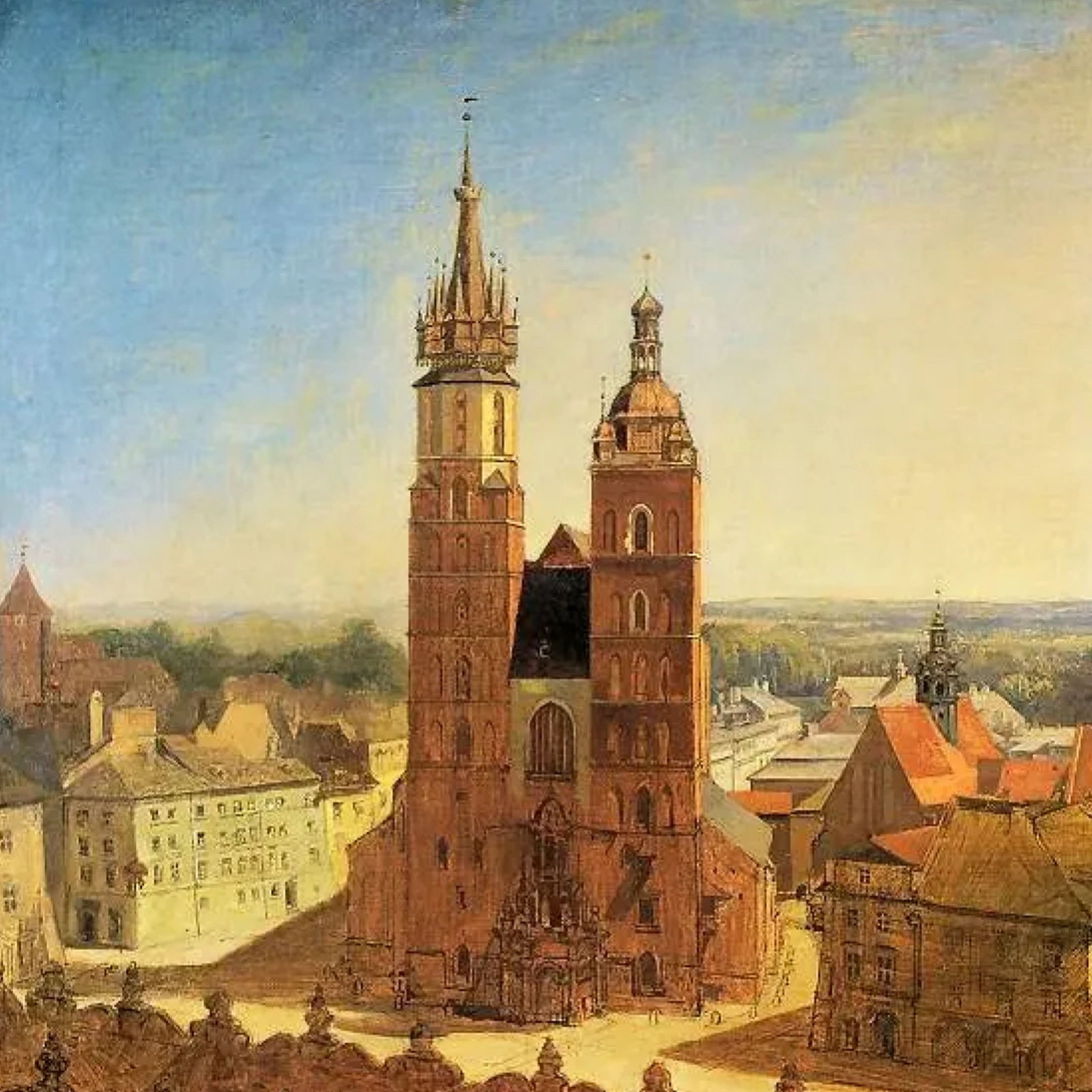
How John Paul II Used the Saints Against the Communists – Prof. James Felak episode artwork

EPISODE · Jun 30, 2026 · 46 MIN

How John Paul II Used the Saints Against the Communists – Prof. James Felak

from The Thomistic Institute · host The Thomistic Institute

Prof. James Felak argues that John Paul II used Polish saints as powerful symbols of faith, moral courage, and national identity to inspire resistance against communism and affirm the Church’s role in Poland’s history.This lecture was given on October 31st, 2026, at St. Albert's Priory.To make a gift this June, visit https://truth.thomisticinstitute.org/pod.About the Speaker:James Felak is a Professor of History and current holder of the Newman Center Term Professorship in Catholic Christianity at the University of Washington. He specializes in Catholicism in East Central Europe and has authored two books on Catholic politics in Slovakia, and a book on Pope John Paul II and his visits to his native Poland during and after Communist rule there. This latter work is based on hundreds of pages of papal speeches and sermons, and the records of the Communist government and secret police as they monitored the Pope during his visits.  Besides courses on modern Europe, Felak teaches “The History of Christianity” and “Catholic Classics in Historical Context.” The latter course covers the major Catholic writers and thinkers from St. Augustine and St. Benedict through G. K. Chesterton and Flannery O’Connor. Felak is from southwestern Pennsylvania, received his doctorate from Indiana University, and has resided in Seattle since 1989.Keywords: Catholic Identity, Communion Of Saints, Communism, John Paul II, Poland, Sacred Space, Saints, Soviet Bloc, St Maximilian Kolbe

Prof. James Felak argues that John Paul II used Polish saints as powerful symbols of faith, moral courage, and national identity to inspire resistance against communism and affirm the Church’s role in Poland’s history.This lecture was given on October 31st, 2026, at St. Albert's Priory.To make a gift this June, visit https://truth.thomisticinstitute.org/pod.About the Speaker:James Felak is a Professor of History and current holder of the Newman Center Term Professorship in Catholic Christianity at the University of Washington. He specializes in Catholicism in East Central Europe and has authored two books on Catholic politics in Slovakia, and a book on Pope John Paul II and his visits to his native Poland during and after Communist rule there. This latter work is based on hundreds of pages of papal speeches and sermons, and the records of the Communist government and secret police as they monitored the Pope during his visits.  Besides courses on modern Europe, Felak teaches “The History of Christianity” and “Catholic Classics in Historical Context.” The latter course covers the major Catholic writers and thinkers from St. Augustine and St. Benedict through G. K. Chesterton and Flannery O’Connor. Felak is from southwestern Pennsylvania, received his doctorate from Indiana University, and has resided in Seattle since 1989.Keywords: Catholic Identity, Communion Of Saints, Communism, John Paul II, Poland, Sacred Space, Saints, Soviet Bloc, St Maximilian Kolbe

NOW PLAYING

How John Paul II Used the Saints Against the Communists – Prof. James Felak

0:00 46:13

No transcript for this episode yet

We transcribe on demand. Request one and we'll notify you when it's ready — usually under 10 minutes.

Frequently Asked Questions

How long is this episode of The Thomistic Institute?

This episode is 46 minutes long.

When was this The Thomistic Institute episode published?

This episode was published on June 30, 2026.

What is this episode about?

Prof. James Felak argues that John Paul II used Polish saints as powerful symbols of faith, moral courage, and national identity to inspire resistance against communism and affirm the Church’s role in Poland’s history.This lecture was given on...

Can I download this The Thomistic Institute episode?

Yes, you can download this episode by clicking the download button on the episode player, or subscribe to the podcast in your preferred podcast app for automatic downloads.
URL copied to clipboard!