
EPISODE · Jul 17, 2018 · 50 MIN
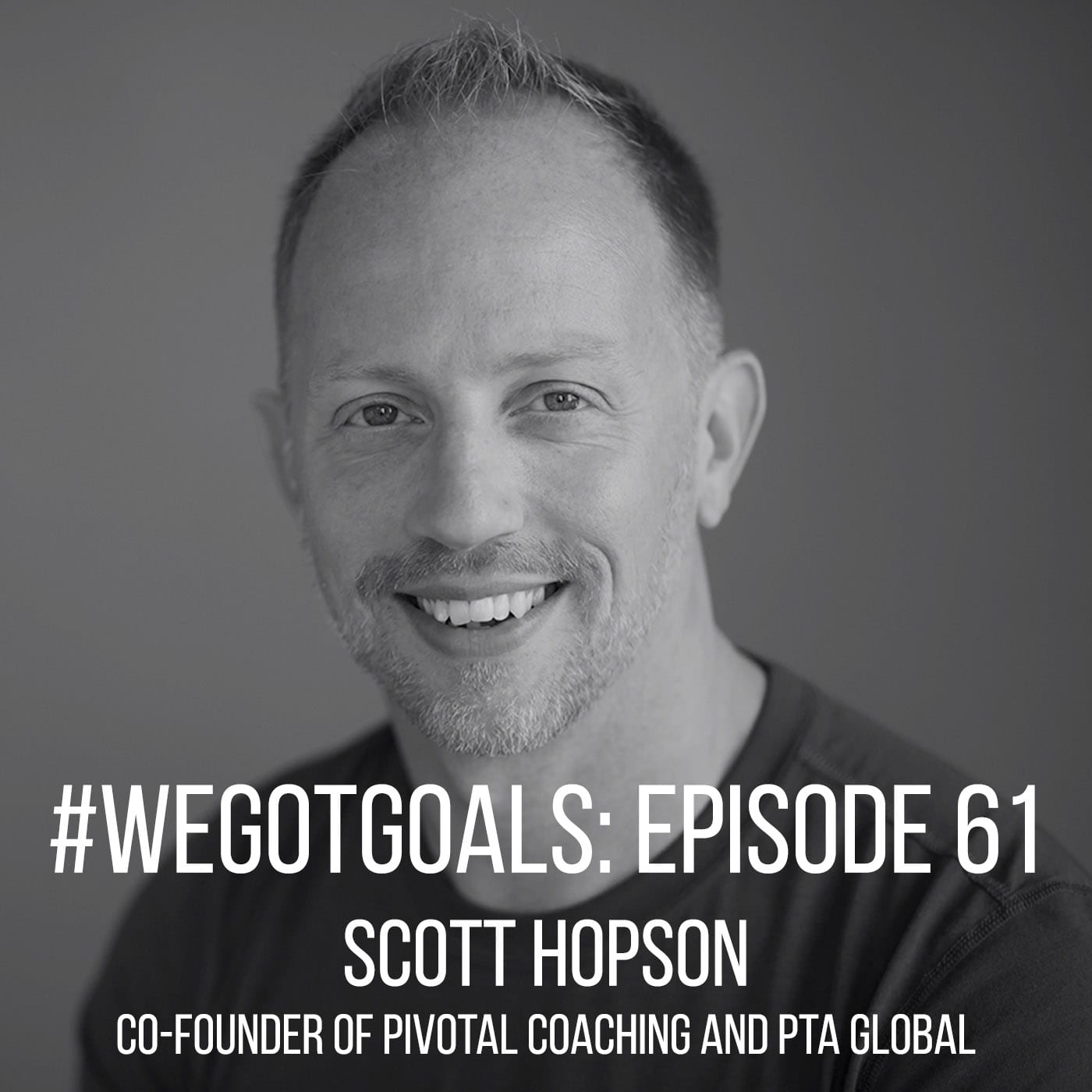
How Leadership Coach Scott Hopson Went From Being Expelled to Helping Others Excel
from #WeGotGoals by aSweatLife · host aSweatLife
There's something to learn by listening to any individual's success story, but when the story starts with being kicked out of high school at 15, one can get pulled especially quickly into hearing how it panned out. I found myself at the edge of my seat while sitting across from Pivotal Coaching Co-Founder Scott Hopson for the latest #WeGotGoals podcast episode interview because that was exactly how his story started. If you're in the training industry, maybe you've attended continuing education sessions through NASM, EXOS, The Gray Institute, or Power Plate International; if so, you've probably studied Hopson's material or done a workshop with him. He also helped launch Midtown Athletic Club, Chicago's first urban sports resort with 575,000 square feet of health and wellness amenities. And, as the co-founder of PTA Global, he's coached countless personal trainers in a unique approach focused on behavioral science. Essentially, Hopson has worked his entire professional life on becoming the best version of himself as a personal trainer, but he's also dedicated his life to the fitness industry from a practical coaching, educational, and business perspective. And with the prestigious laundry list of titles he possesses, you can imagine why I found it unbelievable that it all started with being kicked out of school. But, as Hopson told me during the interview, when he decided he wanted to turn his life around, he started at the source where he felt like he was always home, the one place where he felt "in flow" amidst it all - with his coaches when he was playing sports. He held onto the memory of being coached and let that passion drive him forward. Now, helping others achieve their movement goals makes him feel alive, and he's equally passionate about training other coaches to bring out their fullest potential and thus, inspire clients to become the best version of themselves too. The most interesting thing about our interview, though, had nothing to do with fitness and everything to do with the human behind the science of coaching. In order to go after the "what" (whether that's a specific fitness goal or any other transformational goal in your life), "you have to articulate the 'why,'" Hopson said. Ultimately, understanding that it's not about him as a coach at all when he's in a coaching session has helped him understand how to navigate every other kind of partnership and communication in his life. "If I'm going to coach you, I've got to create an environment for you to train yourself, because I can't do it," Hopson said. "That'd be quite arrogant and ignorant of me to believe I can. If I create an environment for you to change yourself, that affects how I communicate to you, how I listen, do I have empathy? And I apply that to my business relationships. Am I listening? Am I willing to consider the possibility that they don't only have a point of view, but they might actually change mine?" Hopson also mentioned that he leans into his intuition to help guide his unique, nonlinear career path and what big goals he goes after. "I'm at my happiest, and in flow, where nothing else matters than that present moment, when I'm being of service to someone as a coach," he said. I commented on how lucky he was to know that feeling - a feeling of just being in total flow. He replied that we all have it, in some way, shape or form. We just have to notice and be open to tapping into it. "It doesn’t happen every day, [but] there are things you can do to connect you back to it if you lose it – whether it’s prayer or meditation, or whatever it is that connects you to that thing," Hopson said. Listen to Scott Hopson's episode of the #WeGotGoals podcast to hear one success story you likely won't ever forget. You can listen anywhere you get your podcasts (did we mention, we're on Spotify now?) If you like what you hear, please leave us a rating or a review! We'd really appreciate it. And stick around until the end of the episode, where you’ll hear a goal from one of you, our listeners. (Want to be featured on a future episode? Send a voice memo with a goal you’ve crushed, a goal you’re eyeing, or your best goal-getting tip to [email protected].) --- Transcript: Jeana: Welcome to #WeGotGoals a podcast by aSweatLife.com on which we talk to high-achievers about their goals. I’m Jeana Anderson Cohen. With me I have Maggie Umberger and Cindy Kuzma. Maggie: Morning Jeana! Cindy: Good morning Jeana! Jeana: Morning! Maggie, you talked to Scott Hobson this week, right? Maggie: I did! I spoke with Scott Hobson and he has a lot of roles which I will try to give you in the upfront here but he will do a better job of talking about the many companies that he has started. And from his career trajectory, he’s been a personal trainer, he has coached coaches. He still loves to coach people on how to help other people achieve their goals. He is the founder, co-founder of PTA Global as well as Pivotal Coaching. But essentially what he does, is he helps people move better. Whether that is individuals or people within big gyms or at really large conferences and for fitness professionals across the world. He’s been to 40 countries to teach. He’s also an author, a writer, and a speaker. And I was so lucky to get to speak to him about his goals of which he has many. Jeana: But he also failed big once, right Maggie? Maggie: I didn’t realize this. I didn’t know this until we were talking for this interview, but he was kicked out of high school. And he kind of tossed it out there and I was honestly shocked because he has done so many things. He is the co-founder of Pivotal coaching which is a world-wide coaching business now. And I was honestly surprised because he is so accomplished. He’s so well spoken, he’s so driven. But I learned that he did get kicked out of high school and it took something for him to realize that in order for him to turn his life around he needed to find the thing that made him feel like he was in flow, is what he calls it. And when he feels like he’s in flow, he knows he’s doing the right thing and the only thing that he felt that kind of sensibility around was when with his rugby team and when he was being coached by his coaches. He felt like he was at home and he wanted to do that more. He wanted to do that in any capacity he could, so he became a personal trainer. He kept going back to school, he kept learning more and his fervor for learning more about human movement and just how people behave around fitness. It’s a much broader topic for him then just like what happens in a coaching session. And he’s really turned that enthusiasm, is what he calls it. This spirit for understanding how people move into his life-long career. Which is huge leaps and bounds away from getting kicked out of high school years ago. Jeana: And he feels like it’s important to coach the humans who are doing the movement and not actually coach the movement. Which is an interesting semantic issue, it’s an interesting word choice. What does he mean by that and how does that fit into his overall philosophy? Maggie: So Scott has the wherewithal to know that what happens in the gym is only a tiny part of your day. And he knows that as long as you just throw anatomical cues at people it’s going to go over their head. They have to find their why. And so he’s become really, really passionate about helping other coaches learn how to speak to people to meet them where they are and to really influence and inspire change for people on a greater level than just going through the motions of a program, of going through the workout. We say this all the time at aSweatLife that fitness can be the catalyst to you living your best life and that what happens in the gym can absolutely affect you life outside of the gym if you let it. If you want it to and he has started to focus a lot of the training and the protocols within Pivotal Coaching around human behavior and how can what coaches do in your training sessions influence how that training session goes. It's so much more of an emotional thing than just a physical thing which is interestingly a large part of the conversation that we had was just about how connected to his own emotional well-being he is. Like when he’s not in flow as I was saying, he knows it and he needs to make a change. And that's what happened when he was director of a really large facility that he's still incredibly involved with and he loves it very much. But when he was doing a role that he could do but he felt a little bit more stressed by being in it. It was apparent to him that he needed to make a change and he could be a better asset in a different capacity. So that when he could actually get back to working with people, for people and helping. Really his passion is working ...
Embed this episode
NOW PLAYING
How Leadership Coach Scott Hopson Went From Being Expelled to Helping Others Excel
No transcript for this episode yet
Similar Episodes
Similar Podcasts
No similar podcasts found.