
EPISODE · Nov 3, 2025 · 12 MIN
How Moral Bankruptcy is One of the Hidden Costs of Privilege
from Walter Rhein Podcast · host Walter Rhein
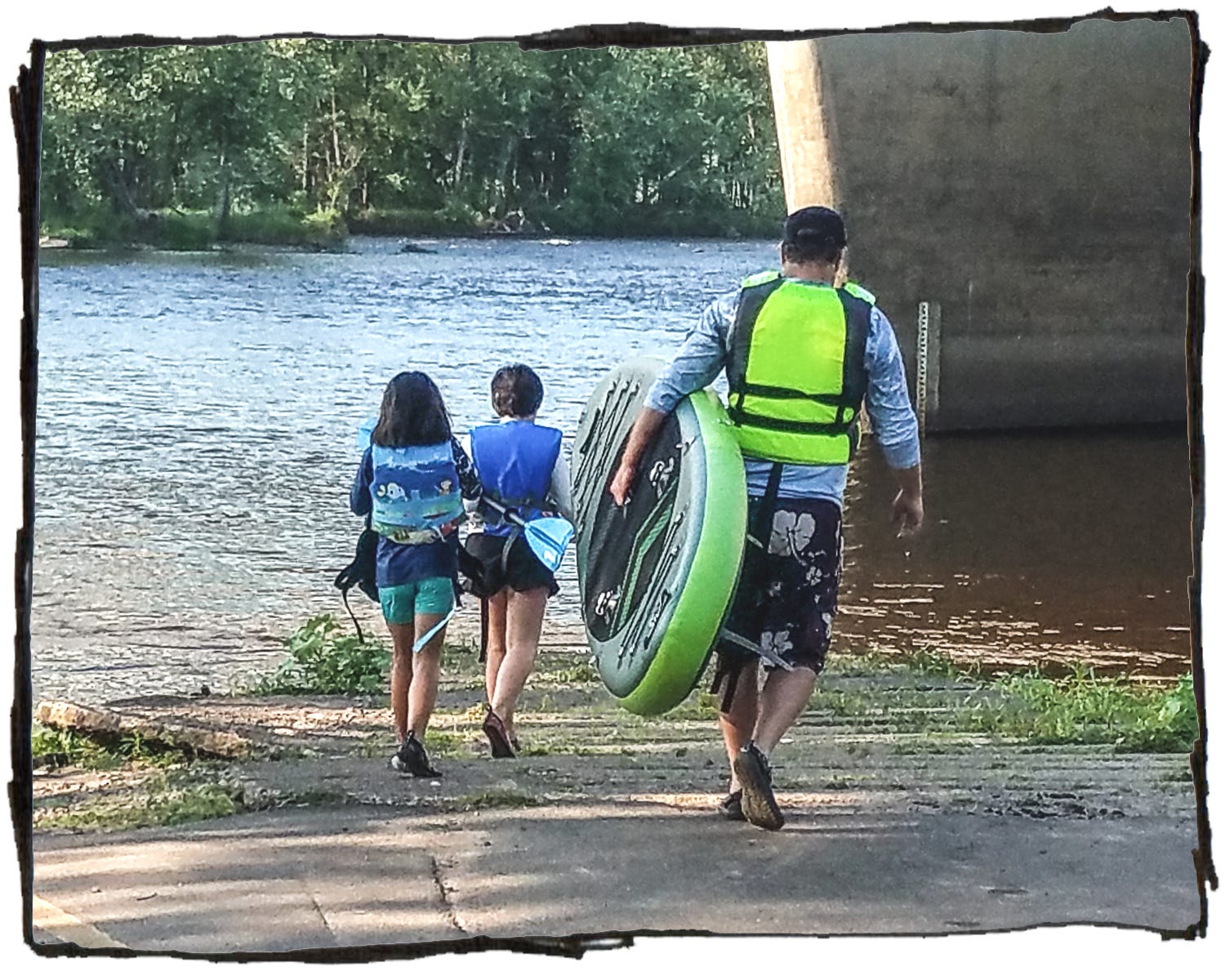
I’m fortunate to be the father of two compassionate daughters who often take time out of their busy schedules to teach me important life lessons.On one occasion, we were out on the lake riding a stand-up paddleboard. Rather than stand, I prefer to sit on the board and propel it with a kayak paddle. My kids are getting close to being too big for this activity, but a few years back we were out on the water giggling and having fun.My youngest daughter was swimming. My eldest daughter was just along for the ride. My youngest was bobbing along, splashing, and calling for me to come in, so I did.That’s when disaster struck.After I’d played around for a few minutes, I went to climb back onto the paddle board and accidentally capsized it. This sent my eldest daughter into the water.“Dad! I said I didn’t want to swim!” she scolded me.“I’m sorry,” I sputtered, “it was an accident.”From my daughter’s face, I realized that wasn’t even close to good enough.I didn’t recognize it then, but my daughter was about to expose a critical flaw in my thought process. When there’s no greater authority present, it’s tempting to lean on the power of privilege to justify your behavior. That is a mistake.We spent a few minutes struggling to get back onto the paddle board. The good times were gone. My eldest daughter was absolutely furious.“I really am sorry,” I said. “I just slipped when I was trying to get back on.”“Harumph.”I was eager to get back to the good times. I like making positive memories with my girls. I didn’t want to be stuck sitting under a storm cloud for the next twenty minutes.In my desperation, my thoughts reverted to old tendencies. I was teleported back to the grade school playground as I remembered our go-to method for handling controversies like this.“Look, you can push me into the water too, that will make us even.”That’s when things went from bad to worse.My daughter turned and looked at me like I’d lost my mind.“Daddy, it’s our job to be nice to each other. I gain nothing from doing something mean to you. When somebody does a mean thing to you, you shouldn’t do a mean thing back. That doesn’t solve anything.”I was stunned into silence. After a moment I muttered, “Well, you’re right.”However, I was still confronted with the problem of her bad mood, and part of me wanted to use my parental authority to command her to get over it.I indulged in a flash of irritation. I wanted to say, “Look, you’re being ridiculous, can’t you accept it was an accident? Quit being grumpy so we can get back to having fun, after all, I’m the grown-up . . .”That’s where the train of thought got derailed.You see, I’d always hated it when adults gave me that line when I was a kid.I hated it. Adults always used their privilege to make me do things even when I knew they were wrong. Those who are members of a dominant group are always able to throw their weight around, and it’s always infuriating.When a parent starts shouting orders at a child, truth often goes out the window. The only expectation is that the kids will comply.When I was a child, I resolved I would always listen to reason no matter where the words came from. The line “I’m an adult and you’re a kid” was something I trained myself to fundamentally reject.Truth should be our guiding light, not age, not power, not privilege.But this was the first time that resolution really got put to the test.When you’re the one with the power of privilege, it’s not so easy to hold yourself to a higher standard. But that’s not an excuse, and it won’t save you.Sitting there, semi-frustrated, dripping wet. I knew my daughter was right. There was nothing to be gained by “allowing” her to dump me into the lake. At best, it might achieve a cheap laugh that would do little to eradicate her frustration.So, what was left?I’d apologized, but an apology didn’t make her less wet. An apology didn’t necessarily mean I understood her anger.I realized my only option was to hand over my authority to her. She had been wronged, therefore she should be allowed the space and agency to sort through her emotions.The only way to correct a wrong is to hand over your privilege for equity.This was not an easy realization to make. It’s even more difficult to implement.I did my best.I shut my mouth and began to paddle.My offer of retribution was rejected, the only thing left was for me to do it her way. I had to surrender control.* I couldn’t pressure her* I couldn’t tell her she was wrong* I couldn’t even beg her to not be angry* I had no choice but to wait for her to work through her feelings* I had an obligation to try and empathize with herAt first, this was very uncomfortable. We are hardwired to get back to the “good” times. I think our whole society trains us to avoid moments of true vulnerability. But denying they happen is like denying the sun.We deny racism. We deny intolerance for the LGBTQ+ community. Members of the dominant community insist that our society has “no problems” and that everyone should just “get over it.”Our society needs to take a moment to shut up and listen.Getting back to the “good times” is a fool’s errand. It’s long past time we started taking it upon ourselves to do the hard work of exploring the truth in our sadness.We always want to get back to the party, but there’s beauty, too, in the silent moments after everyone has gone.Somebody’s got to stick around and clean up the mess. Denying there is a mess doesn’t make it go away. Emotional messes, even minor ones, are nebulous, but they shouldn’t be dismissed or brushed over.“You can push me in too, then we’ll be even.”No. The objective here isn’t to hurt each other. The objective is to empower each other.When you accept accountability, you empower yourself to be a better person. You also empower the other person to be themselves.It’s interesting how we’ll propose a self-serving solution under the guise of restoring peace.When I said, “You can dump me into the lake,” I just wanted her to not be angry. I wanted to avoid the somber rebuke. I wanted to go back to being happy, happy, happy.But the wisdom of my daughter reminded me that fake “happy, happy, happy,” is worse than a truthful, somber, and reflective moment.The simple fact was that I’d accidentally dumped her in the lake and she had the right to be angry about it for a moment. It didn’t matter that it was an accident. It had happened. It irritated her. She deserved the opportunity to tell me that I had wronged her.This moment encapsulates the reality of everything a good parent claims they want to teach their child. Why then was the moment so terrifying?We paddled in silence. We went to the place where the turtles sun themselves. The turtles saw us and slipped quietly back into the water.I turned the paddle board and we headed back in the direction of the car. The trip took about twenty minutes.“Okay,” my daughter said, “I’ve decided to forgive you, Daddy.”“Thank you, sweetie,” I said, and I was sincere. In fact, I felt relief. It’s a sobering thing to acknowledge the reality that your child doesn’t have to forgive you. She doesn’t have to forgive anyone. That’s what autonomy means.You have a responsibility to prove yourself worthy of your child’s love. That’s a good thing to be reminded of.You also have a responsibility to prove yourself worthy of the trust of anyone who is in a marginalized group.I felt an enormous surge of pride. “I’m sorry you got wet, I didn’t mean it. It really was an accident.”“I know.”It’s strange that, no matter how hard you try, you still find yourself having to be reminded of very basic lessons. I kind of wish I could go back to the third-grade playground and be more forceful in my objections to, “Well, you can do the same thing to me.”A kid would hit you and you’d hit them back and then you’d get back to playing with only a vague sense of disquiet that something wasn’t right.Hitting back is not a solution. In fact, that proposal denies you the opportunity to work through your emotions.Why is it that the guilty party should feel entitled to propose the form of retribution? “You can do the same thing to me.”“But I don’t want to do the same thing to you, doing that brings me no joy. All that does is make me like you and that’s the last thing I want.”It seems to me that everything in our society creates a pressure funnel to indulge in a punitive response to every misstep. This is probably why the whole world is blind.Why don’t we ever listen to the opinions of the aggrieved?“What do you propose we do to make this better?”“Just let me sit in silence for a moment and don’t pressure me until I can forgive you.”That sentence strikes harder than any blow.I think we don’t listen because we’re terrified of acknowledging that other people deserve to express what affects them negatively. To be honest, the thought that my daughter wouldn’t forgive me was (and is) close to unbearable.But you know what the result of all this is? The result is that the next time we went out on the lake I was extra careful not to capsize the paddle board. The result is that I learned “accidents” don’t happen if you take greater care. The result is that I took greater care because I didn’t want to face her withholding her forgiveness.I wouldn’t have learned that lesson if she’d accepted my offer to push me in.We’d be dunking each other over and over every time we went out to the lake.Instead, we have respect, and I’m a better person for it.This is why you should listen to truth even if you’re the adult and the person speaking the truth is the child. Authority is an illusion. I learned that lesson when I was young. I’m pleased my daughter took the time to remind me.This example with my daughter is a good starting point for a meditation on many of the conflicts plaguing society today. It seems that we always turn to the oppressors for proposals on how to best ease the suffering of the oppressed.The true solution lies in giving power to the powerless.Instead, the dominant group always gets to decide the course of action. People with privilege offer the equivalent of, “Well, you can do the same thing to me and that will make it all okay.”But then they develop a singular focus on ensuring no form of retaliation is possible and they never pause to recognize no such action was ever forthcoming.My daughter wasn’t about to push me off the paddleboard. It would have been delusional to become fixated on that fantasy. Why do we submit to a society that has evolved from following that very impulse?It’s wrong to assume that people who are marginalized in our society due to institutionalized racism or bigotry are fixated on retaliation. Retaliation gets us nowhere.Anyone who is sincere about forging a better world has to be willing to defer to the inherent agency of marginalized people.You all make this newsletter happen! Thanks for your sponsorship! I have payment tiers starting at as little as twenty dollars a year.Upgrade at 30% offUpgrade at 40% offUpgrade at 50% offUpgrade at 60% offI’m so happy you’re here, and I’m looking forward to sharing more thoughts with you tomorrow.My CoSchedule referral linkHere’s my referral link to my preferred headline analyzer tool. If you sign up through this, it’s another way to support this newsletter (thank you).I'd Rather Be Writing is a reader-supported publication. To receive new posts and support my work, consider becoming a free or paid subscriber. Get full access to I'd Rather Be Writing at walterrhein.substack.com/subscribe
Embed this episode
NOW PLAYING
How Moral Bankruptcy is One of the Hidden Costs of Privilege
No transcript for this episode yet
Similar Episodes
No similar episodes found.
Similar Podcasts
No similar podcasts found.