
EPISODE · Sep 24, 2025 · 18 MIN
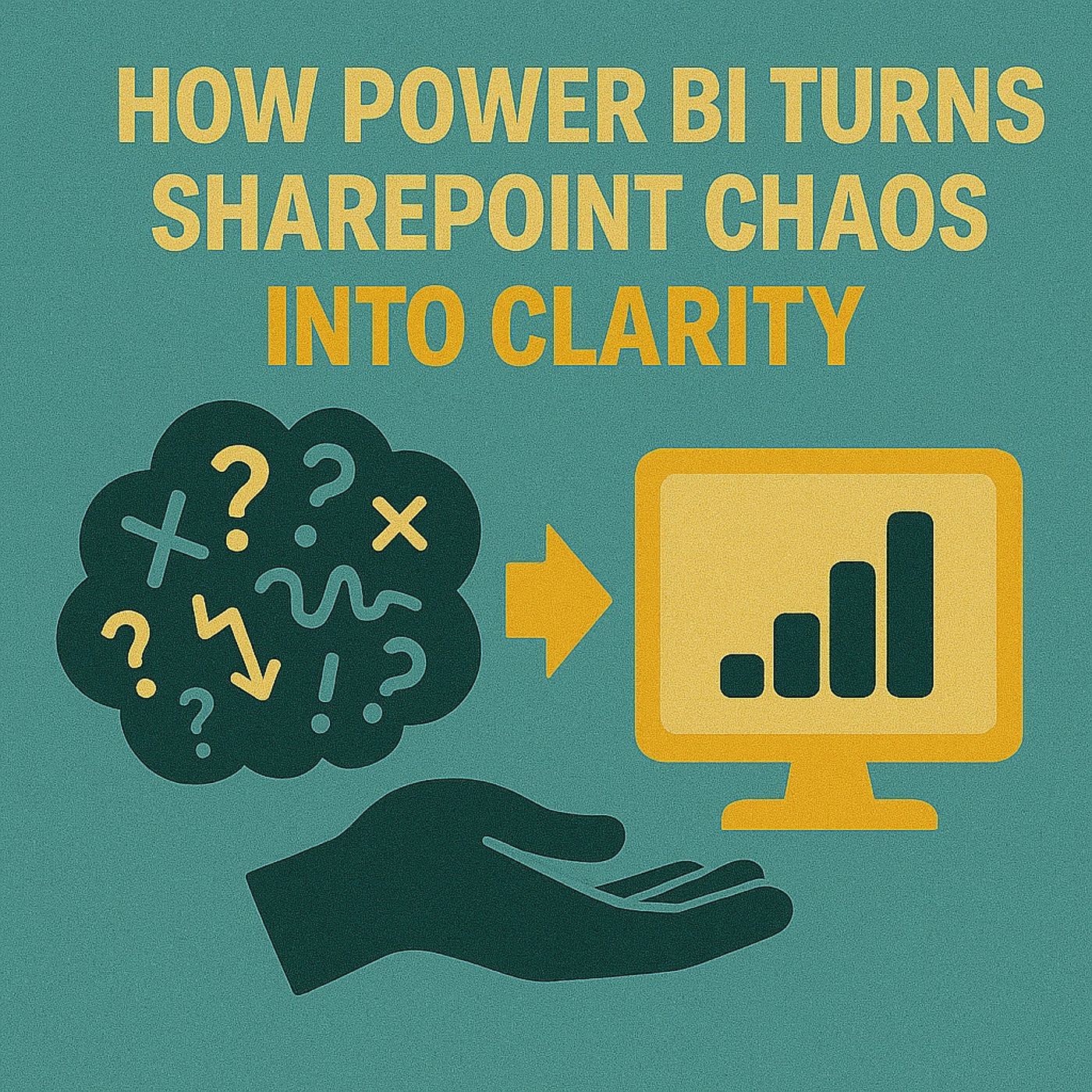
How Power BI Turns SharePoint Chaos Into Clarity: Fix Slow Lists, Shadow Apps & Reporting Pain In Microsoft 365
from M365.FM - Modern work, security, and productivity with Microsoft 365 · host Mirko Peters - Founder of m365.fm, m365.show and m365con.net
Your SharePoint lists aren’t “lightweight apps,” they’re often where critical processes secretly live—approvals, requests, inventories—all glued together by views, filters, and a lot of wishful thinking. The problem is that once those lists grow up, nobody can see the full picture: performance tanks, permissions get weird, and reporting devolves into hacked‑together exports. In this episode, we walk through how Power BI gives SharePoint lists a real backend: stable models, proper relationships, and governed reports that finally show the whole story instead of whatever happens to fit on one list view.THE LIST THAT GOT TOO BIGWe start with the “one list to rule them all” pattern: someone spins up a SharePoint list for a simple process, then over a few months it mutates into a mission‑critical system with thousands of rows, dozens of columns, and performance that makes users want to scream. You’ll see how Power BI connects directly to these lists, offloads heavy aggregations into its columnar engine, and gives you a proper model that can join multiple lists (requests, assignments, reference data) instead of overloading a single monster list. The result: admins keep SharePoint as the place where work happens, while Power BI becomes the place where you actually understand what’s going on.FROM SHADOW APPS TO GOVERNED ANALYTICSNext, we look at the hidden risk: SharePoint lists used as shadow line‑of‑business apps with zero reporting or governance. Power BI turns those pockets of chaos into governed analytics by moving calculations, KPIs, and filters into a semantic model that lives in a workspace with proper roles and deployment pipelines. We talk about how to separate “operational screens” in SharePoint from “decision views” in Power BI, how to align permissions so sensitive list data doesn’t suddenly become visible to everyone, and how this reduces the number of people exporting to Excel just to answer basic questions.WHY THIS MATTERS FOR ADMINS AND MAKERSFor admins, Power BI on top of SharePoint lists means fewer emergency tickets about slow views and more predictable performance. For makers, it means you can keep building lists and low‑code apps while still giving leadership and teams proper dashboards and models that scale. In the episode, we outline a simple pattern: lists for capture, Power BI for insight, with clear rules about when a “big list” must get a real model—so you don’t wake up one day and find that your most important business process is held together by a single overloaded view.WHAT YOU’LL LEARNWhy SharePoint lists quietly become mission‑critical systems—and why that breaks at scale.How Power BI turns large lists into fast, model‑driven analytics without killing the list itself.How to join multiple lists in a proper model instead of overloading one giant list.How to separate operational list views from governed Power BI reports with roles and deployment pipelines.When a “big list” needs to graduate into a proper data model so you don’t get performance and governance surprises.THE CORE INSIGHTThe core insight of this episode is that SharePoint lists are great for capturing work, but terrible as the only place to understand it. Once you put Power BI on top—moving aggregations, joins, and KPIs into a real model—you keep the flexibility users love while finally getting the clarity, performance, and governance your business actually needs.WHO THIS EPISODE IS FORSharePoint and Microsoft 365 admins dealing with slow, oversized lists.Power BI developers and makers who report on SharePoint list data.Business owners and process owners whose “small” lists turned into critical systems.Architects and consultants designing M365 solutions that mix SharePoint, Power Apps, and Power BI.ABOUT THE AUTHOR / HOSTMirko Peters is a Microsoft 365 and data platform consultant and host of the M365.FM podcast, helping organizations treat Microsoft 365, SharePoint, and Power BI as one integrated operating system instead of scattered sites and spreadsheets. He works with teams running on Microsoft 365 and Azure to design architectures, governance, and reporting patterns that turn ad‑hoc SharePoint solutions into stable, insight‑driven platforms.Become a supporter of this podcast: https://www.spreaker.com/podcast/m365-fm-modern-work-security-and-productivity-with-microsoft-365--6704921/support.
Embed this episode
NOW PLAYING
How Power BI Turns SharePoint Chaos Into Clarity: Fix Slow Lists, Shadow Apps & Reporting Pain In Microsoft 365
No transcript for this episode yet
Similar Episodes
No similar episodes found.
Similar Podcasts
No similar podcasts found.