
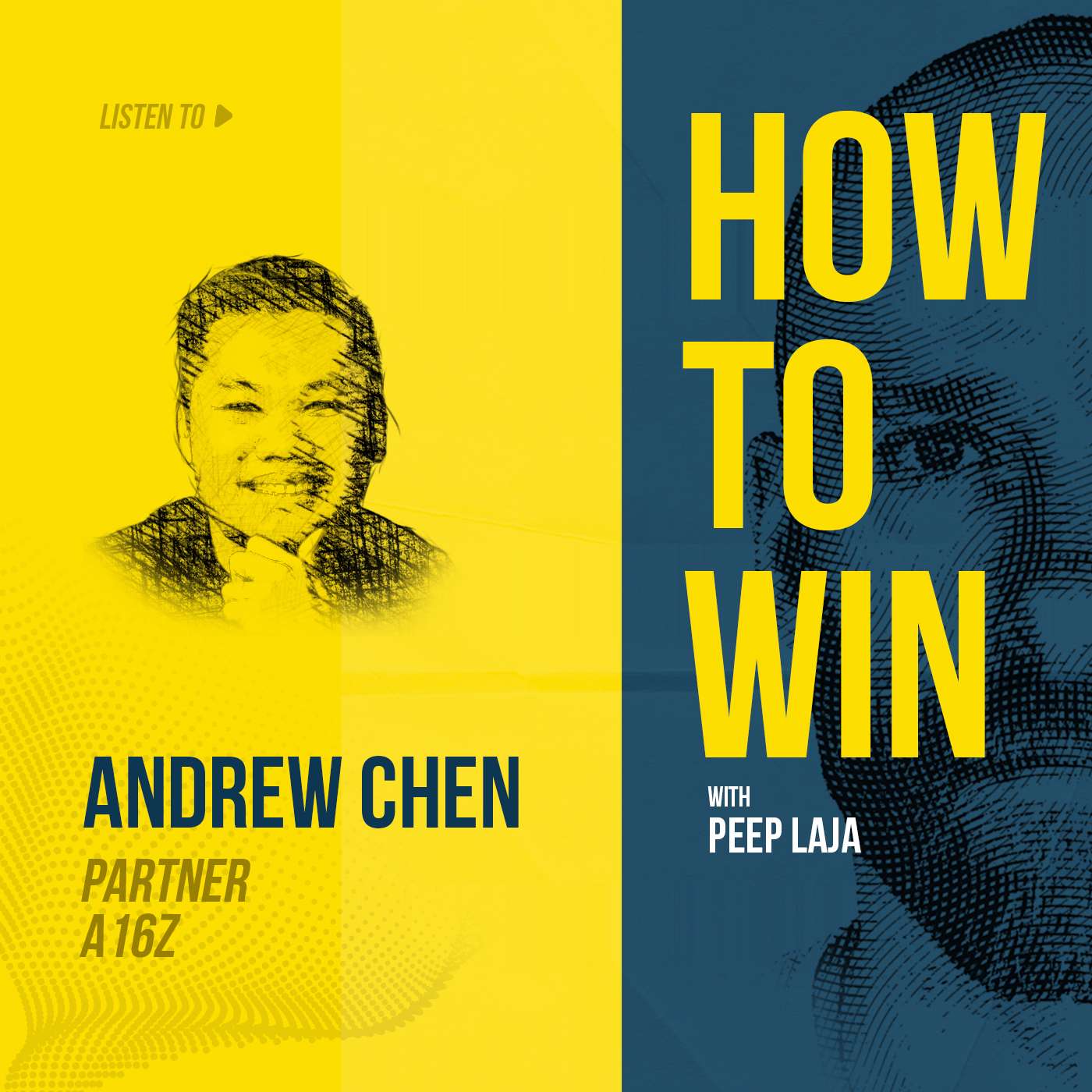
EPISODE · Dec 20, 2021 · 32 MIN
How SaaS investor Andrew Chen of a16z is helping entrepreneurs use network effects to tackle the cold start problem
from How to Win podcast with Peep Laja · host Peep Laja
Key Points:Andrew talks about moats and how he identified network effects as a valuable growth tool (01:17)Andrew gives his thoughts on how collaborative use and networking have improved enterprise software across the board in the last decade (04:26)I give my thoughts on sustainable vs transient competitive advantages, with a clip from Rita McGrath (07:07)Andrew discusses how network effects can be used to revolutionize industries in surprising ways, for example AirBnB taking on hotels (09:00)Morgan Brown, VP of growth at Shopify, gives his thoughts on utilizing network effects (10:30)We discuss the Cold Start Problem, and how businesses need to work out what a network looks like to them, and kick start it with clever marketing and growth strategies (12:00)Tinder co-founder Sean Rad explains how Tinder targeted a specific use-case to make sure its atomic network grew the way they needed it to (14:00)We talk about the importance of establishing the minimum network to make your product viable, formulas for success, and some of the ways major firms like AppSumo and Uber built their atomic networks (15:45)Andrew talks about low-cost strategies for developing your atomic network (18:30)We discuss network effects in relation to web 3.0, crypto and NFT's (20:05)I ask Andrew about why some established companies struggle to build or maintain network effects (22:10)Author of the Innovator's Dilemma Clayton Christensen explains sustaining innovations (23:12)Andrew gives his thoughts on the failure of Google+ and the lessons we can learn (24:30)I give my thoughts on working out what an atomic network looks like for Wynter, and how different companies have taken advantage of (or failed in) network effects (26:30)Andrew talks about how he uses data to inform his potential investments, breaking down networks to see if a company is growing organically, has global appeal, or is more of a localized niche product (27:30)Wrap up (30:40)Mentioned:NotionAsanaSlackTinderEbayCraigslistAppsumoConvoyDropboxAndreessen Horowitz (a16z)My Links:TwitterLinkedInWebsiteWynterSpeeroCXL
What this episode covers
This week in How to Win: Andrew Chen is a partner at VC firm Andreessen Horowitz (a16z), a board member of AppSumo and Clubhouse, former head of Rider Growth teams at Uber, and author of The Cold Start Problem: Using Network Effects to Scale Your Product. We discuss the ways in which companies are using network effects to rapidly accelerate their growth, and talk about strategies for kick starting network-led growth in SaaS.
NOW PLAYING
How SaaS investor Andrew Chen of a16z is helping entrepreneurs use network effects to tackle the cold start problem
No transcript for this episode yet
Similar Episodes
Dec 5, 2025 ·50m
Oct 9, 2025 ·33m
Oct 3, 2025 ·40m
Sep 11, 2025 ·31m
Aug 27, 2025 ·39m
Aug 18, 2025 ·54m