
EPISODE · Jul 20, 2026 · 31 MIN
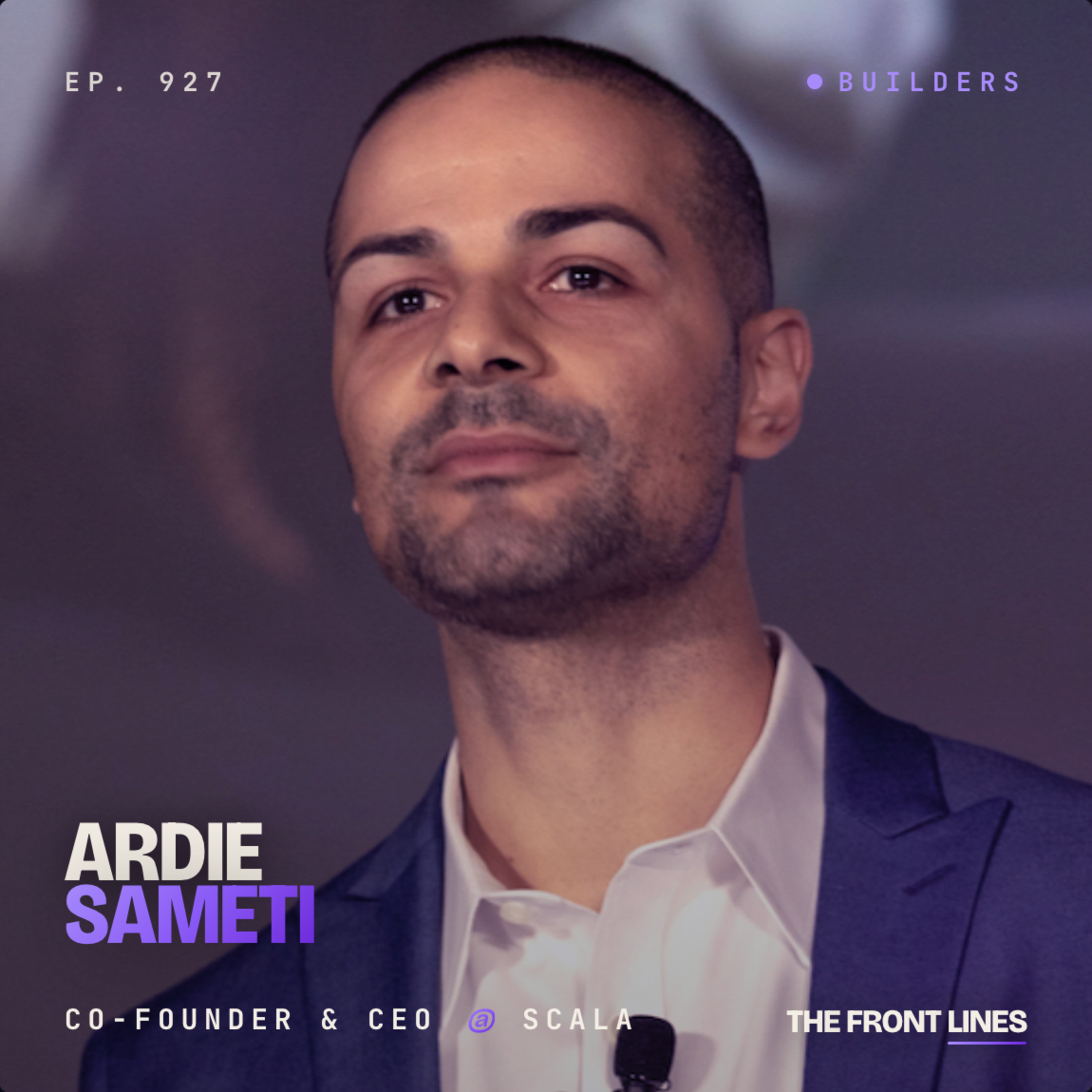
How Scala tracks every closed deal back to its source before scaling spend | Ardie Sameti
from BUILDERS · host Front Lines Media
Scala is reimagining how operators run customer experience and contact center operations, shifting the model from software as a service to what its founder calls intelligence as a service. In a recent episode of BUILDERS, we sat down with Ardie Sameti, Co-Founder and CEO of Scala, to learn how a decade scaling healthcare technology company Accolade shaped his decision to start over and build an AI-native operations platform from scratch.Topics Discussed:Why operational fragmentation at scale, not a single bad decision, created the gap Scala was built to fillWhy Scala held off adding headcount even while tracking ahead of its investor-approved hiring planThe shift from software as a service to intelligence as a service, and why proprietary data is the real moatHow Scala attributes closed deals back to specific channels before scaling spend on any of themThe guardrails Scala applies to AI avatars and outbound to avoid the brand cost of generic AI spamThe long-term vision: an autonomous operations agentic platform where humans supervise fleets of AI agentsGTM Lessons For B2B Founders:Resist headcount growth even when you're ahead of plan. Ardie's go-to-market and marketing leads were tracking ahead of their investor-approved hiring milestones, but chose not to add headcount anyway, because every new layer between founders and prospect calls dilutes the firsthand signal driving product and positioning decisions. Founders should treat being "ahead of schedule" as a reason to slow hiring, not speed it upBuild a per-person output multiplier into headcount planning, not just budget. Scala's internal framework reframes each hire's expected output as a multiple of what the same role would have produced a few years ago, the same way Ardie now expects to operate at several times his own historical output. Founders should use this to decide which roles get automated versus hired for.Attribute every closed deal to its actual source before scaling spend on any channel. Scala tracks which deals originated from warm network intros versus AI avatar-driven inbound versus paid social, and only increases investment in a channel after it has produced enough closed deals to justify the cost. Founders should build this kind of deal-level channel attribution before assuming a new GTM motion is working.Apply explicit guardrails to AI outreach the same way you would onboard a junior SDR. Scala intentionally avoids blasting AI avatars at scale, instead targeting them using intent signals like active buying patterns and in-market status, with guardrails on what the AI is and isn't allowed to say. Founders should define those boundaries before scaling AI-driven outreach volume.Architect around proprietary data and workflow context, not the model layer. Ardie's view is that frontier models are now a commodity anyone can access, so the durable advantage is the specific data, workflows, and context a company accumulates inside its customers' operations. Founders should evaluate moats by asking what data a competitor cannot replicate, not which model they've shipped.// Sponsors: Front Lines — We help B2B tech companies launch, manage, and grow podcasts that drive demand, awareness, and thought leadership. www.FrontLines.ioThe Global Talent Co. — We help tech startups find, vet, hire, pay, and retain amazing marketing talent that costs 50-70% less than the US & Europe. www.GlobalTalent.co//Don't Miss: New Podcast Series — How I Hire Senior GTM leaders share the tactical hiring frameworks they use to build winning revenue teams. Hosted by Andy Mowat, who scaled 4 unicorns from $10M to $100M+ ARR and launched Whispered to help executives find their next role. Subscribe here: https://open.spotify.com/show/53yCHlPfLSMFimtv0riPyM
Embed this episode
Ready to play
How Scala tracks every closed deal back to its source before scaling spend | Ardie Sameti
No transcript for this episode yet
Similar Episodes
No similar episodes found.