
EPISODE · Jun 18, 2026 · 35 MIN
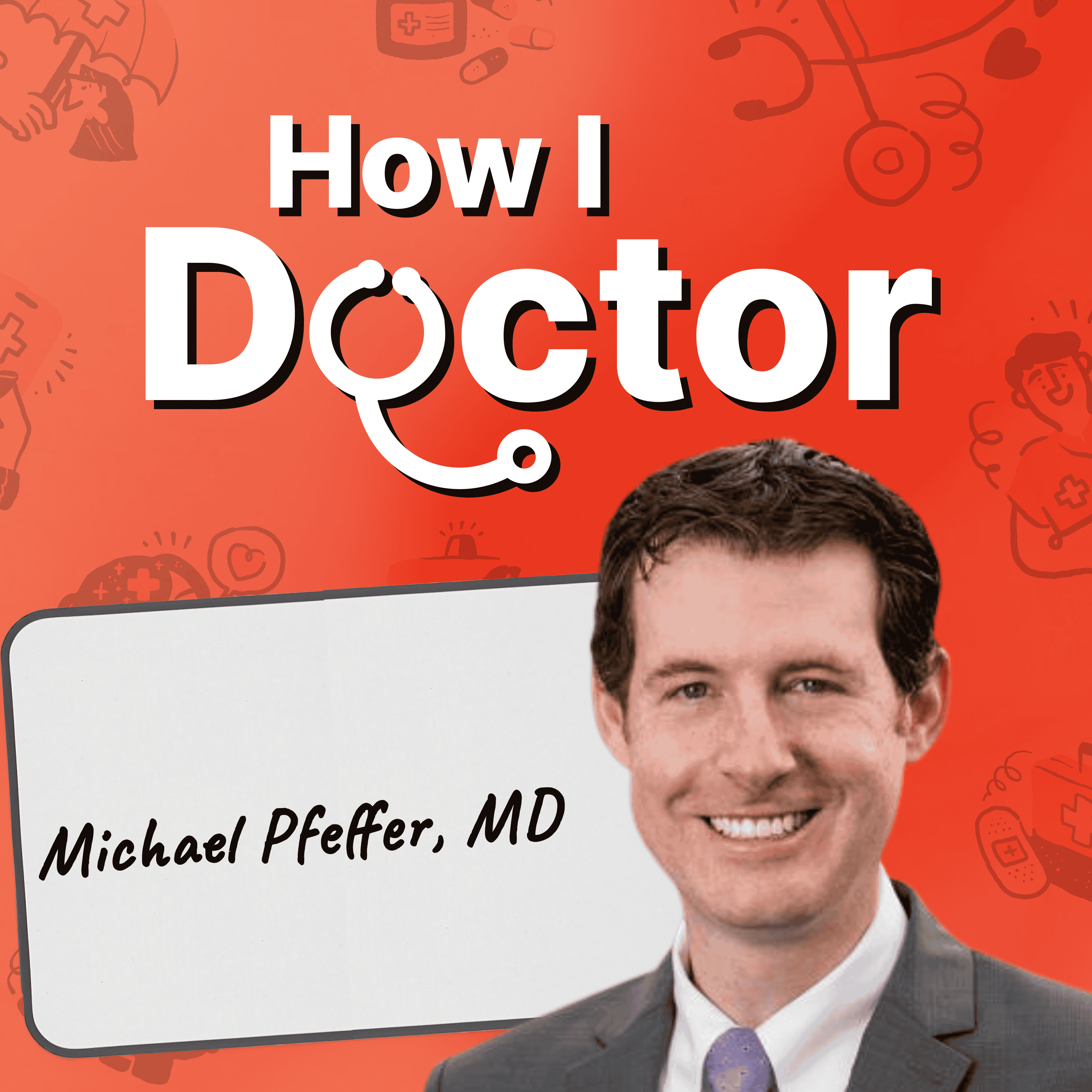
How Stanford Health Care Is Rethinking What AI Should Actually Do for Clinicians with CIO Dr. Michael Pfeffer
from How I Doctor with Dr. Graham Walker
Dr. Michael Pfeffer is Stanford Healthcare's Chief Information Officer and a practicing hospitalist, which means he builds AI tools in the morning and uses them on patients that afternoon. That combination is rarer than it should be, and it shapes everything about how he thinks.Stanford is one of the most AI-forward health systems in the country. It runs 1,500 software applications, has put generative AI into the hands of its clinicians through ambient documentation and a plain-language chart querying tool called ChatEHR, and has published the outcomes of all of it, including the parts that did not go as expected. Mike's argument is that none of that is the point. Healthcare spends three times more on AI than any other industry, and most of that investment is going toward automating processes that were broken to begin with. Digitizing the way medicine has always been done is not transformation. The real opportunity is redesigning what the encounter itself looks like, offloading guideline-driven busywork to agents that can own it, and building toward a world where the right test is ordered the first time and the right drug is prescribed before the patient leaves the room.In this episode of How I Doctor, Graham sits down with Mike to get into what Stanford has actually built, what the data shows, and what distinguishes a health system that deploys AI responsibly from one that just deploys it. They also get into clinical AI governance, how physicians interact with decision support versus how they should, whether the next generation of trainees is losing its curiosity or still has it, and what Mike's ideal AI-enabled hospital day actually looks like in five years.What You'll Learn in This Episode:What the difference between digitizing and transforming healthcare actually means in practiceWhy healthcare spending more on AI than any other industry may be a sign of lag, not leadershipHow Stanford uses the FURM framework to evaluate every AI applicationWhy the biggest mistake medicine could make with AI is buying a lot of it without understanding the value, and what responsible deployment actually requiresWhy Mike is less worried about AI deskilling the next generation of physicians than most and what he saw on rounds last week that gave him confidence🩺 Offcall is more than a platform — it’s a community. Join today!📝 For a full transcript of this episode click HERE🎧 Subscribe to receive new How I Doctor episodes directly in your feed here: https://episodes.fm/1767429315👨⚕️Follow Dr. Graham Walker onLinkedIn https://www.linkedin.com/in/graham-walker-md/IG https://www.instagram.com/ubergraham/Bluesky https://bsky.app/profile/drgrahamwalker.com✉️ Join our newsletter On/Offcall here https://offcall.beehiiv.com/subscribe🟧 Follow Offcall onLinkedIn https://www.linkedin.com/company/joinoffcall/IG https://www.instagram.com/offcalldotcom/TikTok https://www.tiktok.com/@offcalldotcom
Embed this episode
NOW PLAYING
How Stanford Health Care Is Rethinking What AI Should Actually Do for Clinicians with CIO Dr. Michael Pfeffer
No transcript for this episode yet
Similar Episodes
No similar episodes found.
Similar Podcasts
No similar podcasts found.