
EPISODE · Mar 25, 2026 · 41 MIN
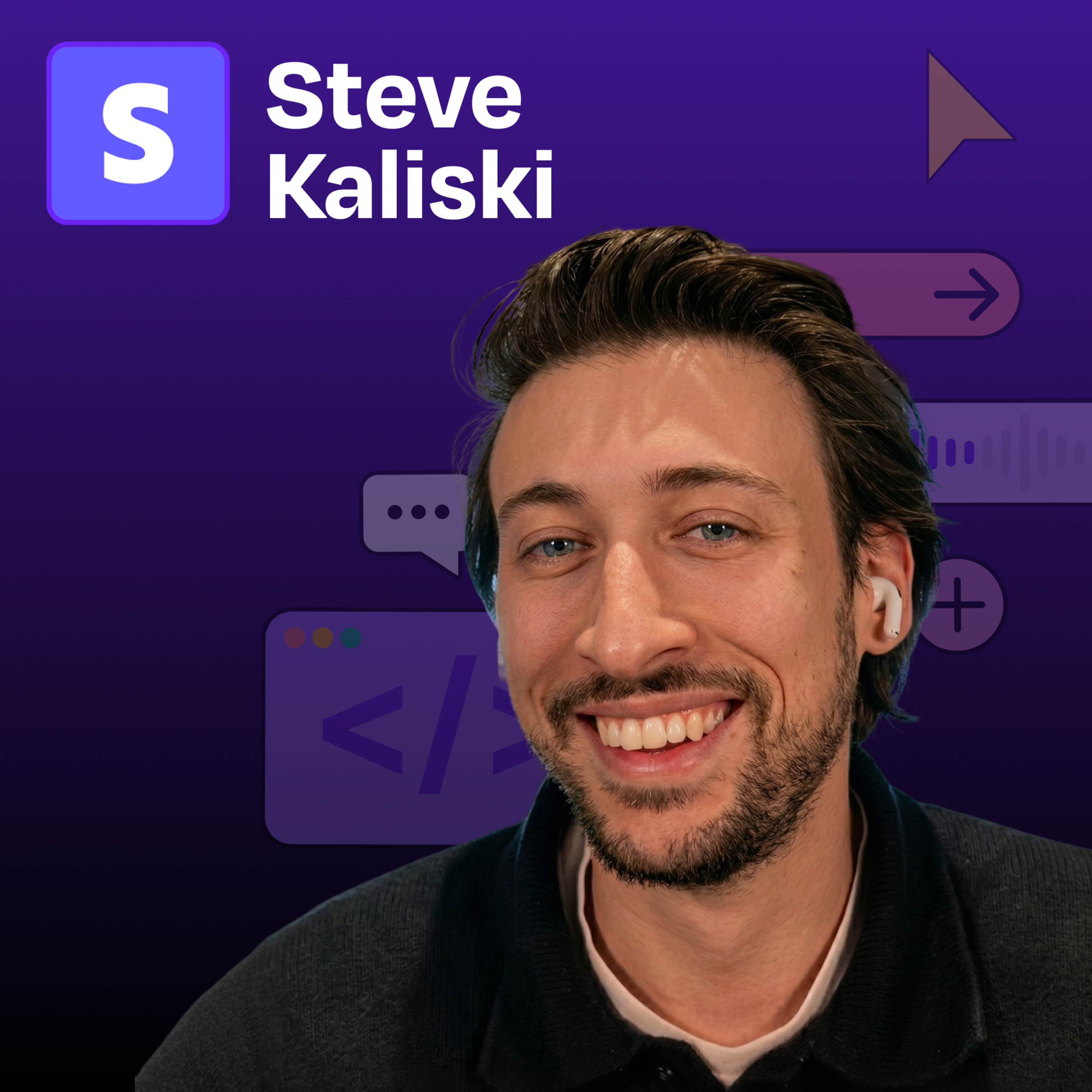
How Stripe built “minions”—AI coding agents that ship 1,300 PRs weekly from Slack reactions | Steve Kaliski (Stripe engineer)
from How I AI · host Claire Vo
Steve Kaliski is a software engineer at Stripe who has spent the past six and a half years building developer tools and payment infrastructure. He’s part of the team that created “minions”—Stripe’s internal AI coding agents, which now ship approximately 1,300 pull requests per week with minimal human intervention beyond code review. In this episode, Steve demonstrates how Stripe engineers activate development work from Slack and leverage cloud-based development environments for parallel agent workflows, and demos machine-to-machine payments where AI agents transact autonomously with third-party services.What you’ll learn:How Stripe’s “minions” write 1,300 pull requests per week with minimal human interventionWhy a good developer experience for humans creates better outcomes for AI agentsThe critical role of cloud development environments in unlocking AI-powered engineering velocityThe machine payment protocol that lets AI agents spend money to accomplish tasksThe code review strategy for handling thousands of agent-written PRsWhy non-engineers at Stripe are starting to use minions to ship codeThe future of software businesses built primarily for agent consumers—Brought to you by:Optimizely—Your AI agent orchestration platform for marketing and digital teamsRippling—Stop wasting time on admin tasks, build your startup faster—In this episode, we cover:(00:00) Introduction to Steve(02:39) Stripe’s minions and their effect on Stripe as a whole(04:42) Why activation energy matters more than execution(05:44) What is a minion? The technical architecture(06:52) Demo: Activating a minion from Slack with an emoji(09:04) Why good developer experience benefits both humans and agents(11:22) Walking through the agent loop and system prompts(13:42) Why Stripe chose Goose as their agent harness(16:00) The role of Stripe’s developer productivity team(17:15) Why cloud environments unlock multi-threaded AI engineering(21:14) One-shot prompting: from Slack to shipped PR(22:04) How Stripe handles code review for 1,300 AI-written PRs weekly(23:44) Non-engineers using minions across the company(24:53) Demo: Planning a birthday party with Claude and machine payments(32:15) Quick recap(35:08) The future of ephemeral, API-first businesses for agents(36:36) Lightning round and final thoughts—Detailed workflow walkthroughs from this episode:• How Stripe's AI 'Minions' Ship 1,300 PRs Weekly from a Slack Emoji: https://www.chatprd.ai/how-i-ai/stripes-ai-minions-ship-1300-prs-weekly-from-a-slack-emoji• How to Build an Autonomous AI Agent That Pays for Services to Complete Tasks: https://www.chatprd.ai/how-i-ai/workflows/how-to-build-an-autonomous-ai-agent-that-pays-for-services-to-complete-tasks• How to Automate Code Generation from a Slack Message into a Pull Request: https://www.chatprd.ai/how-i-ai/workflows/how-to-automate-code-generation-from-a-slack-message-into-a-pull-request—Tools referenced:• Goose (AI agent harness): https://github.com/block/goose• Claude Code: https://claude.ai/code• Cursor: https://cursor.sh/• VS Code: https://code.visualstudio.com/• Slack: https://slack.com/• Browserbase: https://browserbase.com/• Parallel AI: https://www.parallel.ai/• PostalForm: https://postalform.com/• Stripe Climate: https://stripe.com/climate—Other references:• Stripe machine payments: https://docs.stripe.com/payments/machine• Blue-Green Deployment: https://martinfowler.com/bliki/BlueGreenDeployment.html• Git worktrees: https://git-scm.com/docs/git-worktree—Where to find Steve Kaliski:Twitter: https://twitter.com/stevekaliskiLinkedIn: https://www.linkedin.com/in/steve-kaliski-079a7710/—Where to find Claire Vo:ChatPRD: https://www.chatprd.ai/Website: https://clairevo.com/LinkedIn: https://www.linkedin.com/in/clairevo/X: https://x.com/clairevo—Production and marketing by https://penname.co/. For inquiries about sponsoring the podcast, email [email protected].
What this episode covers
Steve Kaliski is a software engineer at Stripe who has spent the past six and a half years building developer tools and payment infrastructure. He’s part of the team that created “minions”—Stripe’s internal AI coding agents, which now ship approximately 1,300 pull requests per week with minimal human intervention beyond code review. In this episode, Steve demonstrates how Stripe engineers activate development work from Slack and leverage cloud-based development environments for parallel agent workflows, and demos machine-to-machine payments where AI agents transact autonomously with third-party services.What you’ll learn:How Stripe’s “minions” write 1,300 pull requests per week with minimal human interventionWhy a good developer experience for humans creates better outcomes for AI agentsThe critical role of cloud development environments in unlocking AI-powered engineering velocityThe machine payment protocol that lets AI agents spend money to accomplish tasksThe code review strategy for handling thousands of agent-written PRsWhy non-engineers at Stripe are starting to use minions to ship codeThe future of software businesses built primarily for agent consumers—Brought to you by:Optimizely—Your AI agent orchestration platform for marketing and digital teamsRippling—Stop wasting time on admin tasks, build your startup faster—In this episode, we cover:(00:00) Introduction to Steve(02:39) Stripe’s minions and their effect on Stripe as a whole(04:42) Why activation energy matters more than execution(05:44) What is a minion? The technical architecture(06:52) Demo: Activating a minion from Slack with an emoji(09:04) Why good developer experience benefits both humans and agents(11:22) Walking through the agent loop and system prompts(13:42) Why Stripe chose Goose as their agent harness(16:00) The role of Stripe’s developer productivity team(17:15) Why cloud environments unlock multi-threaded AI engineering(21:14) One-shot prompting: from Slack to shipped PR(22:04) How Stripe handles code review for 1,300 AI-written PRs weekly(23:44) Non-engineers using minions across the company(24:53) Demo: Planning a birthday party with Claude and machine payments(32:15) Quick recap(35:08) The future of ephemeral, API-first businesses for agents(36:36) Lightning round and final thoughts—Detailed workflow walkthroughs from this episode:• How Stripe's AI 'Minions' Ship 1,300 PRs Weekly from a Slack Emoji: https://www.chatprd.ai/how-i-ai/stripes-ai-minions-ship-1300-prs-weekly-from-a-slack-emoji• How to Build an Autonomous AI Agent That Pays for Services to Complete Tasks: https://www.chatprd.ai/how-i-ai/workflows/how-to-build-an-autonomous-ai-agent-that-pays-for-services-to-complete-tasks• How to Automate Code Generation from a Slack Message into a Pull Request: https://www.chatprd.ai/how-i-ai/workflows/how-to-automate-code-generation-from-a-slack-message-into-a-pull-request—Tools referenced:• Goose (AI agent harness): https://github.com/block/goose• Claude Code: https://claude.ai/code• Cursor: https://cursor.sh/• VS Code: https://code.visualstudio.com/• Slack: https://slack.com/• Browserbase: https://browserbase.com/• Parallel AI: https://www.parallel.ai/• PostalForm: https://postalform.com/• Stripe Climate: https://stripe.com/climate—Other references:• Stripe machine payments: https://docs.stripe.com/payments/machine• Blue-Green Deployment: https://martinfowler.com/bliki/BlueGreenDeployment.html• Git worktrees: https://git-scm.com/docs/git-worktree—Where to find Steve Kaliski:Twitter: https://twitter.com/stevekaliskiLinkedIn: https://www.linkedin.com/in/steve-kaliski-079a7710/—Where to find Claire Vo:ChatPRD: https://www.chatprd.ai/Website: https://clairevo.com/LinkedIn: https://www.linkedin.com/in/clairevo/X: https://x.com/clairevo—Production and marketing by https://penname.co/. For inquiries about sponsoring the podcast, email [email protected].
NOW PLAYING
How Stripe built “minions”—AI coding agents that ship 1,300 PRs weekly from Slack reactions | Steve Kaliski (Stripe engineer)
No transcript for this episode yet
Similar Episodes
Mar 31, 2026 ·54m
Mar 27, 2026 ·14m
Mar 24, 2026 ·42m
Mar 20, 2026 ·42m
Mar 17, 2026 ·41m
Mar 13, 2026 ·44m