
EPISODE · Jun 10, 2026 · 17 MIN
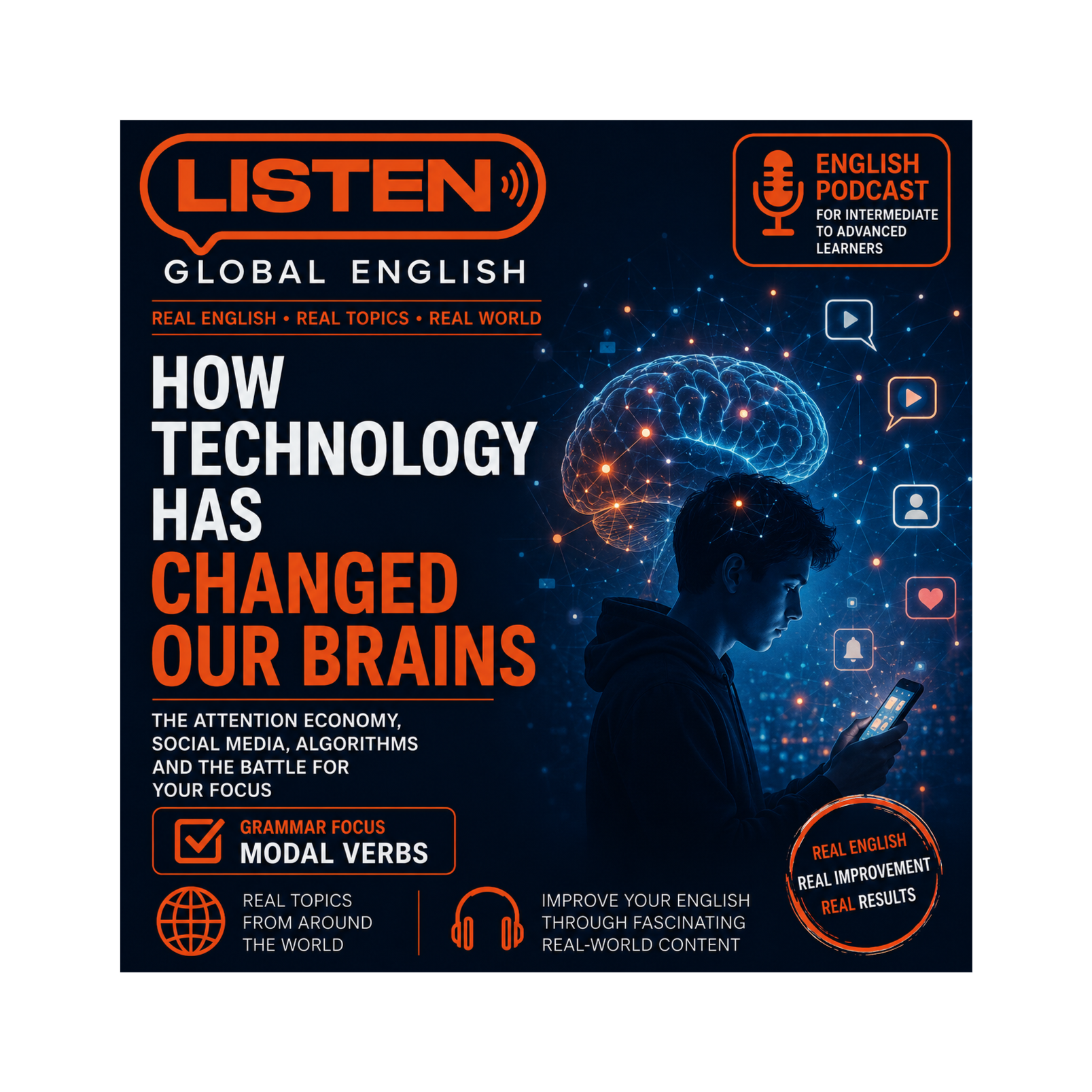
How Technology Has Changed Our Brains - MODAL VERBS
The Attention Economy: How Technology Has Changed Our BrainsHave you ever picked up your phone for a quick check and found yourself scrolling thirty minutes later? Have you ever struggled to concentrate on an important task because notifications, messages, or social media kept interrupting your attention?In this episode of LISTEN: Global English, we explore the fascinating world of the Attention Economy and examine how technology companies compete for one of the most valuable resources in the modern world: your attention.You'll discover how social media platforms, algorithms, notifications, and artificial intelligence have transformed the way we consume information and interact with the world around us. We'll also explore how these technologies may be influencing our focus, habits, decision-making, and even the way our brains process information.At the same time, you'll improve your English by focusing on one of the most important grammar topics in the language: Modal Verbs.Throughout the episode, you'll hear real-world examples of modal verbs in context while learning useful vocabulary, phrasal verbs, idioms, and discussion points related to technology, psychology, and modern society.Grammar FocusModal VerbsLearn how native speakers use modal verbs to express:✅ Ability✅ Possibility✅ Probability✅ Advice✅ Obligation✅ NecessityExamples from the episode:Technology can connect people.Social media may influence attention.Users might become distracted.Companies must compete for attention.We should manage our screen time carefully.Distraction could reduce productivity.In This Episode✅ What the Attention Economy is and why it matters✅ How technology companies compete for human attention✅ The role of algorithms and artificial intelligence✅ Why social media platforms can feel addictive✅ How notifications and infinite scrolling influence behaviour✅ The effects of technology on concentration and focus✅ Why attention has become one of the world's most valuable resources✅ Practical ways to protect your attention and improve focus✅ Real-world examples of modal verbs in actionPhrasal Verbs FeaturedTune OutTo stop paying attention.Example: "Students may tune out if a lesson becomes repetitive."Scroll ThroughTo move through digital content on a screen.Example: "Millions of people scroll through social media every day.LISTEN: Global English helps intermediate and advanced English learners improve their English through fascinating real-world topics including technology, psychology, business, economics, global affairs, history, culture, and current events.Our sister podcasts LISTEN: Business English https://rss.com/podcasts/listen-business-english and LISTEN: Online English https://rss.com/podcasts/listen-online-englishHosted by Gary, a British English teacher who has lived in Colombia since 2010 and has spent the last 16 years helping professionals and English learners across Latin America and around the world improve their English through authentic content and meaningful conversations.Keep listening. Keep learning. Keep improving your English.
NOW PLAYING
How Technology Has Changed Our Brains - MODAL VERBS
No transcript for this episode yet
Similar Episodes
Jun 15, 2022 ·8m
May 25, 2022 ·20m
May 19, 2022 ·16m
May 15, 2022 ·34m
May 12, 2022 ·1m