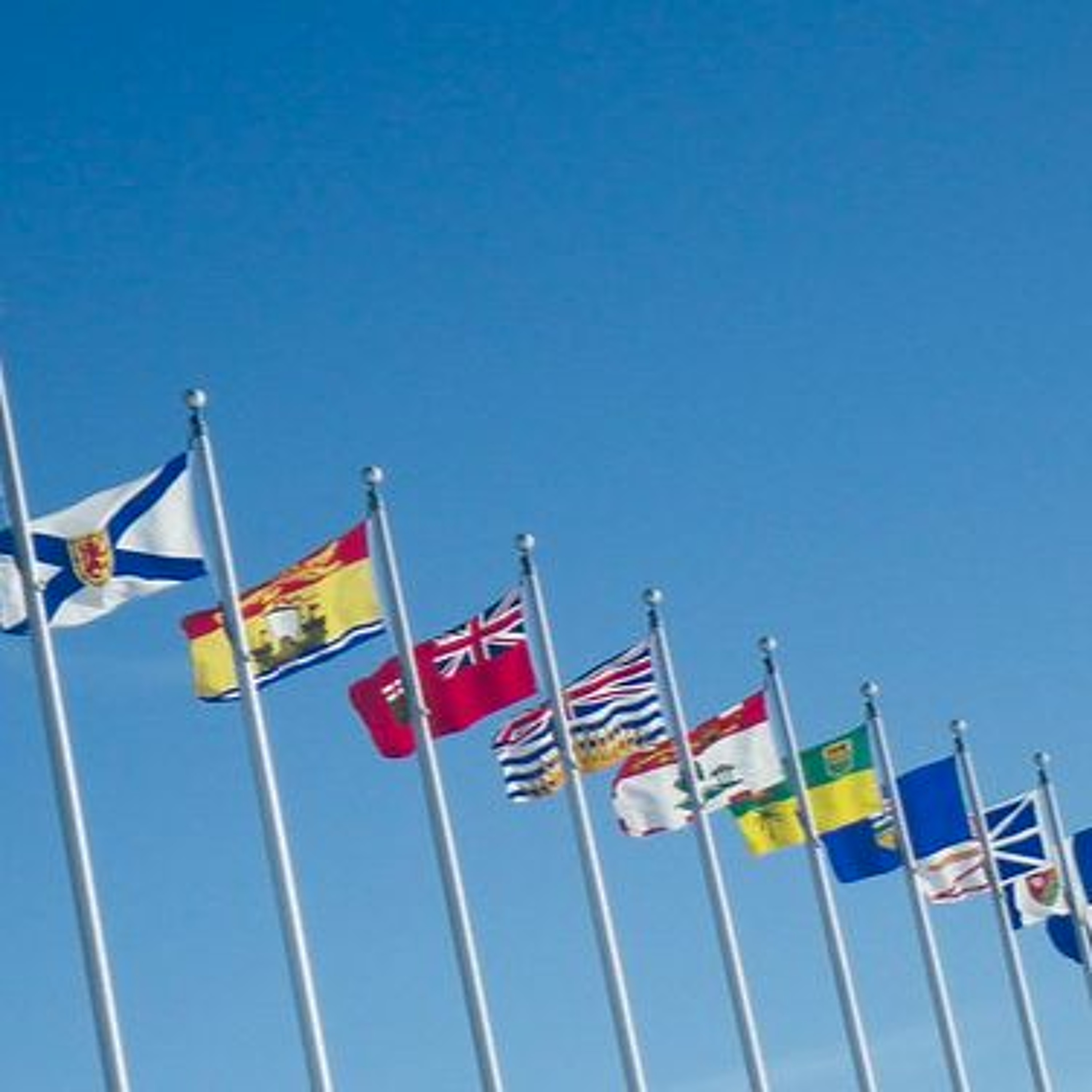
How the Canadian Constitution structures economic relations episode artwork

EPISODE · May 12, 2023 · 33 MIN

How the Canadian Constitution structures economic relations

from Witness to Yesterday (The Champlain Society Podcast on Canadian History) · host The Champlain Society

In this podcast episode, Greg Marchildon talks to Malcolm Lavoie about his book Trade and Commerce: Canada's Economic Constitution published by McGill-Queens University Press in 2023. In recent decades, the economic framework of Canada’s Constitution has been a subject largely neglected by judges, scholars, and commentators. With Trade and Commerce, Malcolm Lavoie fills this gap by bringing to light a lost understanding of how the Constitution structures economic relations. The Constitution includes foundational commitments to property rights, local government autonomy, and the principle of subsidiarity. At the same time, it creates a platform for integrated national markets with secure channels for interprovincial trade. This economic vision remains a vital part of Canada’s constitutional order and is relevant to a purposive interpretation of the Constitution. But contemporary legal discourse has begun to lose touch with this vision, with regrettable consequences in several policy areas. Lavoie explores the implications of the economic Constitution in the context of contemporary issues - including disputes over interprovincial trade and jurisdictional tensions between federal, provincial, and Indigenous governments with respect to the environment and the economy - and with Trade and Commerce, Lavoie restores economic ideas to the forefront of constitutional thinking in Canada. Malcolm Lavoie is associate professor in the Faculty of Law and a member of the Advisory Board of the Centre of Constitutional Studies at the University of Alberta. He is also a practicing member of the Alberta Bar, where he consults on civil, constitutional, and regulatory issues. He received his doctorate in law from Harvard University. This podcast was produced by Jessica Schmidt. Image Credit: Martin Lopatka, Flickr, licensed under CC BY-SA 2.0 If you like our work, please consider supporting it: bit.ly/support_WTY. Your support contributes to the Champlain Society’s mission of opening new windows to directly explore and experience Canada’s past.

In this podcast episode, Greg Marchildon talks to Malcolm Lavoie about his book Trade and Commerce: Canada's Economic Constitution published by McGill-Queens University Press in 2023. In recent decades, the economic framework of Canada’s Constitution has been a subject largely neglected by judges, scholars, and commentators. With Trade and Commerce, Malcolm Lavoie fills this gap by bringing to light a lost understanding of how the Constitution structures economic relations. The Constitution includes foundational commitments to property rights, local government autonomy, and the principle of subsidiarity. At the same time, it creates a platform for integrated national markets with secure channels for interprovincial trade. This economic vision remains a vital part of Canada’s constitutional order and is relevant to a purposive interpretation of the Constitution. But contemporary legal discourse has begun to lose touch with this vision, with regrettable consequences in several policy areas. Lavoie explores the implications of the economic Constitution in the context of contemporary issues - including disputes over interprovincial trade and jurisdictional tensions between federal, provincial, and Indigenous governments with respect to the environment and the economy - and with Trade and Commerce, Lavoie restores economic ideas to the forefront of constitutional thinking in Canada. Malcolm Lavoie is associate professor in the Faculty of Law and a member of the Advisory Board of the Centre of Constitutional Studies at the University of Alberta. He is also a practicing member of the Alberta Bar, where he consults on civil, constitutional, and regulatory issues. He received his doctorate in law from Harvard University. This podcast was produced by Jessica Schmidt. Image Credit: Martin Lopatka, Flickr, licensed under CC BY-SA 2.0 If you like our work, please consider supporting it: bit.ly/support_WTY. Your support contributes to the Champlain Society’s mission of opening new windows to directly explore and experience Canada’s past.

NOW PLAYING

How the Canadian Constitution structures economic relations

0:00 33:54

No transcript for this episode yet

We transcribe on demand. Request one and we'll notify you when it's ready — usually under 10 minutes.

Frequently Asked Questions

How long is this episode of Witness to Yesterday (The Champlain Society Podcast on Canadian History)?

This episode is 33 minutes long.

When was this Witness to Yesterday (The Champlain Society Podcast on Canadian History) episode published?

This episode was published on May 12, 2023.

What is this episode about?

In this podcast episode, Greg Marchildon talks to Malcolm Lavoie about his book Trade and Commerce: Canada's Economic Constitution published by McGill-Queens University Press in 2023. In recent decades, the economic framework of Canada’s...

Can I download this Witness to Yesterday (The Champlain Society Podcast on Canadian History) episode?

Yes, you can download this episode by clicking the download button on the episode player, or subscribe to the podcast in your preferred podcast app for automatic downloads.
URL copied to clipboard!