
EPISODE · Apr 23, 2025 · 6 MIN
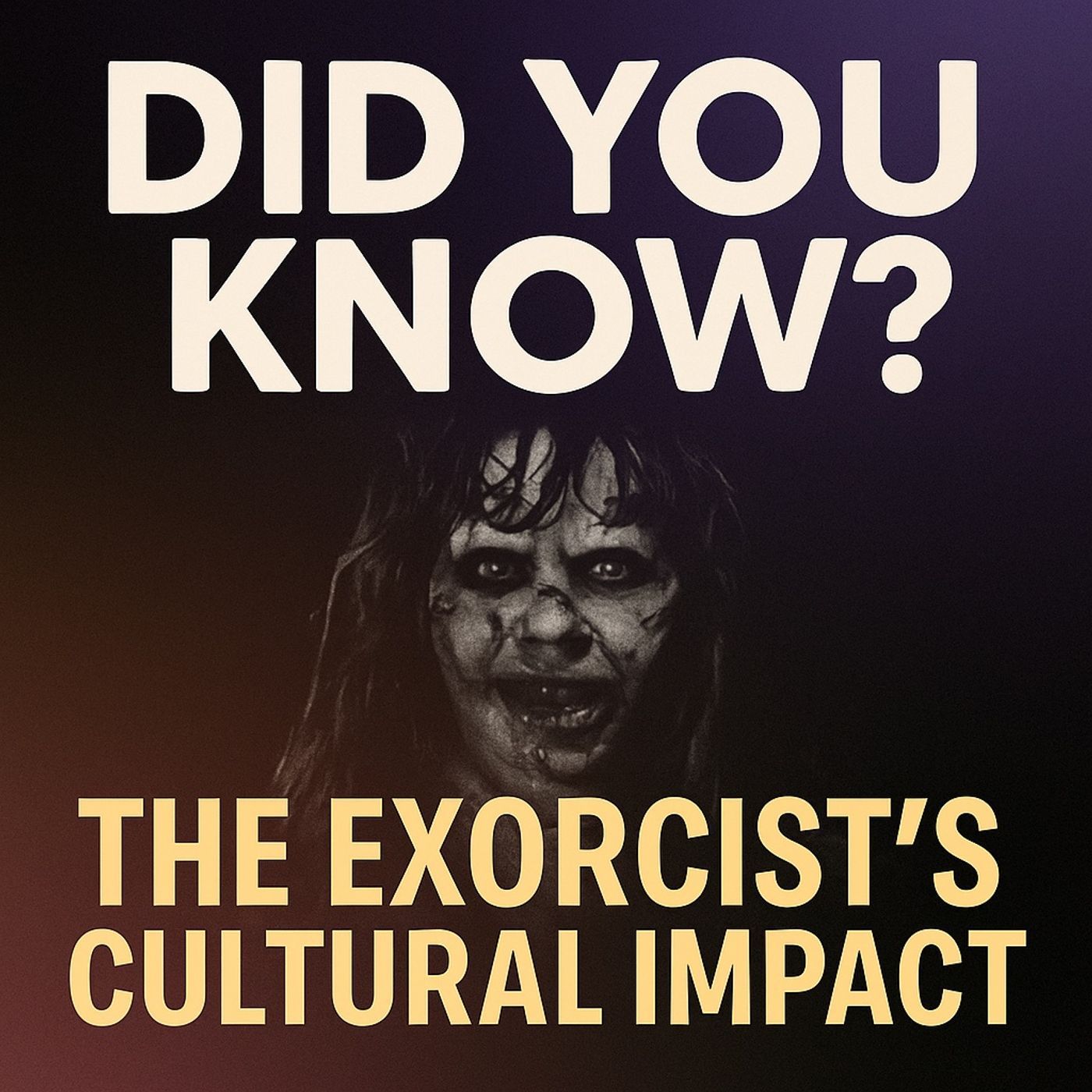
How The Exorcist Possessed American Culture?
from Did You Know?
Did You Know? How The Exorcist Possessed American Culture?The horror film released in 1973 not only terrified moviegoers but also deeply influenced religion, cinema, and culture in America and beyond? That film was The Exorcist, and its legacy reaches far beyond the screen.The Exorcist was adapted from William Peter Blatty’s 1971 novel of the same name, which itself was inspired by the alleged real-life exorcism of a young boy in Maryland in 1949. Blatty, a devout Catholic, was fascinated by the implications of demonic possession in a modern, skeptical world. He teamed up with director William Friedkin, known for his gritty realism, to bring the story to life. What resulted was a film unlike anything audiences had seen before.The film follows Regan MacNeil, a 12-year-old girl who becomes possessed by a mysterious and increasingly violent entity. As her behavior spirals out of control—levitating, speaking in tongues, and contorting her body—her desperate mother seeks help from two priests: Father Merrin, a seasoned exorcist, and Father Karras, a Jesuit struggling with his faith. Together, they confront not just a demonic force, but their own personal demons.From the moment it premiered on December 26, 1973, The Exorcist sent shockwaves through popular culture. People fainted during screenings. Some vomited. Others fled theaters mid-scene. Reports emerged of theatergoers suffering panic attacks, heart palpitations, even miscarriages. In Washington D.C., ambulances were called to the theater. In Los Angeles, a man sued the filmmakers, claiming the film made him pass out and injure himself.The film earned over $440 million worldwide—a staggering figure for the time—and became the highest-grossing R-rated movie ever until it was overtaken decades later. But it wasn’t just the box office success that made it legendary. The Exorcist became a cultural litmus test for how Americans viewed fear, evil, and the role of faith in a modern age.In the early 1970s, America was in the midst of cultural turmoil: the Vietnam War, Watergate, the sexual revolution, and growing distrust in institutions. The Exorcist landed like a bombshell, confronting audiences with the terrifying idea that evil wasn’t just metaphorical—it was real, personal, and could inhabit your child. For many, this deeply resonated.Religious reactions were mixed. Some clergy praised the film for showing the power of faith and the Catholic Church’s role in combating evil. Others condemned it as blasphemous, grotesque, and dangerous. The Vatican didn’t officially endorse the film, but many Catholic leaders noted that it sparked renewed interest in spiritual warfare and exorcism rites. Following the film’s release, reports of possession and calls for exorcisms spiked around the world. The Catholic Church, once hesitant to discuss exorcism publicly, began reexamining its guidelines and training new exorcists in greater numbers.The influence of The Exorcist on filmmaking was profound. It legitimized horror as a serious cinematic genre. Before its release, horror was largely dismissed as pulp entertainment. Afterward, it became a space for complex storytelling, moral questions, and mainstream prestige. The film’s groundbreaking use of practical effects—like the 360-degree head spin, levitations, and the pea soup vomit scene—set a new standard for realism in supernatural films.It also sparked an entire wave of exorcism- and possession-themed films, from The Omen to The Amityville Horror, Poltergeist, and beyond. It influenced directors like John Carpenter, Wes Craven, and even modern filmmakers like Ari Aster and James Wan. You can see its DNA in nearly every horror movie involving demons or spiritual warfare.But the film also left its mark in subtler ways. The idea of demonic possession entered pop culture in a way it never had before. People referenced “going full Exorcist” when discussing extreme behavior. Halloween costumes of Regan became widespread. The creepy piano score, the eerie whispers, the cold breath in the exorcism scene—all became iconic.The Exorcist was re-released in theaters in 2000 with additional footage, including the infamous “spider walk” scene. Once again, it performed well, drawing both nostalgic fans and curious new viewers. In 2010, the Library of Congress selected the film for preservation in the National Film Registry, cementing its status as a cultural treasure.Nearly fifty years after its release, The Exorcist still provokes, disturbs, and captivates. It asks unsettling questions: What if evil isn’t just a social construct? What if belief matters more than we think? And what do we lose when we cast faith aside?So the next time you think horror is all cheap thrills and jump scares, remember The Exorcist. A film that terrified a generation, rekindled religious debates, and redefined what a scary movie could be.Thanks for listening to Did You Know?. Hosted on Acast. See acast.com/privacy for more information. Hosted on Acast. See acast.com/privacy for more information.
Embed this episode
Ready to play
How The Exorcist Possessed American Culture?
No transcript for this episode yet
Similar Episodes
No similar episodes found.