
EPISODE · Sep 9, 2026 · 1H 19M
How the Vietnam War Changed the Pacific Northwest
from Rainy Day Rabbit Holes: History Unhinged · host Rainy Day Rabbit Holes
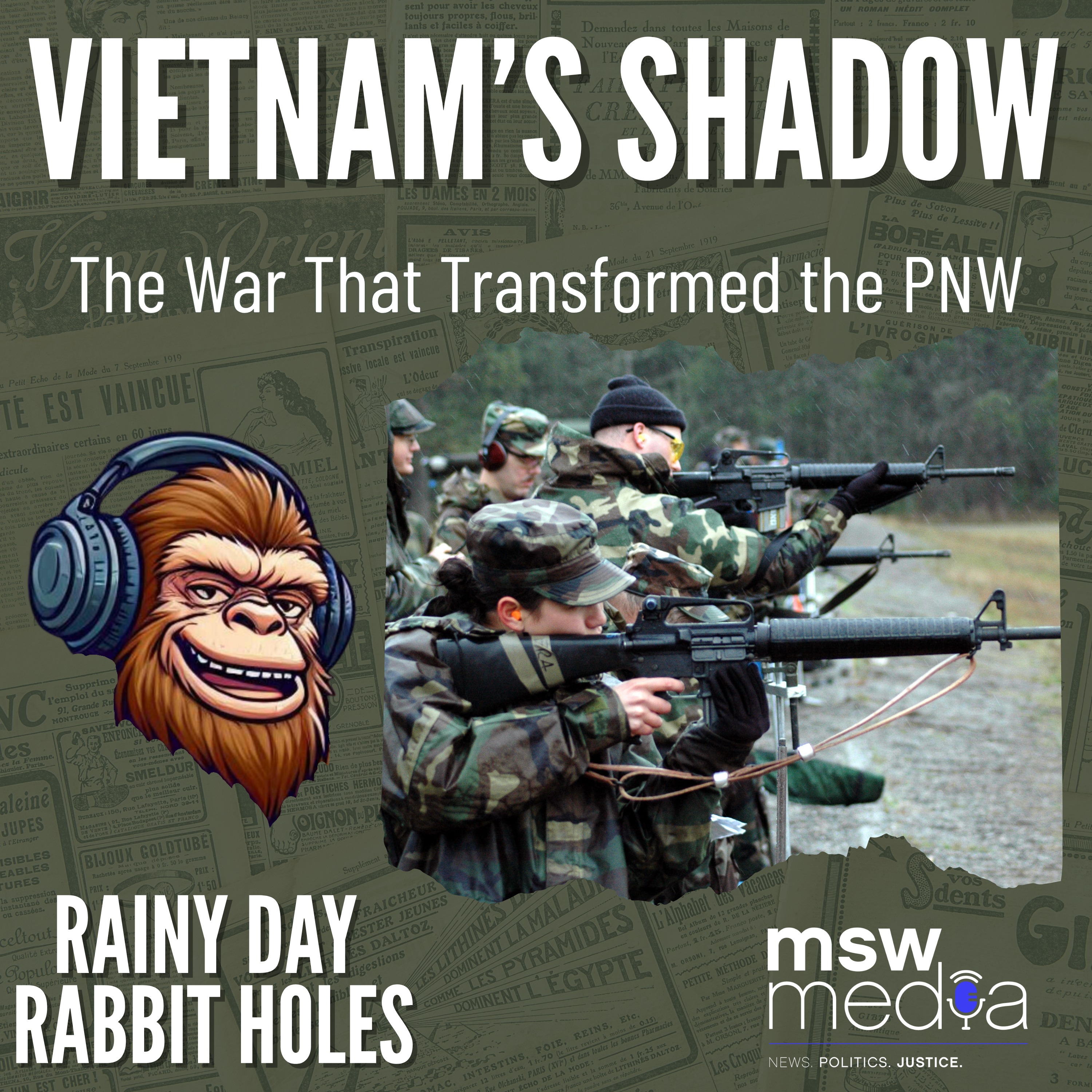
The Vietnam War is usually remembered as a conflict fought half a world away. But for the Pacific Northwest, especially the communities surrounding Fort Lewis, the war wasn't something happening "over there." It was happening right at home.In this episode, Shea is joined by historian, retired Army Reserve Lieutenant Colonel, former Lewis Army Museum Director, and current battlefield historian Erik Flint to explore how the Vietnam War transformed Washington State, the U.S. military, and the South Sound.From counterinsurgency training exercises in Washington forests to anti-war movements inside the military itself, Erik reveals how Fort Lewis became one of the Army's most important Vietnam-era installations and how the conflict left a lasting mark on Tacoma, Seattle, and the surrounding communities.Please check out tours with historian Erik Flint! (Psst, he's also now a fellow guide with Pretty Gritty Tours!)https://stephenambrosetours.com/historian/erik-flint/Fort Lewis Becomes a Gateway to VietnamLong before Joint Base Lewis-McChord became one of America's largest military installations, Fort Lewis was already a critical part of the nation's defense infrastructure. During Vietnam, its role expanded dramatically.As the war escalated, Fort Lewis became a major training center and personnel processing hub for soldiers heading to and returning from Southeast Asia. Hundreds of thousands of service members passed through the South Sound during the conflict, making the region one of the most important military gateways on the West Coast.Erik explains how Washington's geography, transportation networks, and established military presence made the area uniquely suited to support the war effort. He also discusses the Army's early counterinsurgency training programs, some of which took place on the Olympic Peninsula years before large-scale American involvement in Vietnam.In this section:Why Fort Lewis became a major Vietnam-era training centerEarly Army counterinsurgency exercises in Washington StateThe difference between draftees and volunteersHow soldiers moved through Fort Lewis on their way to and from VietnamThe South Sound's growing connection to the war effortProtest, Resistance, and the GI MovementOne of the most surprising stories from the Vietnam era is that some of the strongest anti-war activism came from inside the military itself.Erik explores the rise of the GI Movement at Fort Lewis, including underground newspapers, anti-war coffeehouses, legal aid organizations, and soldiers who openly challenged military policies and America's involvement in Vietnam. The conversation dives into publications like Fed Up and the Lewis-McChord Free Press, as well as the broader cultural shifts of the late 1960s that fueled dissent both inside and outside military communities.Shea and Erik also discuss:The Fort Lewis SixNational Guard resistance effortsAnti-war organizing near military basesJane Fonda's involvement in local activismThe growing divide between military leadership and younger soldiersThese stories highlight a rarely discussed side of Vietnam-era history: the conflict between military discipline and a generation increasingly willing to question authority.How Vietnam Changed the Military ForeverThe Vietnam War exposed challenges the military could no longer ignore.Drug abuse, racial tensions, morale issues, recruiting difficulties, and widespread dissatisfaction forced Army leaders to rethink how service members lived and worked. Many of the reforms that followed shaped the modern military Americans know today.Erik explains how military leaders implemented new equal opportunity programs, improved quality of life initiatives, expanded educational opportunities, and ultimately helped guide the transition from the draft to an all-volunteer force. Fort Lewis once again found itself at the center of that transformation.Topics include:Military desegregation and civil rights progressEqual Opportunity programsThe transition to the all-volunteer ArmyImprovements to soldier quality of lifeDrug treatment programs for returning service membersHow Vietnam influenced modern military cultureThe Economic Impact on Washington StateWhen the war wound down, the economic impact hit Washington hard.Military employment declined, defense-related spending decreased, and major employers such as Boeing faced significant challenges. Communities throughout the Puget Sound region felt the effects as wartime demand disappeared and the state entered a difficult economic period.The end of Vietnam wasn't simply a military story. It became an economic and social story as well, affecting everything from jobs and housing to local politics and community identity. Fact, Folklore & DebateFactFort Lewis served as a major Vietnam-era training and personnel processing center, connecting Washington State directly to the war effort. FactAnti-war newspapers, coffeehouses, and GI activism existed within the Fort Lewis military community during the Vietnam War.FactThe military implemented reforms related to equal opportunity, quality of life, and recruitment during and after the Vietnam era. Folklore & Ongoing Historical DebateStories about returning Vietnam veterans being routinely mistreated remain heavily debated among historians. While documented examples exist, the prevalence and scope of those incidents continue to be discussed.Key TakeawaysFort Lewis became one of the Army's most important Vietnam-era installations. Washington State played a larger role in the Vietnam War than many people realize.Anti-war activism existed both outside and inside the military.Underground GI newspapers flourished at Fort Lewis during the late 1960s and early 1970s.Vietnam accelerated changes in military policies related to race and equal opportunity.The Army's transition to an all-volunteer force was shaped by lessons learned during Vietnam.Returning veterans often experienced little transition time between combat and civilian life.Military reforms introduced after Vietnam still influence service members today. Washington's economy felt the effects of both the war's expansion and its end.The legacy of Vietnam remains visible throughout the South Sound. Related Episodes🐕 Sergeant Stubby: A Very Good Boy Goes to Warhttps://www.rainydayrabbitholes.com/podcast/sergeant-stubby-a-very-good-boy-goes-to-war⚓ Arizona Navy (1934): When a Desert State Went to Warhttps://www.rainydayrabbitholes.com/podcast/arizona-navy-1934-when-a-desert-state-went-to-war🌙 That Time We Almost Nuked the Moonhttps://www.rainydayrabbitholes.com/podcast/that-time-we-almost-nuked-the-moonIf you enjoy surprising military history, unexpected wartime stories, and the strange ways national events shape local communities, these are great rabbit holes to explore next.Support this podcast at — https://redcircle.com/history-unhinged-rainy-day-rabbit-holes/exclusive-contentAdvertising Inquiries: https://redcircle.com/brandsPrivacy & Opt-Out: https://redcircle.com/privacy
Embed this episode
What this episode covers
Most Americans know how the Vietnam War changed the nation, but few realize how deeply it transformed the Pacific Northwest. In this episode, historian and retired Army Reserve Lieutenant Colonel Erik Flint joins Shea to explore the surprising story of how Fort Lewis became one of the military's most important Vietnam-era hubs, processing hundreds of thousands of troops traveling to and from the war. Along the way, they uncover anti-war activism inside the military, underground GI newspapers, racial tensions, military reforms, and the lasting impact Vietnam had on Tacoma, Seattle, and the entire South Sound. From National Guard resistance and Jane Fonda's visits to Fort Lewis, to the military's role in desegregation and the birth of the all-volunteer force, this episode reveals how Vietnam didn't just happen overseas. It reshaped Washington State in ways still visible today. Support this podcast at — https://redcircle.com/history-unhinged-rainy-day-rabbit-holes/exclusive-content Advertising Inquiries: https://redcircle.com/brands Privacy & Opt-Out: https://redcircle.com/privacy
Ready to play
How the Vietnam War Changed the Pacific Northwest
No transcript for this episode yet
Similar Episodes
No similar episodes found.
Similar Podcasts
No similar podcasts found.