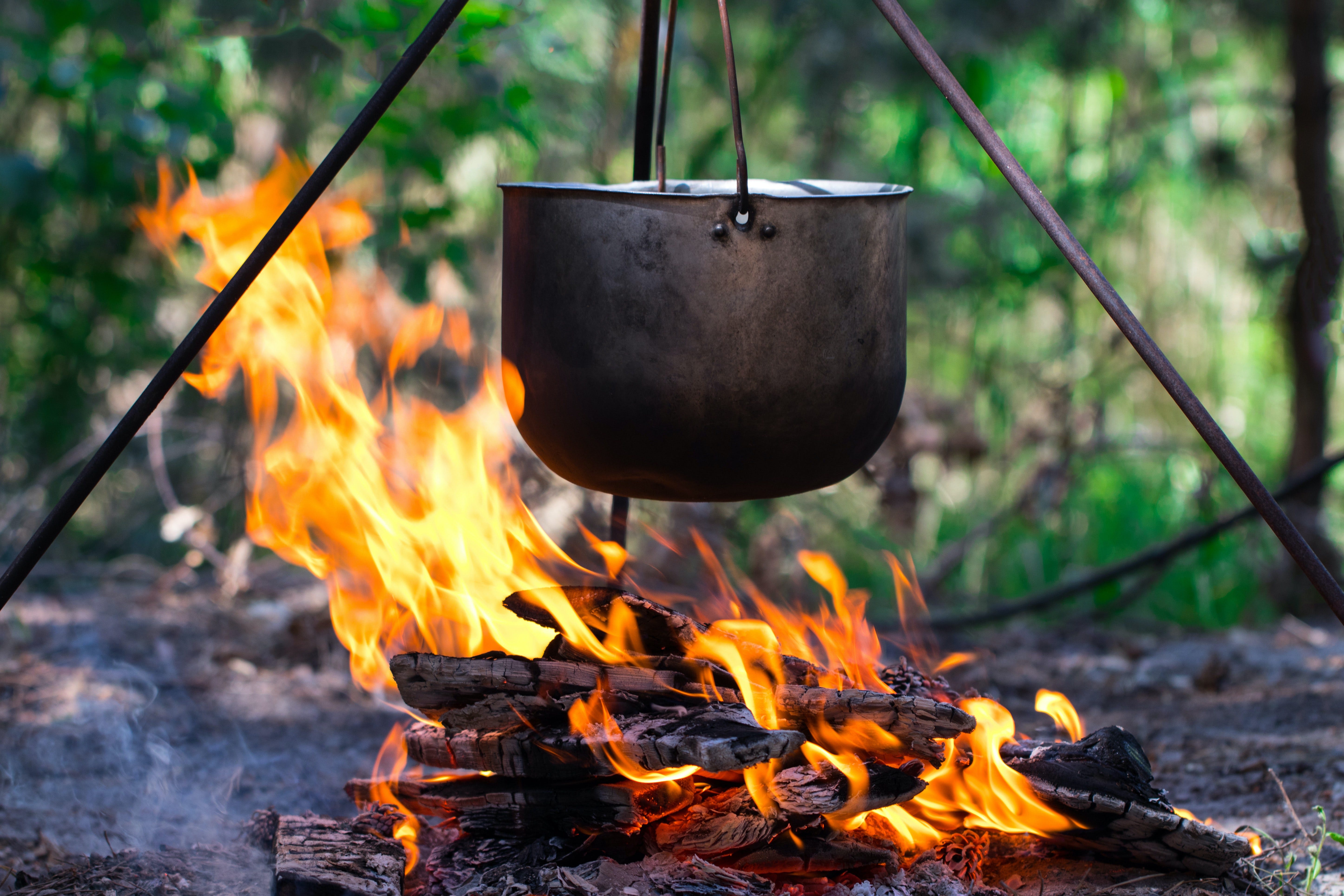
How to Boil Water
from Life School Hosted by Life School
This lesson is 394 words, a 1 min 34 sec read time. It is the second lesson of How to Boil Water. 📍 Introduction Boiling water has been the ultimate symbol of hearth & home for over 15,000 years. Researchers trace the roots of cooking back to Ancient China & prehistoric Spain, where our ancestors tossed scraps of meat, bones & vegetables into vats of water heated by fire-warmed stones. Today boiling water is a whole lot easier. Nonetheless, may you find equal awe in the magic that happens when boiling water & food meet. So without further ado - and without boiling the ocean 😉- let’s get started! 🧂Ingredients & Equipment: * Fire (or electric heat-source) & water * Medium or large stockpot (3.5qt +). Examples: Budget; Investment; Splurge; Extra Lids * (Alt) Electric kettle: Budget; Investment; Splurge 1; Splurge #2 ✔️Instructions: * Fill a stockpot with cold water about three-quarters full * Turn heat to high * Place lid on the pot to keep heat from escaping * Check every so often until bubbles are large, continuous & bursting at surface * Upon boiling, remove the lid to keep water from boiling over 📝Notes, Tips, Tricks: * Timing: Track the time it takes for your favorite pot to reach a boil -- it will make future meal prep planning easier. * Efficiency: Electric kettles make boiling water faster & simpler. You can also use one simultaneously alongside or prior to stove boiling to speed things up. Conversely, to buy yourself extra time, heat water on a lower temperature. * Hot debate: While hot tap water boils faster & is tempting to use, most cooks advocate for starting with cold. Hot water can pull minerals/heavy metals from pipes, as well as pick up flavors from the water heater. (Learn more here) * Elevation: At sea level, water boils at 100° C (212° F). For every 500-foot (150 m) increase in altitude, water's boiling point is lowered by approximately 0.5° C. * Microwave: You can safely boil water in a microwave-safe dish (e.g., glass, ceramic). Do not cover, and be careful of “superheating” (where the water can suddenly & explosively bubble over upon being touched post-heating). To avoid this, stir the water every 1-2 minutes until the water is visibly boiling inside the microwave. * Safety: Handle pot carefully & with mittens or burn-proof gloves. Boiling water can create 3rd-degree burns. * A watched pot will boil. 🙃 🎓Further Studies: * Everything You Ever Wanted to Know (Plus More!) About Boiling Water * Why You Should Always Use Cold Water in Your Kettle 👉 Next Lesson 02: How to Make Tea This is a public episode. If you would like to discuss this with other subscribers or get access to bonus episodes, visit www.trylifeschool.com
Embed this episode
No transcript yet.