How to Catch a Lab Leak episode artwork

EPISODE · Jul 3, 2024 · 53 MIN

How to Catch a Lab Leak

from Statecraft · host Santi Ruiz

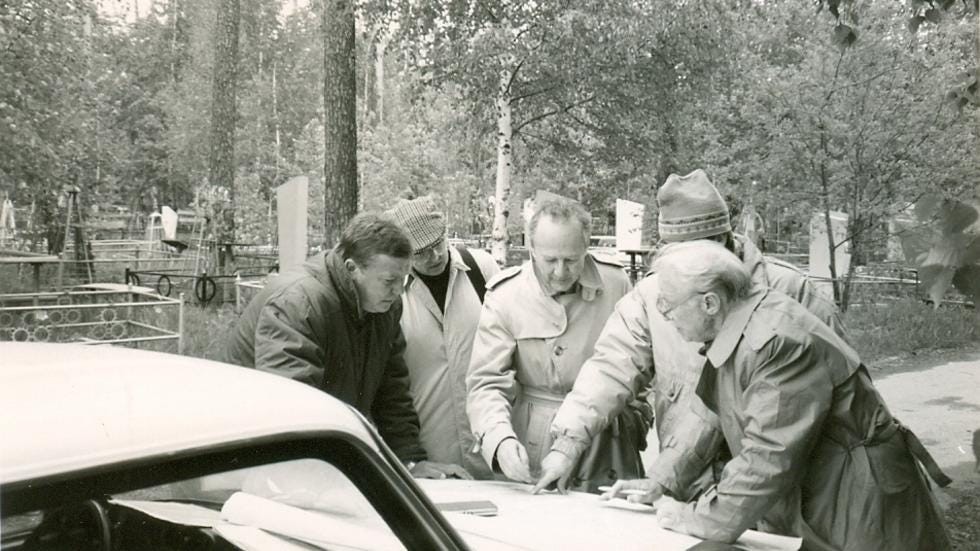
In April and May 1979, between 66 and 300 people died from anthrax in the Russian city of Sverdlovsk, now called Yekaterinburg. The Soviet authorities seized doctors’ records and quickly rolled out an explanation: the deaths were an accident caused by contaminated meat. But American intelligence agencies suspected a more nefarious explanation: the Soviets were secretly developing biological weapons.Last week, we interviewed Matthew Meselson about his key role in convincing Henry Kissinger and Richard Nixon to ban biological weapons research in the early 1970s. After the Sverdlovsk incident, Meselson was brought in by the CIA to help assess the potential explanations. For more than a decade, he led scientific investigations into the incident. In 1992, after the fall of the Soviet Union, the truth finally came out: the Sverdlovsk incident was a bioweapons lab leak, the most deadly confirmed lab leak in history.Meselson’s paper confirming the lab leak is an epidemiological classic. For the first time on Statecraft, we’ve doubled up on a guest: the 94-year-old Meselson is back for round two.[00:00] The CIA recruits Meselson[5:38] Attempts to travel to Sverdlovsk[9:11] Meselson travels to Moscow[14:15] An invitation to Sverdlovsk[25:27] On-the-ground investigation[34:25] Who knew what, and when did they know it?[40:16] Who is developing chemical weapons today?[45:34] How closely does the Sverdlovsk lab leak parallel incidents in Wuhan?[50:31] Why the Soviets couldn't find their own research facilities This is a public episode. If you would like to discuss this with other subscribers or get access to bonus episodes, visit www.statecraft.pub

NOW PLAYING

How to Catch a Lab Leak

0:00 53:13

No transcript for this episode yet

We transcribe on demand. Request one and we'll notify you when it's ready — usually under 10 minutes.

The History of China Podcast Ibnul Jaif Farabi / Light Knot Studios What does the world's oldest continuous civilization, with over 3,000 years of recorded history, have to teach us about power, philosophy, innovation, and human nature? "The History of China Podcast" delivers the epic saga of China in accessible, daily chapters, transforming a vast and complex past into a compelling narrative you can absorb in just minutes a day.This show chronicles the full sweep of China's story, from the mythical Xia Dynasty to the rise of the modern superpower. We explore the dazzling heights of Tang poetry and Song technology, the brutal calculus of Legalist statecraft, and the quiet wisdom of Daoist sages. Each episode focuses on a pivotal event, a transformative figure, or a defining idea—whether it's the construction of the Great Wall, the mind of Empress Wu, or the invention of paper money—weaving them into the grand tapestry of the dynastic cycle. The tone is authoritative yet vividly human, making emperors, poets, and peasants alike feel immediate and real. The Institute of World Politics The Institute of World Politics The Institute of World Politics is a graduate school of national security and international affairs, dedicated to developing leaders with a sound understanding of international realities and the ethical conduct of statecraft, based on knowledge and appreciation of the principles of the American political economy and the Western moral tradition.**Please note that the views expressed by our guest lecturers do not necessarily reflect the views of The Institute of World Politics.** Small World, Big Problems JHU SAIS Philip Merrill Center for Strategic Studies Small World, Big Problems – a SAIS Strategy Podcast. ​A SAIS student podcast supported by the Philip Merrill Center for Strategic Studies. ​In Small World, Big Problems, we ask the experts about the biggest challenges in the world of strategy and national security. ​It’s a small world, and it’s only getting smaller. But it seems like every day, there is a new problem on the horizon: great power conflict, political extremism, climate change – the list goes on and on. In this student podcast sponsored by the Philip Merrill Center for Strategic Studies, we ask leading experts in the fields of national security, strategy, and statecraft about what problems the world is facing and, more importantly, how to solve them. ​Please address any questions to [email protected]. What’s New in New Defence? Digital Defence Ecosystem Finland; Valtteri Vuorisalo Europe’s security landscape is shifting at unprecedented speed. What’s New in New Defence, the new podcast from the Digital Defence Ecosystem, brings you the insights behind the transformation. Each episode breaks down the technologies, capabilities and strategic developments shaping Europe’s future of security.Join DDE’s Dr Valtteri Vuorisalo and a line-up of leading Finnish experts as they unpack the breakthroughs redefining technology, cyber, intelligence, space, climate security and economic statecraft.

Frequently Asked Questions

How long is this episode of Statecraft?

This episode is 53 minutes long.

When was this Statecraft episode published?

This episode was published on July 3, 2024.

What is this episode about?

In April and May 1979, between 66 and 300 people died from anthrax in the Russian city of Sverdlovsk, now called Yekaterinburg. The Soviet authorities seized doctors’ records and quickly rolled out an explanation: the deaths were an accident caused...

Can I download this Statecraft episode?

Yes, you can download this episode by clicking the download button on the episode player, or subscribe to the podcast in your preferred podcast app for automatic downloads.
URL copied to clipboard!