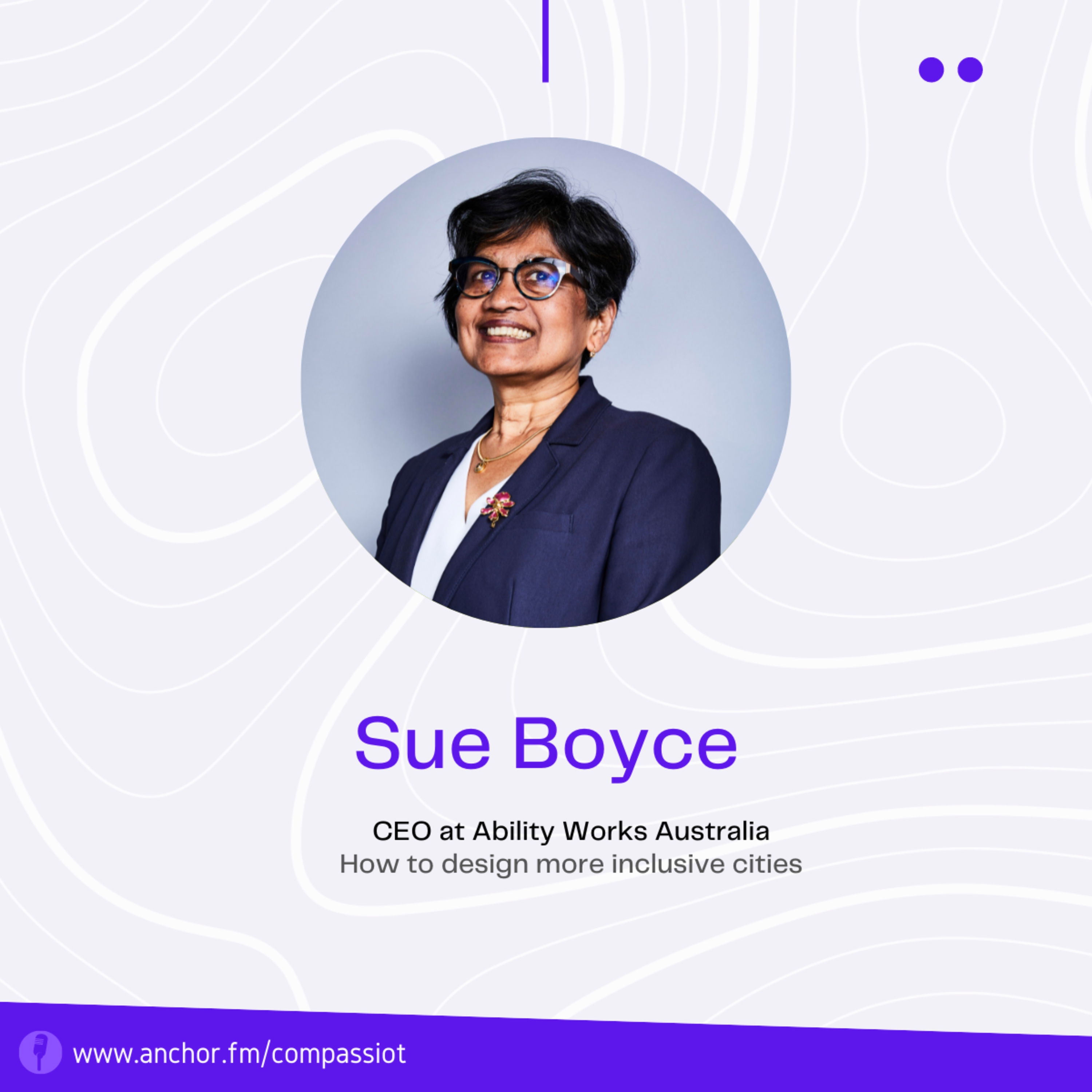
How to design more inclusive cities | Interview with Sue Boyce episode artwork

EPISODE · Aug 1, 2021 · 18 MIN

How to design more inclusive cities | Interview with Sue Boyce

from Byte Size · host Compass IOT

In Australia, more than 4.4 million people live with some form of disability. That's roughly 1 in 5 people.  Often there is a stereotypical depict that a 'disability' is something more permanent or severe, such as blindness or wheelchair use. But a disability isn't necessarily something that is long-term. Quite often, you or someone you know has suffered an illness or an injury that impacts the ability to move freely and independently. Whether that be temporary use of crutches while navigating a busy train station, a cast for a broken arm that makes it difficult for you to stand on a bus, or anything that changes the way you interact with the city around you. On this episode, we sat down with Sue Boyce, the CEO of Ability Works Australia to discuss some of the challenges faced by people that live with disabilities in their daily lives. Everything to the accessibility options in a doctors office that impact your healthcare choices, whether the width of a tram station can actually accomodate a wheelchair, and the economic and social impacts on our society when we don't design with inclusivity for all people in mind. In this episode you'll hear about: Social Procurement and how to operate an inclusive supply chain User-centered design for city infrastructure Accessibility disparities between urban and rural centers The economic cost of unintentionally excluding people with either short-term or long-term disabilities. 

In Australia, more than 4.4 million people live with some form of disability. That's roughly 1 in 5 people.  Often there is a stereotypical depict that a 'disability' is something more permanent or severe, such as blindness or wheelchair use. But a disability isn't necessarily something that is long-term. Quite often, you or someone you know has suffered an illness or an injury that impacts the ability to move freely and independently. Whether that be temporary use of crutches while navigating a busy train station, a cast for a broken arm that makes it difficult for you to stand on a bus, or anything that changes the way you interact with the city around you. On this episode, we sat down with Sue Boyce, the CEO of Ability Works Australia to discuss some of the challenges faced by people that live with disabilities in their daily lives. Everything to the accessibility options in a doctors office that impact your healthcare choices, whether the width of a tram station can actually accomodate a wheelchair, and the economic and social impacts on our society when we don't design with inclusivity for all people in mind. In this episode you'll hear about: Social Procurement and how to operate an inclusive supply chain User-centered design for city infrastructure Accessibility disparities between urban and rural centers The economic cost of unintentionally excluding people with either short-term or long-term disabilities.

NOW PLAYING

How to design more inclusive cities | Interview with Sue Boyce

0:00 18:14

No transcript for this episode yet

We transcribe on demand. Request one and we'll notify you when it's ready — usually under 10 minutes.

No similar episodes found.

Frequently Asked Questions

How long is this episode of Byte Size?

This episode is 18 minutes long.

When was this Byte Size episode published?

This episode was published on August 1, 2021.

What is this episode about?

In Australia, more than 4.4 million people live with some form of disability. That's roughly 1 in 5 people.  Often there is a stereotypical depict that a 'disability' is something more permanent or severe, such as blindness or wheelchair use. But a...

Can I download this Byte Size episode?

Yes, you can download this episode by clicking the download button on the episode player, or subscribe to the podcast in your preferred podcast app for automatic downloads.
URL copied to clipboard!