
EPISODE · Mar 8, 2026 · 40 MIN
How to Fast-track a Regenerative Future
from Journal of Biophilic Design · host Vanessa Champion
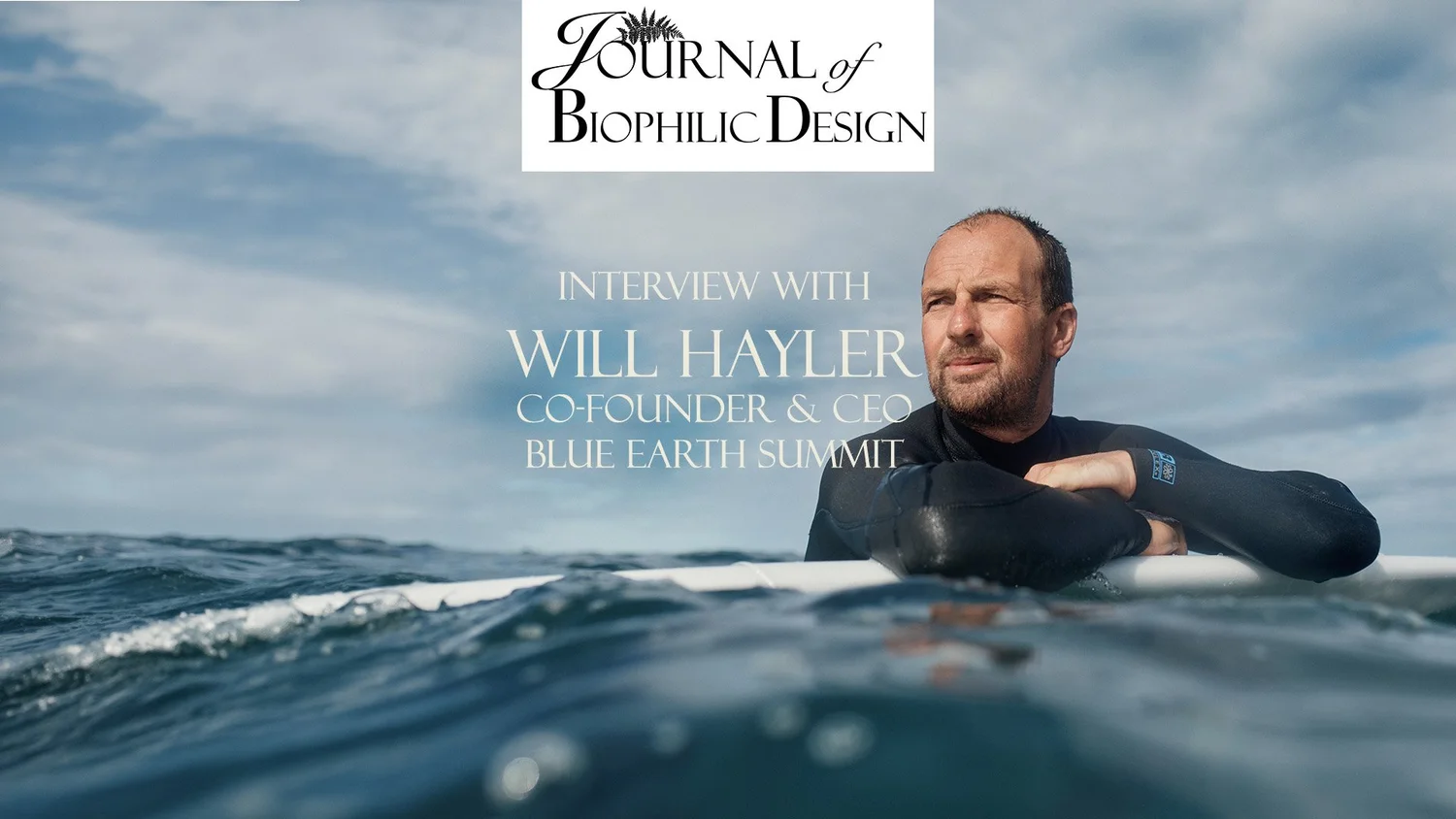
Efforts to tackle the climate and nature crisis often focus on policy, science and activism. But according to Will Hayler, founder and CEO of The Blue Earth Summit, real transformation will only happen when entrepreneurs and investors are fully part of the conversation. Speaking about the philosophy behind the Blue Earth Summit, Will argues that innovation and enterprise are essential if environmental solutions are to move beyond ideas and into the real economy. “If you're really serious about solving problems, you need entrepreneurs in the room,” he says. Scaling solutions requires capital, markets and commercial incentives. While science and policy define the problem, entrepreneurs are often the ones who turn ideas into practical products and services. For architects, planners and designers, this represents an opportunity. Across the UK alone, plans to build 1.5 million homes in the coming years will shape the nation’s landscape for decades. Decisions made today about materials, planning and urban design will define the health and sustainability of future communities. Will believes the design industry should see this not as a burden, but as a privilege.“People working in climate and sustainability sometimes expect sympathy,” he says. “But I see it differently. It’s lucky you. You’re working at the cutting edge of what the world needs.” Designers, he argues, have the chance to rethink how humanity lives — creating cities that are cleaner, healthier and more connected to nature. Will is also clear-eyed about the motivations that drive the private sector. “Businesses will only do the right thing if it benefits them,” he says, pointing to the reality that return on investment and competitive advantage ultimately shape corporate decisions. Rather than criticise that system, the summit aims to work within it. One of its core goals has been to bring together groups that have historically operated in separate spheres. “We wanted to create that connection between third sector and private sector,” Will explains, arguing that NGOs, scientists and businesses must collaborate if environmental progress is to accelerate. Central to this approach is reframing the narrative around sustainability. Instead of presenting environmental action as a burden, Will believes it should be positioned as an opportunity. In his view, sustainability needs to be understood as a form of upgrade — delivering healthier environments, smarter materials and more resilient systems. “The sustainability movement is best framed around wellbeing for everyone, forever,” he says. This shift is particularly relevant in the built environment, where designers, architects and developers are shaping the places where people spend most of their lives. Integrating nature into buildings and cities can have profound health benefits. As Will puts it: “People that spend more time in nature are healthier than those that don't. So how can you bring that into your design and sell it as an upgrade?” At the same time, he believes the next wave of environmental innovation will focus heavily on circular systems and resource efficiency. “Waste management is a massive, massive issue at the moment,” he notes, pointing to the need for designers and entrepreneurs to rethink materials and production processes. Will is optimistic about the direction of travel. Clean energy, he argues, is abundant and increasingly affordable. “Energy is free and abundant, through the sun and through the wind,” he says, imagining a future powered by renewable systems. If innovators, investors and designers can work together, he believes the outcome could be transformative. “The future can and should be radically better than what we have today.” Chapter 1 — Opening and Guest Introduction (0:00 – 0:42)Chapter 2 — Will’s Background and the Blue Earth Summit’s Purpose (0:42 – 4:03)Chapter 3 — The Summit’s Focus, Leverage, and the Role of Entrepreneurship (4:03 – 9:32)Chapter 4 — Building a Bridge: Business, NGOs, and the “Upgrade” Narrative (9:32 – 16:38) Chapter 5 — Regenerative Design, Biophilia, and the Built Environment (16:38 – 21:33)Chapter 6 — Scaling, Investment, and Cross‑Border Opportunity (21:33 – 29:53)Chapter 7 — Nature-Based Design, Health, and the Big Vision (29:53 – 40:22). To find out more and register your interest in the Blue Earth Summit visit: www.blueearthsummit.com Have you got a copy of the Journal? You can now subscribe as a member of the Journal of Biophilic Design or purchase a gorgeous coffee table reference copy or PDF download of the Journal journalofbiophilicdesign.comor Amazon and Kindle. Credits: with thanks to George Harvey Audio Production for the calming biophilic soundscape that backs all of our podcasts. Listen to our podcast on Audible, Amazon Music, Spotify, iTunes, YouTube and all the RSS feeds.https://www.facebook.com/journalofbiophilicdesign/https://twitter.com/JofBiophilicDsnhttps://www.linkedin.com/company/journalofbiophilicdesign/https://www.instagram.com/journalofbiophilicdesignIf you like this,please subscribe!
Embed this episode
What this episode covers
The idea that business can help solve environmental problems is still controversial in some circles. Corporations are frequently blamed for accelerating climate change and biodiversity loss. Yet Will Hayler, co-founder of The Blue Earth Summit, argues that excluding business from the conversation would be a strategic mistake. Nowhere is this more important than in the built environment. More and more of us are living and working in cities, and our urban environment is already shaping humanity’s relationship with nature for generations. Buildings, materials, public spaces and infrastructure will determine whether urban living disconnects people from nature, or reconnects them to it. It is why we are so passionate about Biophilic Design. The design principle is critical.
NOW PLAYING
How to Fast-track a Regenerative Future
No transcript for this episode yet
Similar Episodes
No similar episodes found.
Similar Podcasts
No similar podcasts found.