How to Layer Melodies Using Rhythmic Displacement
from Ray Harmony Hosted by Hack Music Theory
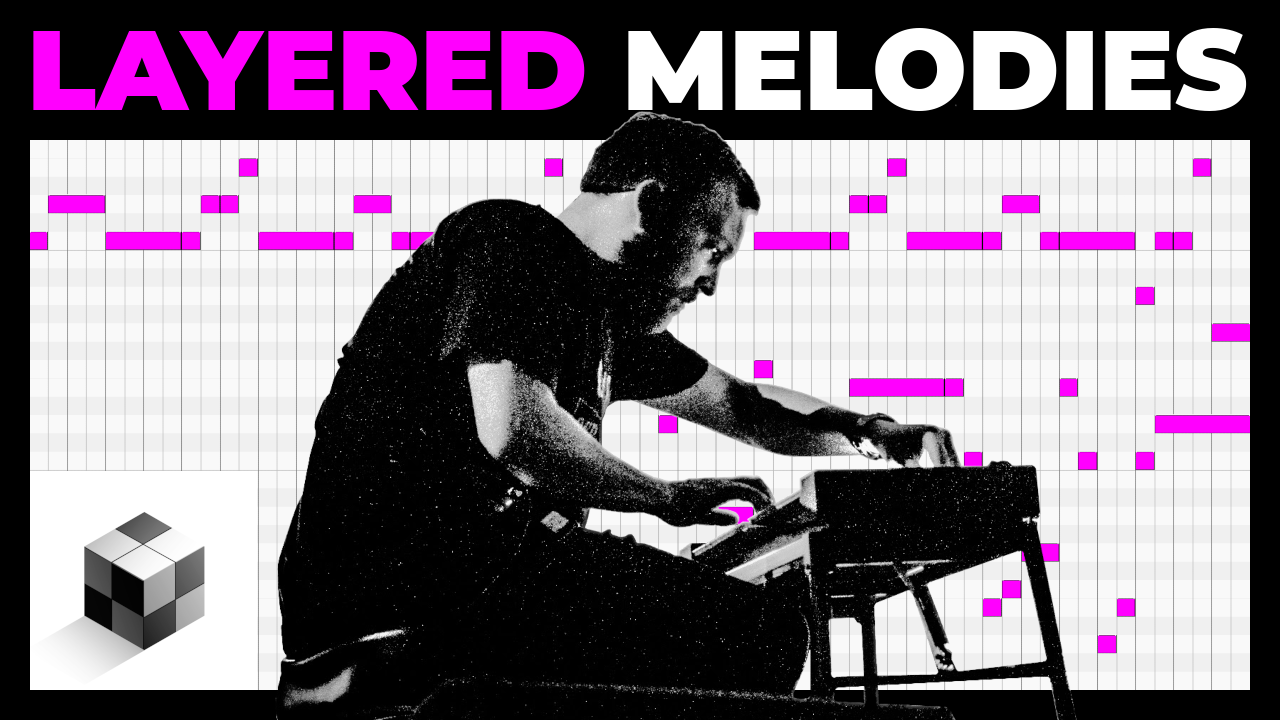
Learn how to write melodies that are layered with rhythmic displacement, using a music theory hack from Mogwai “Hungry Face” (Les Revenants / The Returned soundtrack). DOWNLOAD PDF + MIDI + WAV FROM THIS VIDEO THEORY Scottish band Mogwai wrote the soundtrack for the TV show Les Revenants (The Returned) back in 2012. In the main theme “Hungry Face”, there’s an innovative approach to layering melodies by using rhythmic displacement, which has gone rather unnoticed and therefore unappreciated. So, what’s rhythmic displacement? And why did theirs go unnoticed? Well, rhythmic displacement is when you take a musical element (like a melody), and move it slightly earlier or later in the music. And Mogwai’s use of this technique goes unnoticed, intentionally, cos they displace the first melody (by moving it a 1/4 note later) when the second melody starts. This is a super clever sleight of hand, cos the second melody pulls your attention away from the first melody, which then gets rhythmically displaced to make the music sound unsettled, without anyone knowing why. And as if that’s not enough, Mogwai have one more ingenious trick up their sleeve. The first melody (which has a nursery rhyme feel), is made to sound like it’s in C major. But, when the second melody begins (which has a serious feel), it reveals the music is actually in D minor. Brilliant! And perfect for the soundtrack to a supernatural TV show. SETUP Alright, now you’re gonna learn how to use this theory to make your own version, and what you see in the video is our version that we made earlier. So, start by setting up eight bars of 4/4, with your grid set to 1/8 notes, and your tempo set to 109 BPM. As you already know, “Hungry Face” is in the key of D minor, so we’ll use it too. STEP 1. FIRST MELODY You’re gonna start by writing an innocent sounding four-bar melody, which will create the illusion that it’s in the nice happy key of C major. So, how do you write a melody that sounds like it’s in C major, but is actually in D minor? Well it’s pretty easy, because these two scales share six notes. The only note in D minor that’s not also in C major, is B♭, so just avoid that note. And don’t play B either, as that’ll make your melody properly in the key of C major. Lastly, centre your melody around C, to make it sound like that’s your root. STEP 2. SECOND MELODY Right, it’s time to finally reveal the real key, D minor. So, you’re now gonna write a serious sounding four-bar melody in a lower register, starting in bar five, and centring it around D (the real root) and F (♭3). These two notes will pull your listeners’ ears into the key of D minor. STEP 3. RHYTHMIC DISPLACEMENT As your listeners are orientating themselves to what sounds like a new key, you’re gonna rhythmically displace your first melody over the top of your second melody, which will create the unsettling feeling that everything is not what it seems. So, simply copy and paste your first melody above your second melody, then shorten its last note by a 1/4 note, and then move the melody a 1/4 note later. Voilà! NEXT Okay, so now that you’ve got one section down, how do you write the other sections? How do you transition between them (especially when they’re in different keys)? And, how do you structure and arrange your song? These are issues that many songwriters and producers struggle with, and that’s exactly why we made our online course Apprenticeship #1. So, if you wanna overcome these obstacles once and for all, then sign up now! Kate & Ray Harmony (AKA Revolution Harmony) Music Teachers & Producers in Vancouver BC, Canada LEVELS Level 1 - Read our free book (below) & watch our YouTube videos Level 2 - Read our "Part 1" book & "Songwriting & Producing" PDF Level 3 - Practice making music using our lessons (PDF+MIDI+WAV) Level 4 - Learn our secret art of song-whispering & finish your music ABOUT Hack Music Theory is a pioneering DAW method for making great music that stands out, so you can move and grow your audience! Taught by award-winning music lecturer Ray Harmony, and his protégé wife Kate Harmony, from their studio in Vancouver BC, Canada. Ray is the author of critically-acclaimed book series "Hack Music Theory", and has made music with Serj Tankian (System of a Down), Tom Morello (Rage Against the Machine), Steven Wilson (Porcupine Tree), Devin Townsend (Strapping Young Lad), Ihsahn (Emperor), Kool Keith (Ultramagnetic MCs), Madchild (Swollen Members), and many more! Kate has the highest grade distinction in Popular Music Theory from the London College of Music, and is the only person on the planet who's been trained by Ray to teach his method. On that note, the "Hack Music Theory" YouTube channel teaches relevant and instantly-usable music theory for producers, DAW users, and all other music makers (songwriters, singers, guitarists, bassists, drummers, etc.) in all genres, from EDM to R&B, pop to hip-hop, reggae to rock, electronic to metal (and yes, we djefinitely djent!). COPYRIGHT © 2019 Revolution Harmony Revolution Harmony is Ray Harmony & Kate Harmony All content (script & music) in video by Revolution Harmony Thumbnail photo courtesy of FactMag.com/2017/03/28/sums-kangding-ray-barry-burns-interview Wooohooo!!! You’re a mere 30 minutes away from being even smarter than you already are. Just head on over to your inbox now for your free download. There was an error submitting your subscription. Please try again. “The most brilliant, fast, easy & fun music theory book I’ve ever seen!” DEREK SIVERS, CD Baby founder We use this field to detect spam bots. If you fill this in, you will be marked as a spammer. DOWNLOAD FREE BOOK /* Layout */ .ck_form { /* divider image */ background: #EAE9EA url(data:image/gif;base64,R0lGODlhAQADAIABAMzMzP///yH/C1hNUCBEYXRhWE1QPD94cGFja2V0IGJlZ2luPSLvu78iIGlkPSJXNU0wTXBDZWhpSHpyZVN6TlRjemtjOWQiPz4gPHg6eG1wbWV0YSB4bWxuczp4PSJhZG9iZTpuczptZXRhLyIgeDp4bXB0az0iQWRvYmUgWE1QIENvcmUgNS41LWMwMTQgNzkuMTUxNDgxLCAyMDEzLzAzLzEzLTEyOjA5OjE1ICAgICAgICAiPiA8cmRmOlJERiB4bWxuczpyZGY9Imh0dHA6Ly93d3cudzMub3JnLzE5OTkvMDIvMjItcmRmLXN5bnRheC1ucyMiPiA8cmRmOkRlc2NyaXB0aW9uIHJkZjphYm91dD0iIiB4bWxuczp4bXA9Imh0dHA6Ly9ucy5hZG9iZS5jb20veGFwLzEuMC8iIHhtbG5zOnhtcE1NPSJodHRwOi8vbnMuYWRvYmUuY29tL3hhcC8xLjAvbW0vIiB4bWxuczpzdFJlZj0iaHR0cDovL25zLmFkb2JlLmNvbS94YXAvMS4wL3NUeXBlL1Jlc291cmNlUmVmIyIgeG1wOkNyZWF0b3JUb29sPSJBZG9iZSBQaG90b3Nob3AgQ0MgKE1hY2ludG9zaCkiIHhtcE1NOkluc3RhbmNlSUQ9InhtcC5paWQ6MUQ5NjM5RjgxQUVEMTFFNEJBQTdGNTQwMjc5MTZDOTciIHhtcE1NOkRvY3VtZW50SUQ9InhtcC5kaWQ6MUQ5NjM5RjkxQUVEMTFFNEJBQTdGNTQwMjc5MTZDOTciPiA8eG1wTU06RGVyaXZlZEZyb20gc3RSZWY6aW5zdGFuY2VJRD0ieG1wLmlpZDoxRDk2MzlGNjFBRUQxMUU0QkFBN0Y1NDAyNzkxNkM5NyIgc3RSZWY6ZG9jdW1lbnRJRD0ieG1wLmRpZDoxRDk2MzlGNzFBRUQxMUU0QkFBN0Y1NDAyNzkxNkM5NyIvPiA8L3JkZjpEZXNjcmlwdGlvbj4gPC9yZGY6UkRGPiA8L3g6eG1wbWV0YT4gPD94cGFja2V0IGVuZD0iciI/PgH//v38+/r5+Pf29fTz8vHw7+7t7Ovq6ejn5uXk4+Lh4N/e3dzb2tnY19bV1NPS0dDPzs3My8rJyMfGxcTDwsHAv769vLu6ubi3trW0s7KxsK+urayrqqmop6alpKOioaCfnp2cm5qZmJeWlZSTkpGQj46NjIuKiYiHhoWEg4KBgH9+fXx7enl4d3Z1dHNycXBvbm1sa2ppaGdmZWRjYmFgX15dXFtaWVhXVlVUU1JRUE9OTUxLSklIR0ZFRENCQUA/Pj08Ozo5ODc2NTQzMjEwLy4tLCsqKSgnJiUkIyIhIB8eHRwbGhkYFxYVFBMSERAPDg0MCwoJCAcGBQQDAgEAACH5BAEAAAEALAAAAAABAAMAAAICRFIAOw==) repeat-y center top; font-family: 'Montserrat'; line-height: 1.5em; overflow: hidden; color: #000000; font-size: 16px; border-top: none; border-top-color: #666666; border-bottom: none; border-bottom-color: #3d3d3d; -webkit-box-shadow: none; -moz-box-shadow: none; box-shadow: none; clear: both; margin: 0px 0px; } .ck_form, .ck_form * { -webkit-box-sizing: border-box; -moz-box-sizing: border-box; box-sizing: border-box; } #ck_subscribe_form { clear: both; } /* Element Queries — uses JS */ .ck_form_content, .ck_form_fields { width: 50%; float: left; padding: 5%; } .ck_form.ck_horizontal { } .ck_form_content { border-bottom: none; } .ck_form.ck_vertical { background: #fff; } .ck_vertical .ck_form_content, .ck_vertical .ck_form_fields { padding: 10%; width: 100%; float: none; } .ck_vertical .ck_form_content { border-bottom: 1px dotted #aaa; overflow: hidden; } /* Trigger the vertical layout with media queries as well */ @media all and (max-width: 499px) { .ck_form { background: #fff; } .ck_form_content, .ck_form_fields { padding: 10%; width: 100%; float: none; } .ck_form_content { border-bottom: 1px dotted #aaa; } } /* Content */ .ck_form_content h3 { margin: 0px 0px 0px; font-size: 0px; padding: 0px; } .ck_form_content p { font-size: 14px; } .ck_image { float: left; margin-right: 5px; } /* Form fields */ .ck_errorArea { display: none; } #ck_success_msg { padding: 10px 10px 0px; border: solid 1px #ddd; background: #eee; } .ck_label { font-size: 14px; font-weight: bold; } .ck_form input[type="text"] { font-size: 16px; text-align: center; margin-top: 20px; margin-bottom: 0px; padding: 8px 8px; width: 100%; border: 1px solid #d6d6d6; /* stroke */ -moz-border-radius: 4px; -webkit-border-radius: 4px; border-radius: 30px; /* border radius */ background-color: #fff; /* layer fill content */ height: auto; } .ck_form input[type="email"] { font-size: 16px; text-align: center; margin-top: 0px; margin-bottom: 15px; padding: 8px 8px; width: 100%; border: 1px solid #d6d6d6; /* stroke */ -moz-border-radius: 4px; -webkit-border-radius: 4px; border-radius: 30px; /* border radius */ background-color: #fff; /* layer fill content */ height: auto; } .ck_form input[type="text"]:focus, .ck_form input[type="email"]:focus { outline: none; border-color: #aaa; } .ck_checkbox { padding: 10px 0px 10px 20px; display: block; clear: both; } .ck_checkbox input.optIn { margin-left: -20px; margin-top: 0; } .ck_form .ck_opt_in_prompt { margin-left: 4px; } .ck_form .ck_opt_in_prompt p { display: inline; } .ck_form .ck_subscribe_button { width: 100%; color: #fff; margin: 0px 0px 0px; padding: 8px 8px; font-size: 18px; background: #d74128; -moz-border-radius: 4px; -webkit-border-radius: 4px; border-radius: 30px; /* border radius */ cursor: pointer; border: none; text-shadow: none; } .ck_form .ck_guarantee { color: #626262; font-size: 12px; text-align: center; padding: 5px 0px; display: block; } .ck_form .ck_powered_by { display: block; color: #aaa; } .ck_form .ck_powered_by:hover { display: block; color: #444; } .ck_converted_content { display: none; padding: 5%; background: #fff; } /* v6 */ .ck_form_v6 #ck_success_msg { padding: 0px 10px; } @media all and (max-width: 403px) { .ck_form_v6.ck_modal .ck_close_link { top: 30px; } } @media all and (min-width: 404px) and (max-width: 499px) { .ck_form_v6.ck_modal .ck_close_link { top: 57px; } }
Embed this episode
No transcript yet.