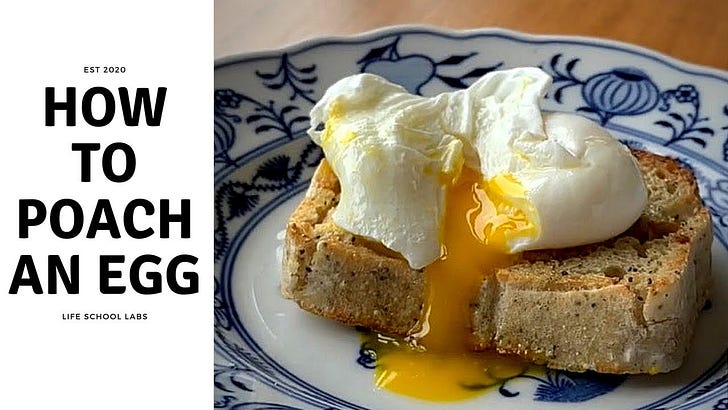
How to Poach an Egg 🥚🎬
from Life School Hosted by Life School
This lesson is 431 words, a 1 min 43 second reading time. It is part of our new course, Poaching, Simmering & Steaming. 🎬 Demonstration Video: 📍 Introduction: Poached eggs are delicious, nutritious, economical & versatile. Whether you have them for breakfast alongside a piece of toast or at dinner topping a grain bowl or bed of sautéed greens, a poached egg can add high-leverage nutrition & rich flavor to almost anything, fast. Like riding a bicycle, once you poach, you’ll know how to do it for the rest of your life. All you need is a little patience and practice. Good luck! 🧂 Ingredients: * Egg(s) * ~ 2 tsp vinegar (e.g., white, apple cider) - (optional) * 1 tsp kosher salt (optional) ⚙️ Unique Gear: * Slotted spoon (recommended) ✅ Instructions: Drop Method (easiest, can accommodate 2+ eggs at a time): * Bring water to boil in a small pot/saucepan. * Turn down heat & add vinegar/salt. Let the water simmer gently. * Crack the egg into a small dish (e.g., cup, ramekin). * Carefully slip the egg from the dish into the water. * When whites set (~2-3 min), remove with a slotted spoon. Cook slightly longer for set yolks. * Pat the egg dry (gently) with a towel. Top & serve. Whirl Method (intermediate, one egg at a time): * Boil water in a small pot/saucepan. * Turn down heat. Let water simmer gently. * Crack egg into a small dish (e.g., cup, ramekin). * Using a spoon, stir the water in a circle. * Once a vortex has formed, slip the egg into the center of the vortex. * Watch the vortex shape the egg into a lovely oval. * When whites set, remove with a slotted spoon. Cook longer for set yolks. * Pat the egg dry with a towel. Top & serve. 📝 Notes Tips & Tricks * Vinegar helps keep the whites together. If yours are regularly becoming stringy increase the amount of vinegar slightly. It should not negatively impact taste. * Sample toppings: olive oil, salt (e.g., sea salt, Maldon flakes), pepper, sauce (e.g., hollandaise), crunch (e.g., seed mixture, everything bagel spice) * Sample bases: grain bowl (e.g., quinoa, rice, grits), ramen, avocado toast, sautéed greens, salad (e.g., frisée, kale), lentils, benedict (e.g., English muffin & ham or smoked salmon). * An egg has 75 calories, 7 grams of protein, 5 grams of fat, and 1.6 grams of saturated fat. *Note - these vary depending on the size of egg. * Once you master the ramekin/bowl & slip technique, try cracking the eggs directly into the water. *Note - watch your fingers! * To poach an egg inside of the shell, you can use the sous vide technique. 🎓 Further Study * Grain Bowls [Life School] * How to Poach an Egg Perfectly [Downshiftology] * Poaching an Egg [NY Times] * 20 Great Ways to Eat Fried or Poached Eggs [Serious Eats] * 22 Poached Egg Recipes for Any Meal [Bon Appetite] This is a public episode. If you would like to discuss this with other subscribers or get access to bonus episodes, visit www.trylifeschool.com
Embed this episode
No transcript yet.