
EPISODE · Feb 27, 2026 · 19 MIN
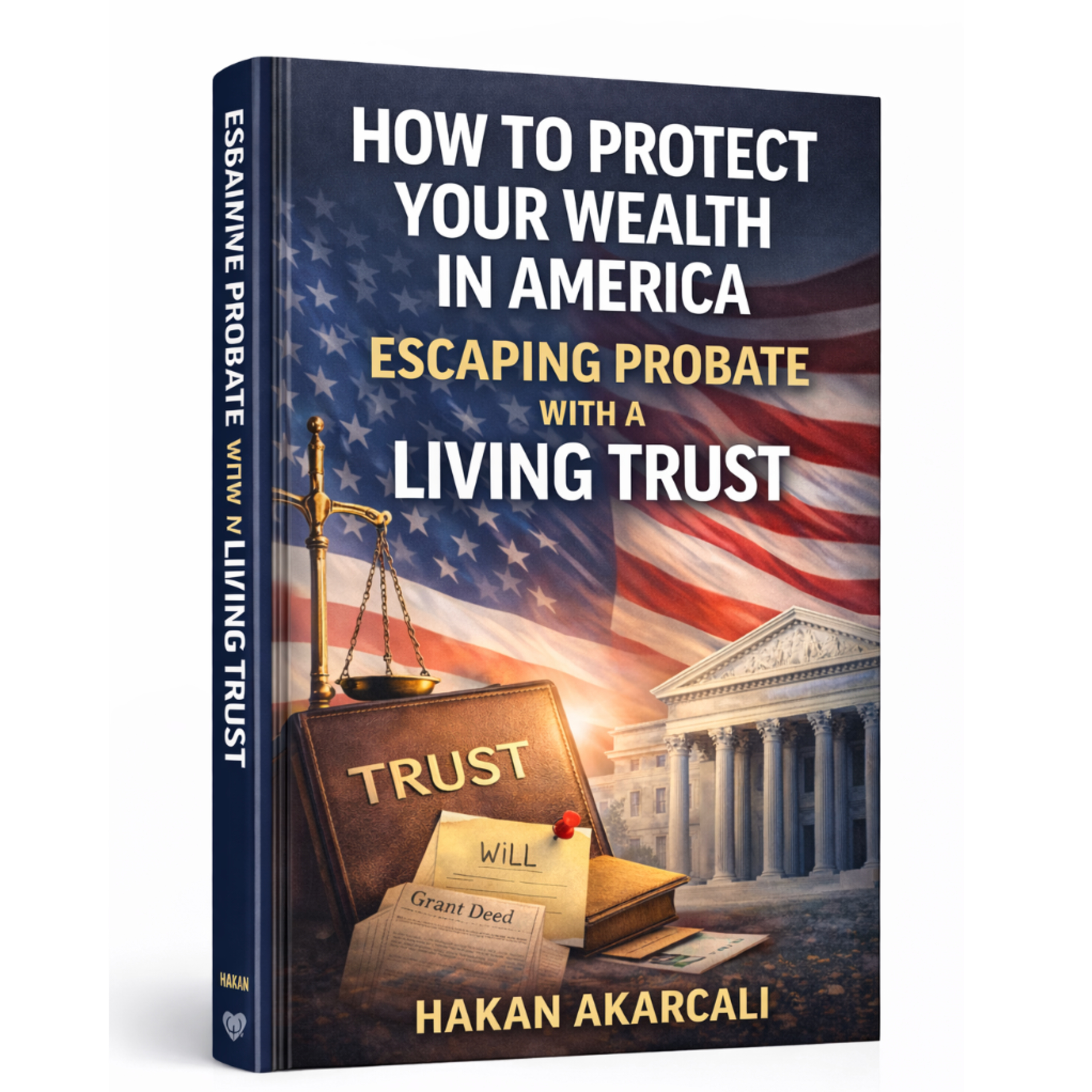
How to Protect Your Wealth in America:Escaping Probate-Living Trust
from HAKAN AKARCALI PodcastBox / Özgün Eser İncelemeleri / Reviews of Original Works · host Hakan AKARCALI
Prepared by the author, “Living Trust and Escape from Probate” examines a central reality of inheritance law in the United States: assets do not automatically transfer to heirs after death. Instead, many estates enter probate (court-supervised inheritance process), a legal procedure that can be lengthy, expensive, and entirely public. The work explains how this court process can take months or even years, during which assets may be frozen and families may face significant legal and administrative costs.The book presents living trust (a living trust structure) as one of the most effective alternatives to probate. A living trust allows assets to pass directly to heirs according to predetermined rules without entering the court system. As a result, families can avoid the delays and costs associated with probate, which often amount to three to five percent of the total estate value. Another major advantage is privacy: while probate records become part of the public record, a trust agreement remains a private legal document, keeping financial details and beneficiary information confidential.“Living Trust and Escape from Probate” also explains the fundamental roles within a trust structure. The grantor (the creator) establishes the trust and transfers assets into it. The trustee (the manager) administers those assets according to the trust’s rules. In many cases, the grantor serves as trustee during their lifetime. The beneficiary (the person who benefits) is the individual or individuals who ultimately receive the assets. The grantor also appoints a successor trustee (the next trustee) who assumes responsibility if the grantor dies or becomes unable to manage their affairs.The book places special emphasis on the concept of the revocable living trust (a revocable living trust structure). In this model, the grantor does not lose control of their property. The trust can be modified, updated, or even revoked entirely at any time while the grantor is alive and competent. Control only shifts to the successor trustee in specific situations defined by the trust, such as death or incapacity caused by conditions like Alzheimer’s disease or severe illness.Another key subject covered in the book is the funding process, meaning the transfer of assets into the trust. For real estate, this typically involves a grant deed (property transfer deed) that records the property under the name of the trust. The document is then filed with the County Recorder (county land records office) to formalize the transfer. Trust documents themselves are usually signed before a notary public, making the structure legally valid. In many cases, these steps can be completed in a matter of minutes once the documents are prepared.The author also emphasizes that a living trust provides solutions not only after death but also during life. If the grantor becomes incapacitated due to illness or injury, the successor trustee can immediately take over management of the assets without waiting for court authorization. For individuals who own property in multiple states, a trust can also consolidate those assets under a single legal structure, eliminating the need for separate probate proceedings in each state.Finally, “Living Trust and Escape from Probate” places the system within the broader context of the coming Great Wealth Transfer, the historic shift in which trillions of dollars are expected to move between generations in the United States. The work highlights how modern digital tools and artificial intelligence are making complex legal structures easier to understand and prepare. In doing so, the book provides a clear and comprehensive framework for families seeking faster, more private, and more efficient methods of transferring wealth across generations within the American legal system.
Embed this episode
NOW PLAYING
How to Protect Your Wealth in America:Escaping Probate-Living Trust
No transcript for this episode yet
Similar Episodes
No similar episodes found.
Similar Podcasts
No similar podcasts found.