
EPISODE · Aug 3, 2026 · 38 MIN
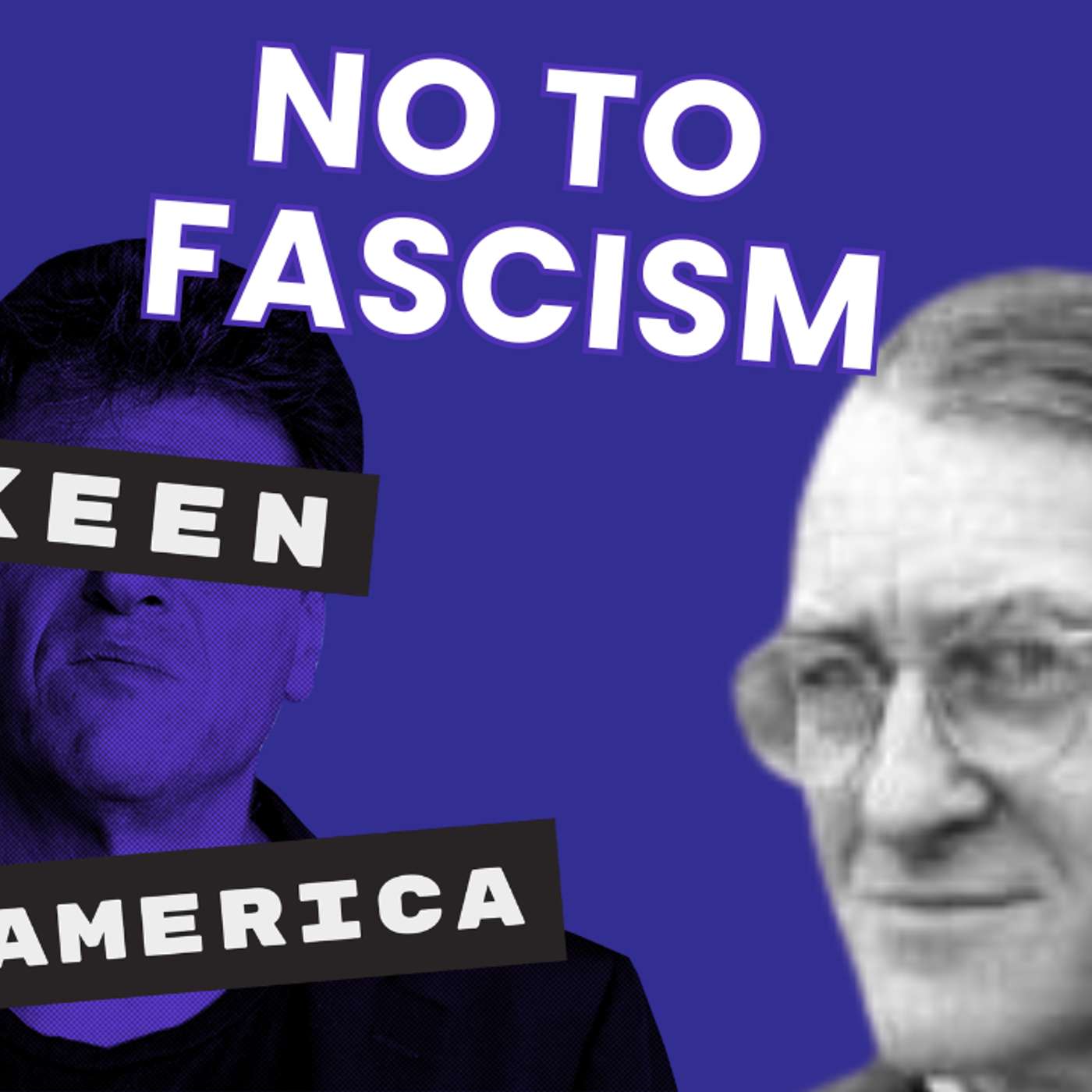
How to Say No to Fascism: Curtis White’s Anti-Manifesto of Resistance
from Keen On America · host Andrew Keen
“Misbehave, make something beautiful, and try to win.” — Curtis White’s motto for resistance How to say no to fascism? Curtis White, the literary thinker dubbed “the splendidly cranky utopian,” has published what he calls a “manifesto” of “resistance.” On Resistance, the 75-year-old White told me, is his last work of non-fiction. He still has worlds to invent, novels to write. Enough with the manifestos. But don’t expect a program. On Resistance is more of an anti-manifesto. “That’s not for me to say,” White responds when asked what, exactly, we’re supposed to do to resist fascism. His resistance is cultural. It’s an attitude. Borrowing from Ted Gioia’s subversive history of music, White likes the idea of “psychic treason.” Its patron saints are the first dropouts, romantics like Wordsworth and Coleridge who rejected the military, clergy and family to write poetry in the countryside. But On Resistance isn’t simply sixties nostalgia. White, a veteran of Berkeley and the Haight, prefers the Nietzschean imperative to forget the past and move on to the next joyful deed. So the only good manifesto is the anti-manifesto. If you want to say no to fascism, become a cranky utopian. Or at least pick up On Resistance. Five Takeaways • Psychic Treason. White’s resistance is not conventionally political — Trump appears once or twice, party politics not at all. Borrowing “psychic treason” from Ted Gioia’s Music: A Subversive History, he argues that the arts are subversive by nature: sometimes formally, sometimes by allying with social movements. His founding example is the Romantics, the first dropouts — Wordsworth and Coleridge refusing the military, the clergy, and the family estate to write poetry in the countryside, declaring cultural war once the church was out of the way. The treason White wants is the one the arts commit constantly, whether or not anyone calls it politics.• Not Nostalgia — Nietzsche. The sixties made White: Berkeley in high school, San Francisco after, and the formative discovery that his country “had lied to me” and was indifferent to whether he lived or died. But On Resistance opens with the confession “I am living in a world that no longer exists” — and refuses to make anyone else live there. One chapter is bluntly titled “Forget The Beatles.” His position is Nietzschean: move on to the next joyful deed. And the rot, he insists, didn’t start with Trump but with Reagan — the decades-long withdrawal of public money from public goods, education above all.• The Three False Resistances. The book’s first half is ideology critique: our culture says resistance is unnecessary because it has already been provided — by philanthropy, virtuous corporations, and liberalism. White’s exhibits: Steve Jobs Buddha-branding the counterculture to sell machines to people who thought they were subverting something; the “big green” foundations (via Mark Dowie) taking over grassroots fights and defanging them; the Gates Foundation vaccinating children against polio downwind of a polluter it was invested in. Philanthropy, he argues, self-limits to protect the source of its own wealth. Patagonia may be the quiet exception that proves the rule.• Dropping Out, Together. White’s alternative is dropping out — plural: doing something else, and doing it with other people. The organic farms and farmers markets that have created communal well-being in most American cities; FC2, the author-run press he co-founded with Ronald Sukenick, past its fiftieth anniversary; the thriving-but-invisible independent presses — Graywolf, Coffee House, Rochester’s Open Letter — for which he’s now plotting a group Substack. The obstacle is the money jail: everyone’s struggle for money limits what it is possible to do. The goal isn’t overturning the status quo. “What we need right now is companions.”• Misbehave, Make Something Beautiful, Try to Win. White’s motto since The Middle Mind — the making beautiful needn’t be art; the trying to win is where misbehavior gets socialized. His lineage runs Thoreau, Whitman, William Carlos Williams, and above all John Berger: Marxist, art critic, poet, writer of lively living books. His Marxism, such as it is, is the humanist 1844 Manuscripts — alienation, not expropriation — via Marcuse’s One-Dimensional Man. And the book itself is the argument: playful and fierce, a performance that moves like a novel, reinvigorating worthy old ideas rather than hunting new ones. At 75, it’s his last nonfiction — written in a spirit of play, to be left in one. About the Guest Curtis White is a novelist and social critic whose books include Memories of My Father Watching TV, The Middle Mind, The Science Delusion, and Living in a World That Can’t Be Fixed. Called by Elle “the most inspiringly wicked social critic of the moment,” he is co-founder, with Ronald Sukenick, of FC2, the publisher of innovative fiction run collectively by its authors, and taught English for many years at Illinois State University. His new and, he says, final work of nonfiction is On Resistance: A Manifesto (Melville House, August 11, 2026). He lives in Port Townsend, Washington. References: • On Resistance: A Manifesto by Curtis White (Melville House, August 11, 2026). Jeffrey St. Clair: “a trail guide through our disorienting and perilous political landscape.”• Music: A Subversive History by Ted Gioia — the source of “psychic treason” and the argument that the arts subvert by nature.• The Middle Mind by Curtis White — where the motto was coined: misbehave, make something beautiful, and try to win.• Jon Taplin in Rolling Stone — the recent essay asking whether the counterculture can rise again, and a recent Keen On conversation in the same key.• One-Dimensional Man by Herbert Marcuse — the Western Marxist tradition, via the 1844 Manuscripts, that taught White to worry about alienation rather than expropriation.• FC2 — the author-run press of innovative fiction White co-founded with Ronald Sukenick, now past its fiftieth year. About Keen On America Nobody asks more awkward questions than the Anglo-American writer and filmmaker Andrew Keen. In Keen On America, Andrew brings his pointed Transatlantic wit to making sense of the United States — hosting daily interviews about the history and future of this now venerable Republic. With nearly 3,000 episodes since the show launched on TechCrunch in 2010, Keen On America is the most prolific intellectual interview show in the history of podcasting. WebsiteSubstackYouTube<...
Embed this episode
Ready to play
How to Say No to Fascism: Curtis White’s Anti-Manifesto of Resistance
No transcript for this episode yet
Similar Episodes
No similar episodes found.
Similar Podcasts
No similar podcasts found.