
EPISODE · Mar 31, 2026 · 27 MIN
How to Transition from Screen-Free Coding to Scratch and Python Programming
from The STEM Lab
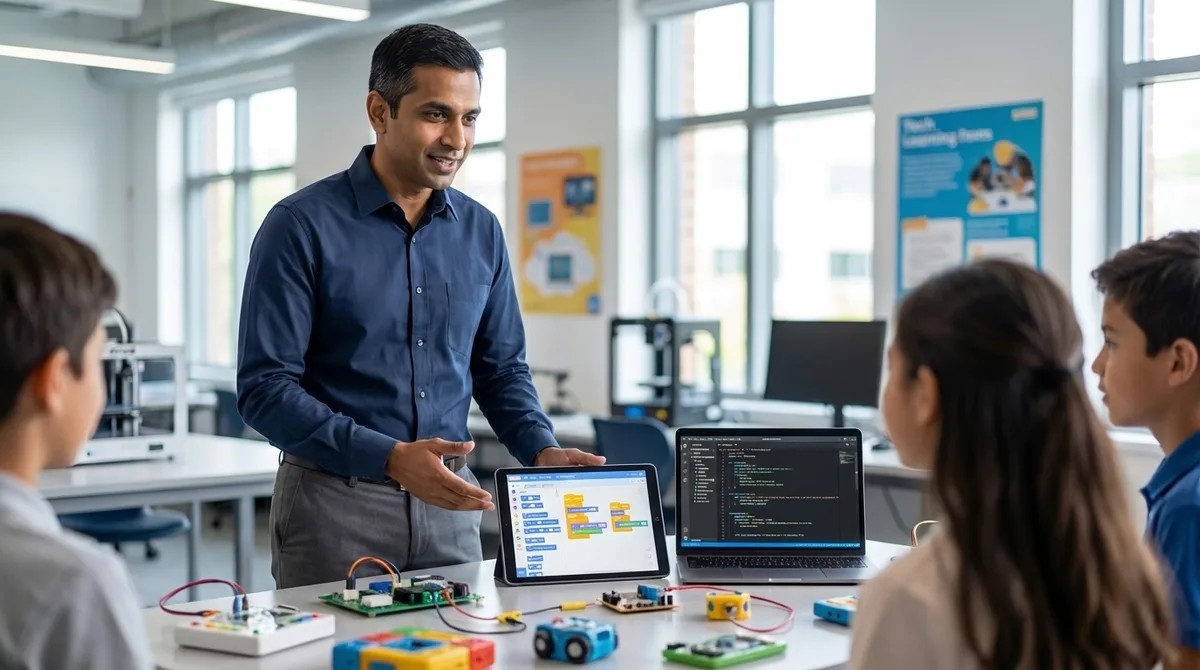
Screen-free coding toys are fantastic for teaching young children logic and sequencing, but they hit a ceiling fast—and real programming lives on screens with actual code. This episode maps the exact progression path for moving kids aged six to ten from physical coding toys to Scratch and Python, covering the prerequisite skills they must demonstrate before advancing, which hardware bridges the gap most effectively, and how to sequence instruction over eight to sixteen weeks so learners don't plateau or regress. If you've invested in robot toys and coding board games and wonder what comes next, this is your blueprint. Never advance a child to Scratch until they can verbally articulate an eight-to-twelve-step algorithm before placing physical tokens—random trial-and-error swapping means they're not ready, and premature transition creates GUI dependence that's harder to fix than initial skill gaps. Scratch's hundred-plus blocks cause cognitive overload for kids used to eight-piece physical sets; hide all categories except Motion and Events for the first three sessions, then gradually unlock Control, Looks, and Sound over subsequent weeks. Specific debugging vocabulary signals readiness: listen for unprompted use of terms like "sequence," "loop," and "condition," plus error prediction statements like "this won't work because I'm missing a turn." Hardware bridges like the Sphero indi and LEGO SPIKE Essential provide tactile-to-digital continuity by accepting both physical inputs and Scratch commands for identical behaviors, making the abstract-to-visual leap concrete. Plan for forty-five to sixty minute sessions, three to four times weekly for the first month; supervision requirements drop significantly after week eight once learners demonstrate self-correction habits. System requirements matter more than parents expect—four gigs of RAM is the minimum, but eight gigs is preferred if running Scratch and a Python IDE simultaneously, and Thonny or Mu Editor are the recommended environments for learners under twelve. Read the full article: https://stemlabguide.com/how-to-transition-from-screen-free-coding-to-scratch-and-python-programming
Embed this episode
Ready to play
How to Transition from Screen-Free Coding to Scratch and Python Programming
No transcript for this episode yet
Similar Episodes
No similar episodes found.