
EPISODE · Jul 6, 2026 · 1H 31M
How We Disappear
from Hacking State · host Alex Murshak
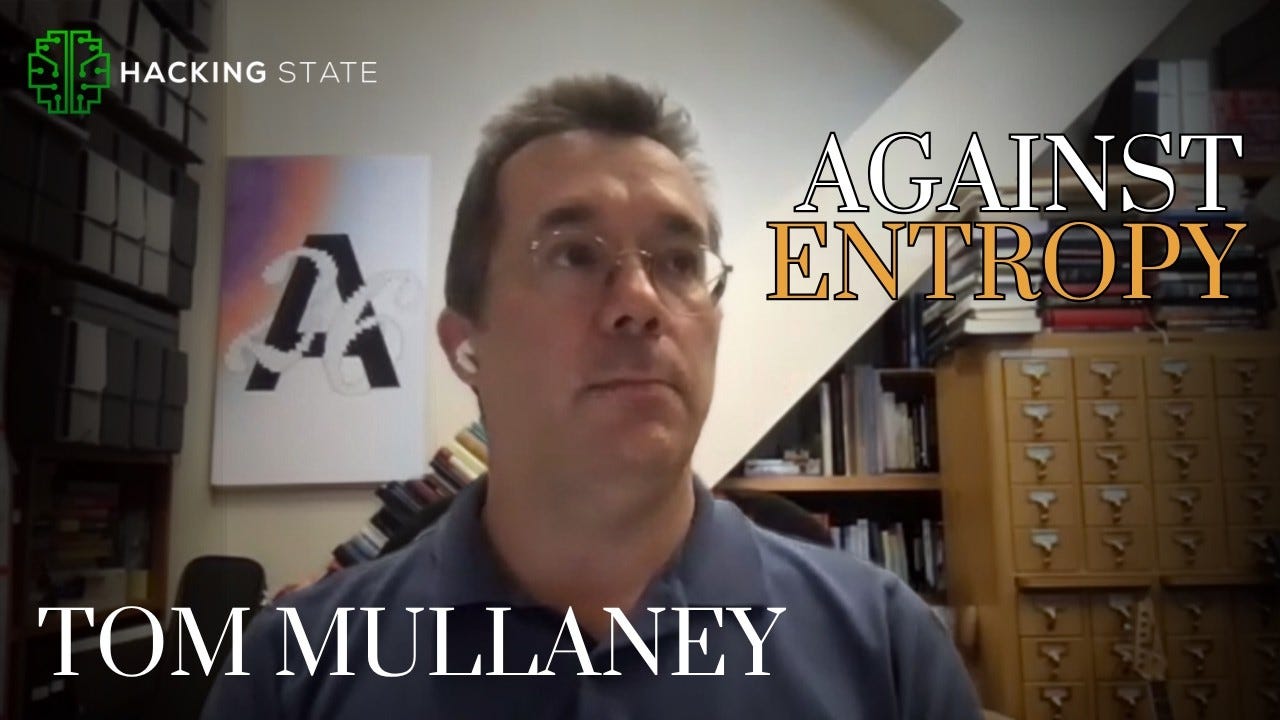
I sit down with Thomas S. Mullaney — professor of modern Chinese history and the history of technology at Stanford, Guggenheim Fellow, and director of Stanford’s Program in Science, Technology & Society — to discuss his new book, How We Disappear: A Personal History of Information (W. W. Norton). It’s his eighth book and first with a trade press, following The Chinese Typewriter and The Chinese Computer, and it turns from how information comes into being toward how it degrades, collapses, and disappears. Our conversation begins with the ordinary ways the past is lost — not fires or catastrophes, but the everyday decisions that quietly erase records, like a family clearing out a box of irreplaceable papers after a death. Mullaney sets this against entropy and the second law of thermodynamics, and his argument that you can’t hack your way out of decay — you can only slow it down. We discuss his central thesis for the digital age: that digitization is not preservation. Mullaney explains why magnetic and optical media are among the most fragile formats ever made, why even Stanford has digitized only one to two percent of its archives, and why he’d rather see institutions invest in better finding aids than in mass scanning that produces files without meaning. The conversation turns to why any of this matters. Mullaney argues that writing history is the same act as living a life — both are acts of compression that throw out nearly everything to hold onto a coherent story. We explore how this connects to identity, to compression as a definition of intelligence, to Durkheim’s anomie, and to the difference between biological death and the death of the creative impulse. We get into the politics of forgetting: the EU’s right to be forgotten, “design for forgetting” as an engineering principle, and Mullaney’s view of what a dignified disappearance looks like — the park bench a stranger sits on without ever knowing whose name is on it, rather than the statue no one reads. He makes the case for being “okay and not okay with it at the same time,” rejecting both nihilism and hedonism as easy ways out. We close on the AI angle, connecting Mullaney’s finding-aid argument to my own work building tools like an MCP server for congress.gov — the idea that archives need a navigable map more than they need total digitization. Get the book: How We Disappear: A Personal History of Information (https://wwnorton.com/books/9781324020783) (W. W. Norton) Follow Tom Mullaney: X/Twitter (https://x.com/tsmullaney) | Stanford profile (https://profiles.stanford.edu/thomas-mullaney) Listen on your favorite platform: Apple Podcasts: Spotify: YouTube: https://www.youtube.com/@alexmurshakRSS: https://feed.podbean.com/hackingstate/feed.xml Get full access to Hacking State at www.alexmurshak.com/subscribe
Embed this episode
Ready to play
How We Disappear
No transcript for this episode yet
Similar Episodes
No similar episodes found.
Similar Podcasts
No similar podcasts found.