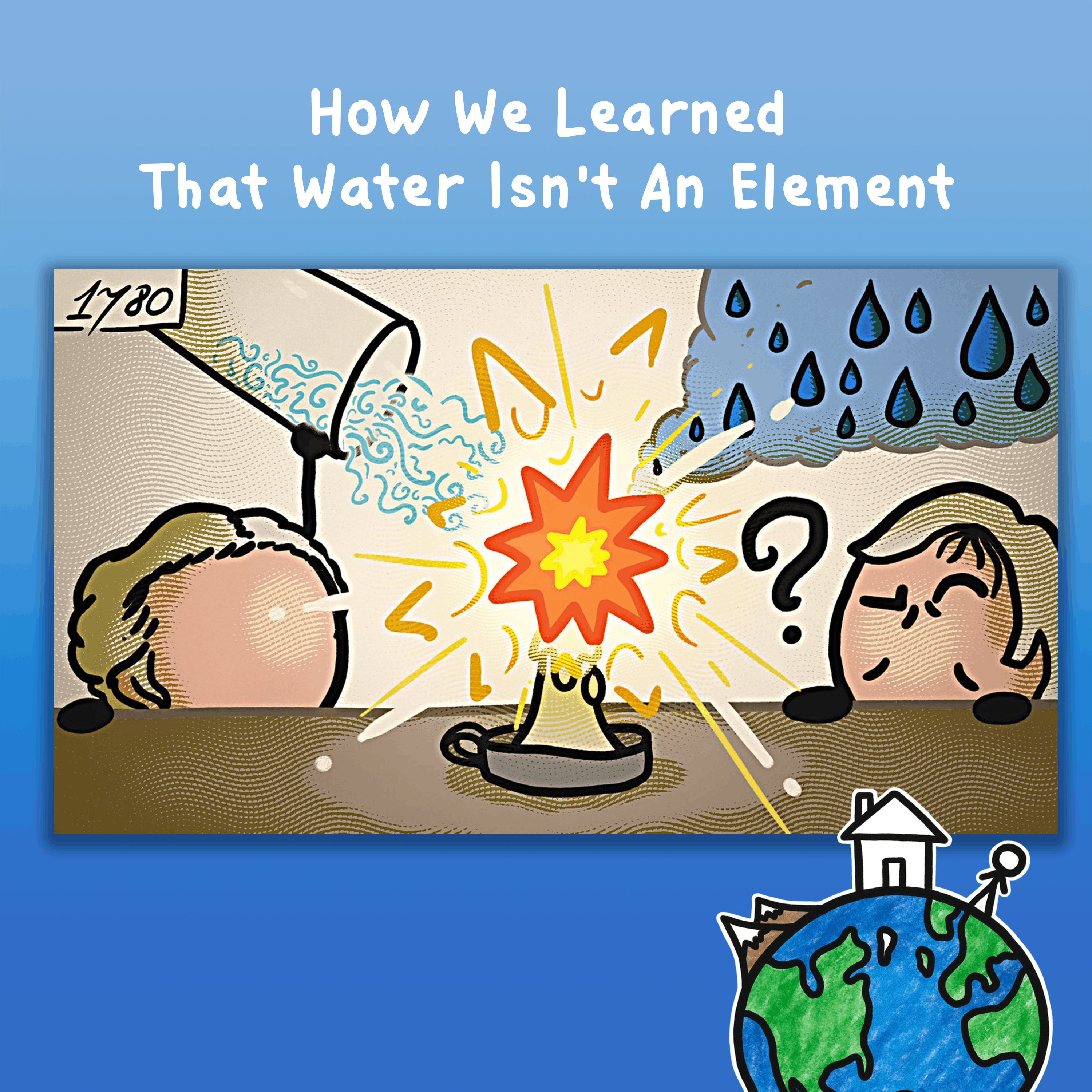
How We Learned That Water Isn't An Element episode artwork

EPISODE · Sep 25, 2025 · 4 MIN

How We Learned That Water Isn't An Element

from MinuteEarth · host Minute Earth

To learn more about this topic, start your googling with these keywords: Chemical element: is a species of atoms that have a given number of protons in their nuclei. Chemical elements cannot be broken down into simpler substances by any chemical reaction. Atom: is the smallest unit of ordinary matter that forms a chemical element. Molecule: is a group of two or more atoms held together by attractive forces known as chemical bonds. Inflammable air: an old name for hydrogen. Hydrogen: is the most abundant chemical substance in the universe. Early chemists identified hydrogen gas because it was colorless, odorless and highly combustible. Hydrogen means "maker of water" in Greek. Dephlogisticated air: an old name for oxygen. Oxygen: is Earth's most abundant element. Early chemists identified oxygen gas because it was colorless, odorless and was essential for respiration and combustion. Diatomic molecules: are molecules composed of only two atoms, of the same or different chemical elements. At standard conditions, both hydrogen and oxygen are gasses of diatomic molecules (H2 and O2, respectively). Water: is an inorganic, transparent, odorless, and nearly colorless chemical substance, which is the main constituent of Earth's hydrosphere and the fluids of all known living organisms. It is vital for all known forms of life. Its chemical formula, H2O, indicates that each of its molecules contains one oxygen and two hydrogen atoms. Combustion (or burning): is a chemical reaction between a fuel and an oxidizing agent (like oxygen gas), that produces oxidized, often gaseous products, in a mixture termed as smoke. Electrolysis: is a technique that uses direct electric current to drive an otherwise non-spontaneous chemical reaction. Avogadro's Law (sometimes referred to as Avogadro's hypothesis): is an experimental gas law that states that equal volumes of all gases, at the same temperature and pressure, have the same number of molecules. MinuteEarth is produced by Neptune Studios LLC ⁠⁠⁠⁠⁠⁠⁠⁠⁠⁠⁠⁠⁠⁠⁠⁠⁠⁠⁠⁠⁠⁠⁠⁠⁠⁠⁠⁠⁠⁠⁠⁠⁠⁠⁠⁠⁠⁠⁠⁠https://neptunestudios.info⁠⁠⁠⁠⁠⁠⁠⁠⁠⁠⁠⁠⁠⁠⁠⁠⁠⁠⁠⁠⁠⁠⁠⁠⁠⁠⁠⁠⁠⁠⁠⁠⁠⁠⁠⁠⁠⁠⁠⁠ If you like what we do, you can help us! - Become our patron: ⁠⁠⁠⁠⁠⁠⁠⁠⁠⁠⁠⁠⁠⁠⁠⁠⁠⁠⁠⁠⁠⁠⁠⁠⁠⁠⁠⁠⁠⁠⁠⁠⁠⁠⁠⁠⁠⁠⁠⁠https://patreon.com/MinuteEarth⁠⁠⁠⁠⁠⁠⁠⁠⁠⁠⁠⁠⁠⁠⁠⁠⁠⁠⁠⁠⁠⁠⁠⁠⁠⁠⁠⁠⁠⁠⁠⁠⁠⁠⁠⁠⁠⁠⁠⁠   - Buy our merch: ⁠⁠⁠⁠⁠⁠⁠⁠⁠⁠⁠⁠⁠⁠⁠⁠⁠⁠⁠⁠⁠⁠⁠⁠⁠⁠⁠⁠⁠⁠⁠⁠⁠⁠⁠⁠⁠⁠⁠⁠http://dftba.com/minuteearth⁠⁠⁠⁠⁠⁠⁠⁠⁠⁠⁠⁠⁠⁠⁠⁠⁠⁠⁠⁠⁠⁠⁠⁠⁠⁠⁠⁠⁠⁠⁠⁠⁠⁠⁠⁠⁠⁠⁠⁠   - Buy our book: ⁠⁠⁠⁠⁠⁠⁠⁠⁠⁠⁠⁠⁠⁠⁠⁠⁠⁠⁠⁠⁠⁠⁠⁠⁠⁠⁠⁠⁠⁠⁠⁠⁠⁠⁠⁠⁠⁠⁠⁠https://minuteearth.com/books⁠⁠⁠⁠⁠⁠⁠⁠⁠⁠⁠⁠⁠⁠⁠⁠⁠⁠⁠⁠⁠⁠⁠⁠⁠⁠⁠⁠⁠⁠⁠⁠⁠⁠⁠⁠⁠⁠⁠⁠ - Sign up to our newsletter: ⁠⁠⁠⁠⁠⁠⁠⁠⁠⁠⁠⁠⁠⁠⁠⁠⁠⁠⁠⁠⁠⁠⁠⁠⁠⁠⁠⁠⁠⁠⁠⁠⁠⁠⁠⁠⁠⁠⁠⁠http://news.minuteearth.com⁠⁠⁠⁠⁠⁠⁠⁠⁠⁠⁠⁠⁠⁠⁠⁠⁠⁠⁠⁠⁠⁠⁠⁠⁠⁠⁠⁠⁠⁠⁠⁠⁠⁠⁠⁠⁠⁠⁠⁠   - Share with your friends and family - Leave us a comment (we read them!) Learn more about your ad choices. Visit megaphone.fm/adchoices

To learn more about this topic, start your googling with these keywords: Chemical element: is a species of atoms that have a given number of protons in their nuclei. Chemical elements cannot be broken down into simpler substances by any chemical reaction. Atom: is the smallest unit of ordinary matter that forms a chemical element. Molecule: is a group of two or more atoms held together by attractive forces known as chemical bonds. Inflammable air: an old name for hydrogen. Hydrogen: is the most abundant chemical substance in the universe. Early chemists identified hydrogen gas because it was colorless, odorless and highly combustible. Hydrogen means "maker of water" in Greek. Dephlogisticated air: an old name for oxygen. Oxygen: is Earth's most abundant element. Early chemists identified oxygen gas because it was colorless, odorless and was essential for respiration and combustion. Diatomic molecules: are molecules composed of only two atoms, of the same or different chemical elements. At standard conditions, both hydrogen and oxygen are gasses of diatomic molecules (H2 and O2, respectively). Water: is an inorganic, transparent, odorless, and nearly colorless chemical substance, which is the main constituent of Earth's hydrosphere and the fluids of all known living organisms. It is vital for all known forms of life. Its chemical formula, H2O, indicates that each of its molecules contains one oxygen and two hydrogen atoms. Combustion (or burning): is a chemical reaction between a fuel and an oxidizing agent (like oxygen gas), that produces oxidized, often gaseous products, in a mixture termed as smoke. Electrolysis: is a technique that uses direct electric current to drive an otherwise non-spontaneous chemical reaction. Avogadro's Law (sometimes referred to as Avogadro's hypothesis): is an experimental gas law that states that equal volumes of all gases, at the same temperature and pressure, have the same number of molecules. MinuteEarth is produced by Neptune Studios LLC ⁠⁠⁠⁠⁠⁠⁠⁠⁠⁠⁠⁠⁠⁠⁠⁠⁠⁠⁠⁠⁠⁠⁠⁠⁠⁠⁠⁠⁠⁠⁠⁠⁠⁠⁠⁠⁠⁠⁠⁠https://neptunestudios.info⁠⁠⁠⁠⁠⁠⁠⁠⁠⁠⁠⁠⁠⁠⁠⁠⁠⁠⁠⁠⁠⁠⁠⁠⁠⁠⁠⁠⁠⁠⁠⁠⁠⁠⁠⁠⁠⁠⁠⁠ If you like what we do, you can help us! - Become our patron: ⁠⁠⁠⁠⁠⁠⁠⁠⁠⁠⁠⁠⁠⁠⁠⁠⁠⁠⁠⁠⁠⁠⁠⁠⁠⁠⁠⁠⁠⁠⁠⁠⁠⁠⁠⁠⁠⁠⁠⁠https://patreon.com/MinuteEarth⁠⁠⁠⁠⁠⁠⁠⁠⁠⁠⁠⁠⁠⁠⁠⁠⁠⁠⁠⁠⁠⁠⁠⁠⁠⁠⁠⁠⁠⁠⁠⁠⁠⁠⁠⁠⁠⁠⁠⁠   - Buy our merch: ⁠⁠⁠⁠⁠⁠⁠⁠⁠⁠⁠⁠⁠⁠⁠⁠⁠⁠⁠⁠⁠⁠⁠⁠⁠⁠⁠⁠⁠⁠⁠⁠⁠⁠⁠⁠⁠⁠⁠⁠http://dftba.com/minuteearth⁠⁠⁠⁠⁠⁠⁠⁠⁠⁠⁠⁠⁠⁠⁠⁠⁠⁠⁠⁠⁠⁠⁠⁠⁠⁠⁠⁠⁠⁠⁠⁠⁠⁠⁠⁠⁠⁠⁠⁠   - Buy our book: ⁠⁠⁠⁠⁠⁠⁠⁠⁠⁠⁠⁠⁠⁠⁠⁠⁠⁠⁠⁠⁠⁠⁠⁠⁠⁠⁠⁠⁠⁠⁠⁠⁠⁠⁠⁠⁠⁠⁠⁠https://minuteearth.com/books⁠⁠⁠⁠⁠⁠⁠⁠⁠⁠⁠⁠⁠⁠⁠⁠⁠⁠⁠⁠⁠⁠⁠⁠⁠⁠⁠⁠⁠⁠⁠⁠⁠⁠⁠⁠⁠⁠⁠⁠ - Sign up to our newsletter: ⁠⁠⁠⁠⁠⁠⁠⁠⁠⁠⁠⁠⁠⁠⁠⁠⁠⁠⁠⁠⁠⁠⁠⁠⁠⁠⁠⁠⁠⁠⁠⁠⁠⁠⁠⁠⁠⁠⁠⁠http://news.minuteearth.com⁠⁠⁠⁠⁠⁠⁠⁠⁠⁠⁠⁠⁠⁠⁠⁠⁠⁠⁠⁠⁠⁠⁠⁠⁠⁠⁠⁠⁠⁠⁠⁠⁠⁠⁠⁠⁠⁠⁠⁠   - Share with your friends and family - Leave us a comment (we read them!) Learn more about your ad choices. Visit megaphone.fm/adchoices

NOW PLAYING

How We Learned That Water Isn't An Element

0:00 4:47

No transcript for this episode yet

We transcribe on demand. Request one and we'll notify you when it's ready — usually under 10 minutes.

No similar episodes found.

No similar podcasts found.

Frequently Asked Questions

How long is this episode of MinuteEarth?

This episode is 4 minutes long.

When was this MinuteEarth episode published?

This episode was published on September 25, 2025.

What is this episode about?

To learn more about this topic, start your googling with these keywords: Chemical element: is a species of atoms that have a given number of protons in their nuclei. Chemical elements cannot be broken down into simpler substances by any...

Can I download this MinuteEarth episode?

Yes, you can download this episode by clicking the download button on the episode player, or subscribe to the podcast in your preferred podcast app for automatic downloads.
URL copied to clipboard!