
EPISODE · Mar 16, 2025 · 13 MIN
How Weightlifting Cured My Anorexia
from Honestly Unorthodox · host Kayla
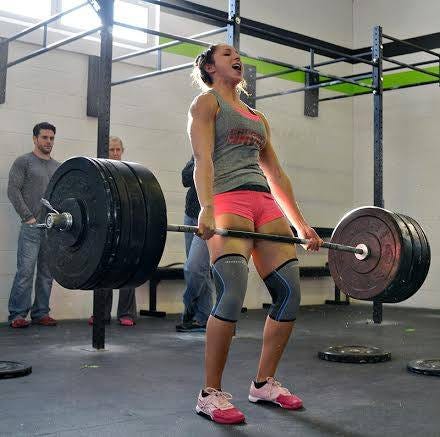
I’d like to preface this piece with the understanding that I am not a “gym-bro” who worships macros as religious entities, nor am I a “health influencer” documenting my “journey” through overly-tight-and-too-small clothing. I’m simply a recovering lunatic who found solace in exercise, exercise that I was once banned from engaging in at every gym across the state of Illinois.Anorexia can sometimes be portrayed inaccurately in TV shows and movies. Most mental illness is. Make no mistake: true, clinical mental illness is utter hell. It fractures your most valued social relationships. Fixation becomes the albatross worn proudly around your neck. Every decision, which has been analyzed and rehashed and agonized over, is dictated by your diagnosis. You evolve into a shell of yourself, a lifeless carcass forever indebted to a small clump of neurons in your brain which cannot be seen or explained. Phew! Now that that’s out of the way, let’s briefly discuss the specifics of anorexia.Thanks for reading honestly unorthodox.! Subscribe for free to receive new posts and support my work.Anorexia has very little to do with food, despite the stereotypical belief that it’s merely a desperation for thinness. Food, and our perverse relationship with it, is just a vessel for control and understanding, a vessel similar to alcohol or heroin for those who find everyday life unbearable. Whether because we haven’t developed appropriate coping mechanisms or we’ve inherited some strange compulsion, our bizarre behavior is a means to make reality more suitable to our liking. Stated differently: we customize reality like we’re in a delusional game of the Sims. Oddly enough, the bizarre behavior can become lethal. We disregard this fact the deeper into our diagnosis we spiral.The “gold standard” for eating disorders is Cognitive Behavior Therapy (CBT), which I’ve written about extensively in a good half of essays in this publication. I find such versatile utility in it that I believe only allowing licensed professionals to use it is a wicked form of “gatekeeping”. CBT’s prized technique, and what I believe to be its most useful principle, is cognitive restructuring: becoming aware of distorted, negative, and irrational thinking, and developing more balanced approaches. Within these approaches comes a change in behavior, although I prefer behavior change to thought-dissection for most.This is where weightlifting and physical fitness entered into focus. Although my brother and I have played sports from elementary school all the way through high school, and recreationally in college, I began taking physical fitness seriously in early high school. I mentioned earlier that I’d once been banned from every gym across the state of Illinois; this was per my psychiatric team when I was in inpatient treatment for anorexia. This portion of my treatment, which has underpinnings in CBT, was grounded in behaving “in spite of” my most delusional and harmful beliefs. My niche mutation of anorexia was called “exercise purging”, in which I was compelled to exercise for hours upon hours each day to compensate for any food I consumed. By withholding access to exercise, I was forced to both tolerate my discomfort as well as develop a new sense of meaning.Although it pains me to use platitudes like “life-changing journey” or “life-saving treatment”, replacing an obsession with starvation with education of my body altered the entire trajectory of my recovery. Weightlifting, I can say with conviction, saved my life. It refashioned my idea of what my body could do and what its purpose was. My perception of my body shifted gradually from “vessel for starvation” to “vehicle for horsepower”. Learning about how the brain and body were connected from the standpoint of biology and kinesiology entirely removed the emotional component of my behavior.Anorexia robbed from me (or, rather, I voluntarily relinquished to it) any modicum of common sense, at least as it related to basic physiology. To starve was to defy a basic need, and to defy a basic need earned me a coveted spot next to Greek gods and main characters in folk lores. With each grumble of my stomach was a notch upward on the totem pole toward Zeus-level strength. I achieved mildly similar outcomes when I came to realize all that my body was able to do if I just allowed it to grow in the way it was meant to. Weightlifting corrected my illogical beliefs about my body and its purpose without a single licensed professional. It proved my strongly held beliefs wrong with every repetition; I was so wildly wrong about what brand of discomfort I believed I could handle. And it demonstrated for me in real time that action must precede motivation or readiness, that behavior change, and behaving ‘as if’, has far greater and longer-term benefits than waiting around for the ‘a-ha’ moment that is stereotypical of talk therapy.Allow me to explain. I’ll do so by explaining in layman’s terms how behavior therapy for behavior disorders works, and how weightlifting/mastery of a skill, in general, encompasses these very principles---- save the copay.Eating disorders are maintained by the maladaptive behaviors we engage in (e.g., restricting food, excessive exercise, vomiting, use of laxatives), as they reinforce the relief we get from discomfort. This discomfort typically stems from fixation on weight and body image, much of which is negative, and these negative symptoms are only then ameliorated by the maladaptive behaviors listed. In nature and in overt behavior, eating disorders operate like substance use disorders: reality bites, so we drink, or shoot up, or starve. Avoidance begets avoidance. This offers immediate relief, and with such relief flows a sense of control over a situation otherwise intolerable. Quite predictably, the sweet, short-lived escape produces heightened sensitivity to future triggers, whether those be environmental and “outside of us”, or entirely internal (i.e., in our own head). The more insufferable reality becomes, the more regularly and automatically we rely on our junk behaviors. This is the “disordered” part. The pattern becomes dysfunctional when it begins to interfere with everyday life.The key, then, is understanding 1. How our thoughts shape the way we feel and act, 2. How the way we act influences the way we think and feel, and 3. How what we feel shapes how we think and act. Our thinking, our emotions, and our behaviors all become enmeshed in a sort of incestual relationship, the three maniacally twirling in unison to inform distorted thinking and shitty decisions. That is, until we learn to separate this psychological thrupple.I prefer to separate the three prongs of Misery’s Trident through education and basic strategies in self-monitoring. Education is exactly what is sounds like: it is an outsider taking on the role of teacher by providing objective, scientific, logical information. In this phase, we tend to avoid talk of childhood trauma or repeated references to past behavior. Frankly, it is irrelevant with a behavior problem. The information we choose to teach, then, is under the discretion of the teacher. While sometimes useful to educate people about their own diagnoses, I prefer to educate about more physiological aspects of their brain and their behavior. In doing so, we eliminate further attention and therefore control given to the diagnosis and begin to understand ourselves as beings amenable to change. Knowledge is a psychiatric disorder’s kryptonite.I was taught to understand my brain as an organ worthy of the same oversight as any other organ. The brain was taught as being closely connected to the mind and the physical being, rather than a separate entity requiring professional, psychological expertise. With such education came experiential, debate-based learning about cognitive distortions and the faulty beliefs we develop through social learning. My belief, at the time? That anorexia served me, and my livelihood was an impossibility if not for its presence.This is where weightlifting and exercise shone through as powerful aspects of treatment. Modern adults have a tendency to hoard information, believing that doing so is synonymous with learning. Without action, and without intentional application of what we’ve been taught, skill-building or mastery cannot possibly take place. We’ve only managed to entertain ourselves. This is important to recognize as it relates to treatment: our distorted, culturally constructed version of therapy can imply that simply talking about our problems and rehashing old events guarantees improved functioning. It does not work this way. We must act.Slowly changing everyday behaviors (because, remember, they influence how we feel, think, and act and vice versa) is the most critical component of addressing any challenge--- but particularly compulsive behavior problems. The client does not have to feel “ready” or “primed” or “prepared” to change these behaviors. Parents do not need to wait until they’re “stable” or “better”. They just need to do them. They just need to do something, anything that serves to prove to their mind that they can operate without their mental crutch (i.e., their maladaptive behavior). Becoming fluent in weightlifting, and continuously adding difficulty and demand with each training week, reconditioned the idea of “control”. I felt masterful. Artful, even. And such confidence and awareness naturally transferred over to distorted thoughts that inevitably came up throughout each day.If you’ve been a reader for a while, you recognize my love of Socratic dialogue. I don’t consider talk therapists the only people capable or even qualified to use such a powerful technique when relating to others and their problems. Socratic dialogue is simple but not easy. The many examples of types of questions are listed below. What this form of dialogue aims to do is build critical thinking through use of open-ended questions, all which glean different types of information based on how the question is framed. Perhaps we probe purpose or assumptions. Maybe we wish to compare and contrast. Prodding at others’ viewpoints and self-reflecting on our own responses is a potent means of understanding what we believe.Helping control patterns of thinking can happen naturally during intense physical activity. There are moments of self-doubt many of us are plagued by, whether we’re true athletes or just exercise enthusiasts like myself. In moments of strenuous effort, it’s likely we’ve stopped before we actually needed to. We equate peak distress or discomfort with danger or even failure and behave in accordance (i.e., we quit). What if we trained ourselves to behave differently, or to behave “in spite of” what our brain told us? It’s worth this little thought + behavior experiment, then: the next time you’re tempted to quit during a workout, say to yourself, “What if I’m wrong, and can do 20% more?” Follow up this thought with the experiment that is trying it out. When you’re running intervals at a blazing fast pace and wish to stop, force yourself to go at an even higher pace for 20 more seconds. Your mind requires repetition to achieve mastery, and overcoming faulty thinking is no different. You can do this.My goal for the near-and-distant-future is to bring this education to schools. My hope is to help influence parents toward a more balanced, holistic approach to their child’s distress, one which actively resists the modern tendency toward feelings and avoidance. I also dismiss the concept that only licensed talk professionals are capable of teaching valuable skills in self-management and self-betterment. I see a future in which students are taught to monitor their own thinking and behavior and develop holistic health plans for themselves, ones which act as their own internal pharmacies and preventative healthcare. Perhaps our mental health crisis isn’t a mental health crisis, but a global misunderstanding of the human body. My anorexia wasn’t cured through delicate conversations about my childhood, nor were my symptoms relieved through vapid statements about doing things that are hard. I cured it myself. Through repeated struggle, through continuous effort.To choose one’s attitude in any given set of circumstances is our purest freedom. As Viktor Frankl yet again reminds us with his poignant memoir of horror and hope: “In some ways suffering ceases to be suffering at the moment it finds a meaning, such as the meaning of a sacrifice.”Thanks for reading honestly unorthodox.! Subscribe for free to receive new posts and support my work. This is a public episode. If you would like to discuss this with other subscribers or get access to bonus episodes, visit honestlyunorthodox.substack.com
NOW PLAYING
How Weightlifting Cured My Anorexia
No transcript for this episode yet
Similar Episodes
Jul 8, 2026 ·2m
Jul 3, 2026 ·76m
Jun 23, 2026 ·14m
Jun 21, 2026 ·17m
Jun 12, 2026 ·51m
Jun 9, 2026 ·16m