NPR. During President Trump's inaugural address last year, he promised to refill America's Strategic Petroleum Reserve, aka America's backup oil supply. We will bring prices down. Fill our strategic reserves up again right to the top. Since that day, those reserves have fallen another 30%.
A certain war in Iran has resulted in a closed Strait of Hormuz, which has prevented much of the world's oil from actually getting out. And in that time, the reserve has served as a price cushion, shielding Americans from the reality of low global oil supply. But now this backup oil is running out. But look, Trump knows this. He still wants to refill that reserve.
His new answer? Then his oil and oil. It's the biggest oil deal, and probably it's the biggest deal in the history of our country. 65 billion barrels or hours. Whether it's with Venezuelan oil or something else, the reserve needs to be refilled, because it is widely considered critical for energy security.
This is the indicator from Planet Money. I'm Cooper Kasmeke. And I'm Ricky Mulvey. Today on the show, can Venezuela oil save the Strategic Petroleum Reserve? And what does all of this mean for our wallets?
That's after the break. This week on sources and methods, President Trump's diesel deal with Russia? Would it help? Would shipping costs? The United States produces more diesel than it consumes.
There's no real need to bring more diesel into this country. Plus, we dig into claims from Ukraine that the US cut access to crucial military satellites. Listen now to sources and methods from NPR. Hey, how are you feeling right now? Exhausted from the summer?
Overwhelmed with the new school year? Restless? Inkshis? LifeKit is here to help. Consider us your mental health accountability buddy, with episodes on everything from navigating social anxiety to unlearning perfectionism.
Listen to the LifeKit podcast in the NPR app or wherever you get your podcasts. Back in the early 70s, Arab countries launched a massive oil embargo on the United States, following US support for Israel during the Ump This isn't totally unique. Some 30 countries have a backup reserve, Japan, Germany, Australia. But Siddarth Mishra says the US version is special. The oil is stored in these man-made underground caves.
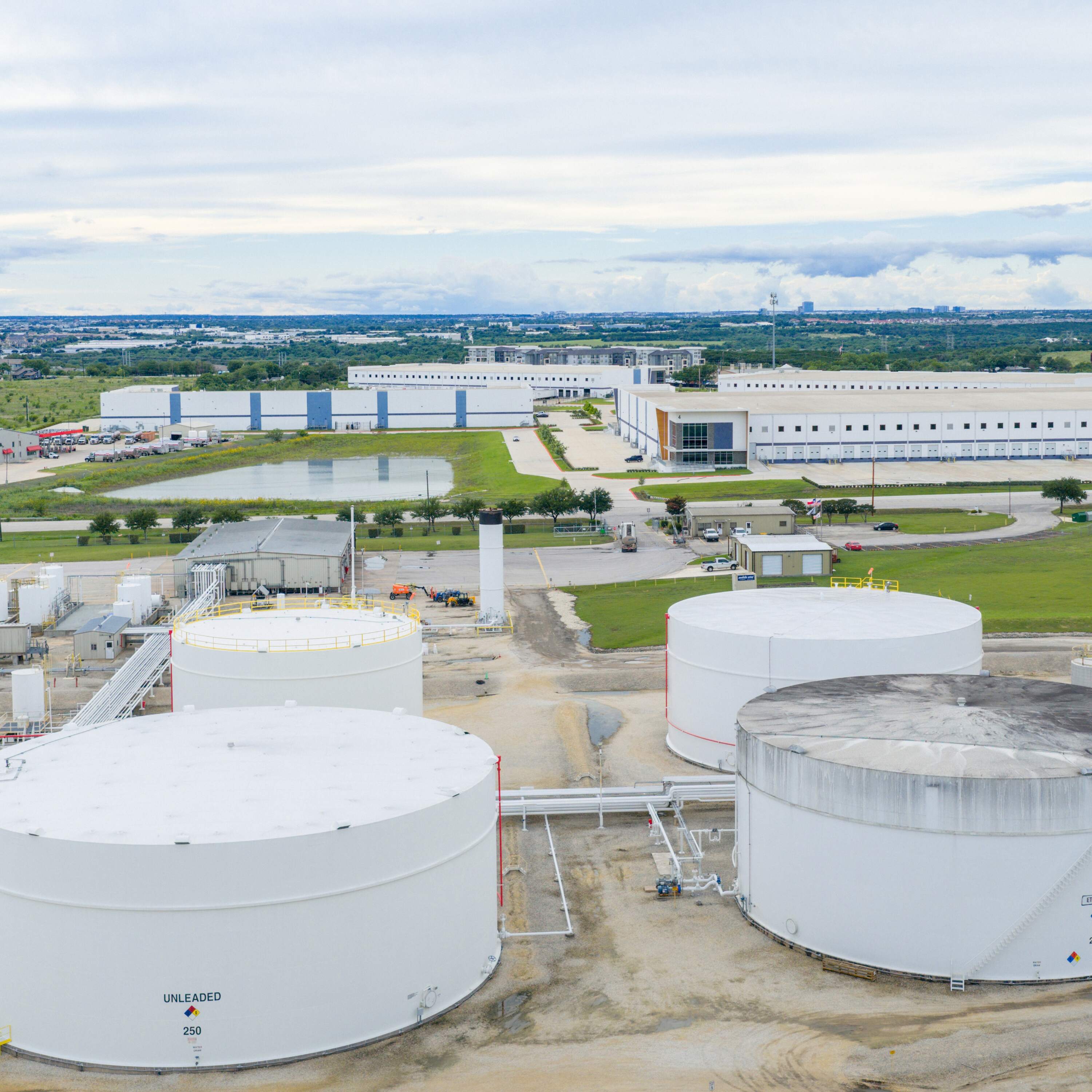
These cabins are engineering marvel the way they were created back then. Siddarth is a professor of petroleum engineering at Texas A&M. He says the US government decided the most effective way to store millions of barrels of oil was not through metallic storage tanks, but salt caverns. So engineers pumped massive amounts of water to dissolve the salt banks underneath the earth and create caves. These caves are not like where we can walk.
These are not traditional caves. These are human design caves. The size of the cylinder would be somewhere like the size of empire state or a little larger. Yeah, making up all 100 plus stories of that building. And there are 60 of these things located between Texas and Louisiana that make up the Strategic Petroleum Reserve, aka SBR.
SBR has been a backbone of American economic success and energy security for many, many years. As in the first time, SBR came into its use, was a 1991 operation desert storm. And during Hurricane Katrina, again, SBR showed up to give us a safety net during the supply shock. Arab Spring 2011, Ukraine War 2022. And currently what is happening in the state of farmuse is also requiring American dependence on SBR.
If you drive in the US, the SBR is saving you money. Back in 2022, the global drawdown saved you roughly 17 to 42 cents per gallon. But if another disruption hit tomorrow, that deal may not last much longer because the reserve has added its lowest point since 1982 and falling fast. Just in the last six years, it's dropped 55% read Ukraine at Iran Wars. But the risk of a low SBR isn't just about volume.
The structure itself doesn't work as well with all this overuse. The lower the reserve gets, the more water you add, and there's more room for contamination of that oil. And refineries don't like contaminated oil, so it's harder to sell. Also that contamination can create a sludge that makes it harder to withdraw the oil quickly. And with drawing the oil quickly, that's kind of the whole point.
SBR is designed for emergency withdrawal, which means we need to withdraw really fast. Over time, the overuse of the reserve has had a permanent impact. The reserves themselves are shrinking and making them weaker. As we put in more and more water, we start dissolving the salts. The salt, the carbon itself gets dissolved, so we are creating unstable structures.
Essentially, it's leaving the engineering miracle that so impressed, Siddharth compromised. Sounds like we're playing a dangerous game here. Yeah, and the Trump administration has had their eye on solutions for a while, but it is not an easy fix. Joseph Micah is an energy security expert with the Center for Strategic and International Studies. He says we're not exactly in a position to just buy more oil to refill this thing.
Under normal mechanisms, it requires Congress to say we're willing to buy oil and stick it in the ground. And at a time of significant fiscal deficit, that can be a challenging problem. previous administrations have come up with strategies to refill the reserve. For example, during the Clinton and Bush administrations, they did it through a royalty and kind program. Basically, when companies wanted to extract oil from federally owned reserves, instead of paying the government, they just gave them oil to put back in the strategic petroleum reserve.
But now the administration is looking at some more unique strategies. Back in April, energy secretary Chris Wright offered digging up oil underneath military bases. Though I have not heard follow up on that. But most recently, the headline solution is Venezuelan oil. A private company grants it to US 20% control of current and future fields that it operates in Venezuela.
The important thing to note, Venezuela has a straight up, different kind of oil than the US has in the SBR. So it would have to be through some trading mechanism where the oil is sold and another is purchased. Joseph, the energy security expert, he's bullish on the Venezuela deal. He thinks this trading thing could actually work. There are a lot of mechanisms that have to work for this plan to play out.
But the key thing that it adds is a source of oil, which won't cause large market disruptions and doesn't require the United States at a time of high prices and fiscal imbalance to get Congress to agree to spend a lot of money to fill the SBR. In other words, anything that doesn't mean Congress buying oil seems awesome. Yeah, here are the challenges though. It is infamously difficult to get oil out of the ground in Venezuela. It would require an enormous amount of investment infrastructure after years of under investment and corruption.
One expert in Latin American energy put that figure at $100 billion over the next decade to get production levels to where they were 20 years ago. And it's not clear who would be footing that bill, whether it's oil companies, the US government or somebody else. Arnab data is a managing director at Employee America focusing on energy markets. He says this Venezuela thing, it's just kind of a hair-brained scheme. This Venezuelan swap idea, like, I'm not really sure why we should be supporting Venezuelan production when we've got production here at home and amongst our allies, I can fit this bill.
Instead of investing $100 billion of money in another country's oil coordinating between agencies, sifting through the political chaos of Venezuela, Arnab says one could just put that money towards the Strategic Petroleum Reserve. Yeah, we don't need to go out for oil. We have plenty in the refrigerator. We've got it right here. Plus, Arnab thinks the Trump administration's current strategy, it's working just fine.
The Department of Energy is basically loaning out barrels to oil companies. Then they promise to return the oil sometime later at up to a 24% premium. I think that this is a well-executed way of delivering to the market, but filling it back and also sending a signal to the market that there's going to be demand for US barrels. Either way, oil supplies continue to get lower globally. Another straight is under who the control and risk of closure.
For Americans, who knows how much longer the Strategic Petroleum Reserve can shield us for even higher costs. If you like today's show, you should sign up for the indicators newsletter. And by me, this story actually came from a segment there. Once a week, we collect the best economic headlines and stories that we don't always turn into podcast episodes. Every Friday in your inbox, sign up at NPR.org slash indicator newsletter.
This episode was produced by Julia Ritchie and engineered by Quasie Lee. It was fact checked by Sierra Juarez, Kaken and his editor, and the indicator is a production of NPR. This election season, let the NPR Politics podcast save your time and your sanity. It will help you understand key races, which polls you can safely ignore, and what might happen if power shifts in Congress. Our short daily episodes come out every afternoon so you can spend less time scrolling through each chaotic news cycle.
Make NPR Politics your hub for midterm election coverage, follow our podcast on the NPR app or wherever you get your podcast. On the next through line from NPR. I was surprised that this man every single day takes a chair and goes to the troubles and debris of his house. And this starts to tell stories to his children, to his mother, to his wife. We travel through the past four seasons of ceasefire in Gaza with NPR's NS Baba.