
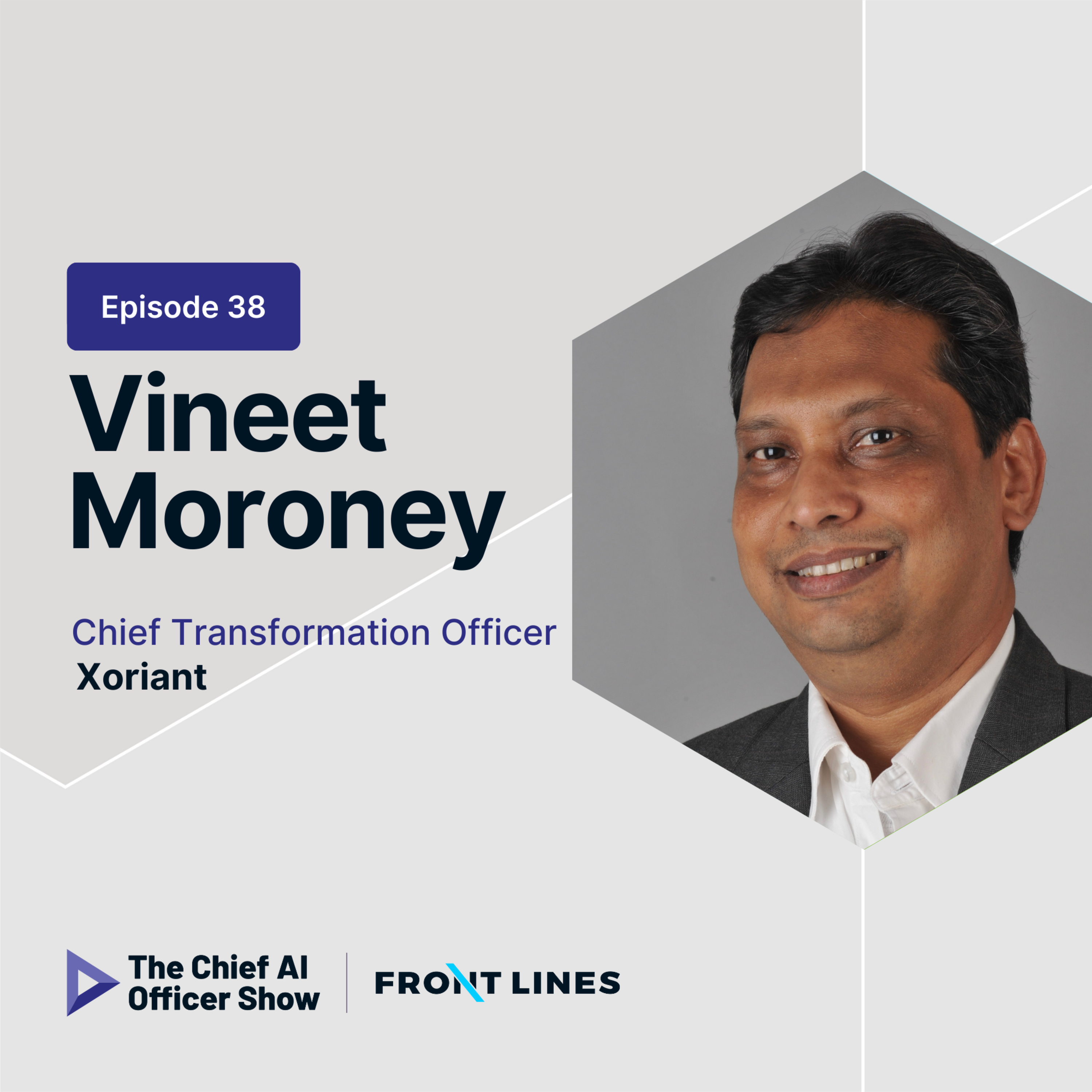
EPISODE · Feb 26, 2026 · 46 MIN
How Xoriant ties compensation to AI metrics: The revenue, margin, and brand multiple framework
from The Chief AI Officer Show · host Front Lines
Most enterprise AI initiatives die in pilot purgatory because organizations chase peripheral use cases instead of embedding AI into core business processes. Vineet Moroney, Chief Transformation Officer at Xoriant, a 6,000-person engineering services firm, has built a measurement system that eliminates this problem: tie AI directly to three financial metrics (revenue, margin, brand multiple) and make 50% of performance bonuses dependent on them.His framework separates AI revenue into two categories: "with AI" (AI-led service transformation like platform modernization) and "for AI" (building AI capabilities on customer platforms). AI margin captures efficiency gains from tool usage that improve project delivery economics. AI multiple quantifies brand value and downstream revenue from innovative deployments. This structure forces teams to distinguish between projects that matter and expensive experiments.When Xoriant's CFO wanted to reduce Days Sales Outstanding, Vineet built an invoice payment prediction model at 87% accuracy that eliminated a five-person AR team and cut DSO by two days. The solution required no expensive models, just strategic business case selection. For manufacturing clients, he's deploying edge AI on legacy sensor infrastructure for predictive maintenance without sensor replacement, creating new service revenue streams from installed equipment bases.Topics discussed:Three-part AI revenue model distinguishing "with AI" service transformation from "for AI" capability building on customer platformsCompensation structure allocating 50% of performance bonuses across AI revenue generation, margin improvement, and brand multipleThe EXB framework quantifying AI returns through efficiency gains, experience improvements via customer lifetime value, and business impact from downstream revenueTwo-week POC to 90-day production methodology with AI assurance testing protocols for non-deterministic system validationFive prerequisite elements for POC survival: strategic alignment, C-suite sponsorship, urgent business need, allocated budget, and core process focusEdge AI monetization on legacy sensor infrastructure for predictive maintenance and service offering creation without hardware replacementInvoice payment prediction at 87% accuracy reducing five-person AR teams to single-person operations while cutting DSO by two daysWhy golden dataset POCs fail at scale due to latency, inconsistency, and infrastructure readiness gapsSales approach for skeptical executives: lead with customer pain points, prove with similar completed work, commit to rapid production timelinesMiddle management resistance as the primary adoption barrier despite CEO enthusiasm and junior staff willingness to adopt AI tools
Embed this episode
NOW PLAYING
How Xoriant ties compensation to AI metrics: The revenue, margin, and brand multiple framework
No transcript for this episode yet
Similar Episodes
No similar episodes found.
Similar Podcasts
No similar podcasts found.