
EPISODE · Jun 15, 2026 · 18 MIN
Human Adjacent
from What Are Days For · host Fernando Pessoa
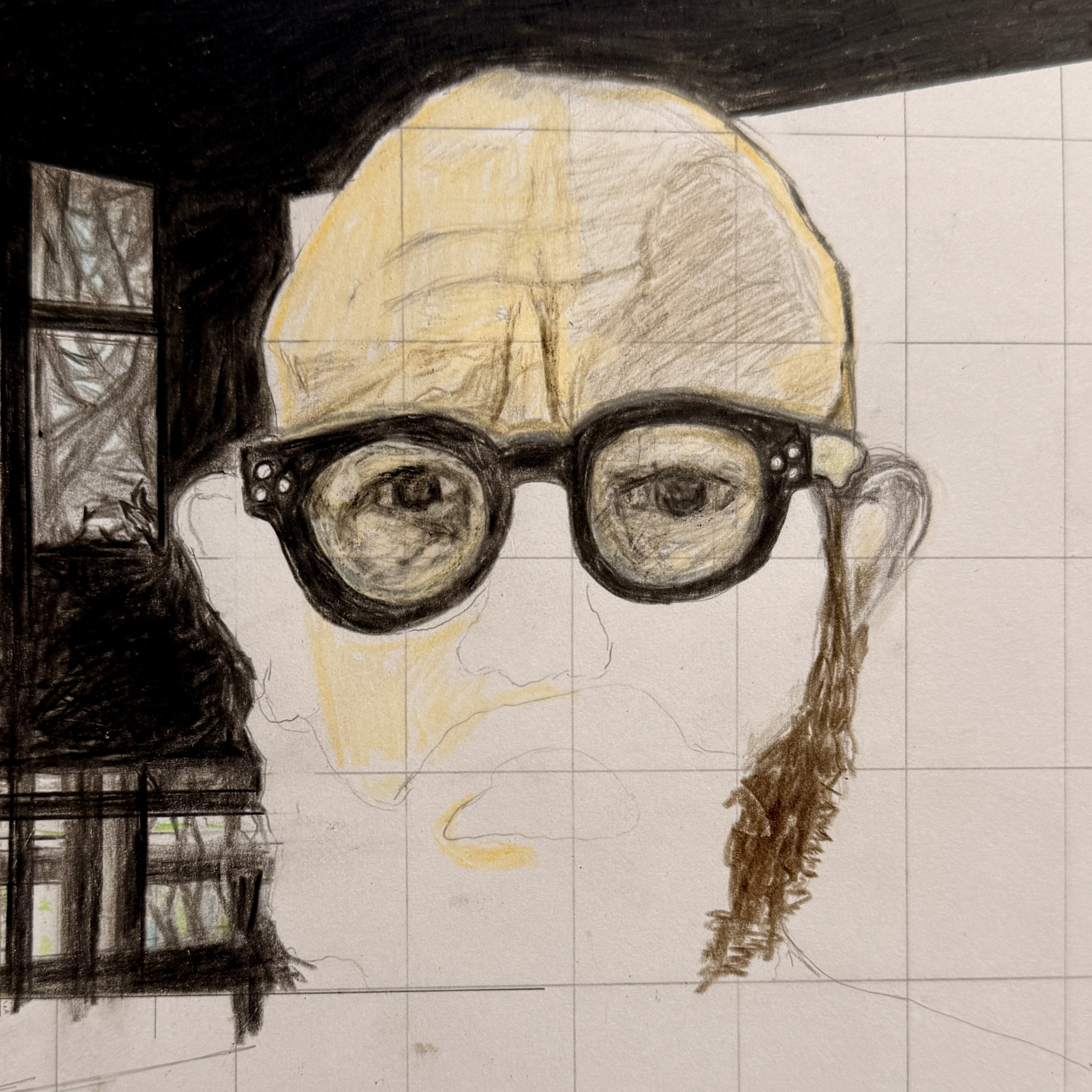
On 15 June, a fleeting thought of filming for YouTube collapses under the recognition that speaking publicly immediately changes the speaker. The imagined audience intrudes, producing a performative self that feels fundamentally different from the private conversation with a future Steve. There is an enduring tension between wanting expression and wanting freedom from the gaze of others, alongside the conviction that nobody else can ever inhabit experience with the intimacy one has with oneself. This extends into reflections on professional life. It feels deeply satisfying that people actively seek out “psychotherapist Steve” or “tea Steve”, valuing conversations enough to pay for them, yet hearing Cam describe an overflowing practice prompts curiosity about money, status and different ways of organising a life. Cam’s stories about workshops and social scenes feel faintly alien rather than enviable. The strongest wish today is simply for solitude. Even Max, normally the least intrusive companion imaginable, briefly becomes too much, needing affection when all that is wanted is silence and space. There is already awareness that these tiny acts of pushing him away will later be tinged with grief once he is gone. Leaning against the silver birch becomes an occasion for fascination with its wounded trunk. The bark split is imagined not as failure but as an ecological opening where decay, fungi, insects, spiders, lichens and defensive growth all coexist. The injury becomes habitat rather than catastrophe, reinforcing an attraction to systems that transform damage into complexity. The chosen resting place mirrors an evolving relationship with humanity itself. What once felt like exclusion from people now feels like voluntary withdrawal into “human adjacent” spaces where distant signs of civilisation remain visible without demanding participation. The empty glade offers precisely enough separation while preserving the comforting outline of the social world beyond. Thoughts turn briefly to Hinge and to Faye, a writer and academic whose profile provokes immediate forecasting. Before meeting her, an entire interpersonal dynamic has already been imagined, particularly the fear that she will inhabit an exhausting “Professor mode”. There is recognition that YouTube and video somehow reveal something more embodied and real than carefully constructed written profiles, making intuitive judgments feel strangely persuasive despite their speculative nature. The reflections drift into self parody. If Faye ever became the great love of later life, these predictions would look absurd. Meanwhile the greatest present love remains Max, whose unconditional attachment raises uncomfortable questions about narcissism and the desire for companions who simply orbit one’s existence with affection. The comparison to maternal love exposes both its comfort and its capacity to become smothering. The walk ends gently, with plans for dinner and listening either to Clive James or Michael Pollan. Clive’s wit appears effortless while clearly requiring enormous craft, leaving behind the impression of someone whose intellectual playfulness masks immense labour beneath the surface.
Embed this episode
Ready to play
Human Adjacent
No transcript for this episode yet
Similar Episodes
No similar episodes found.