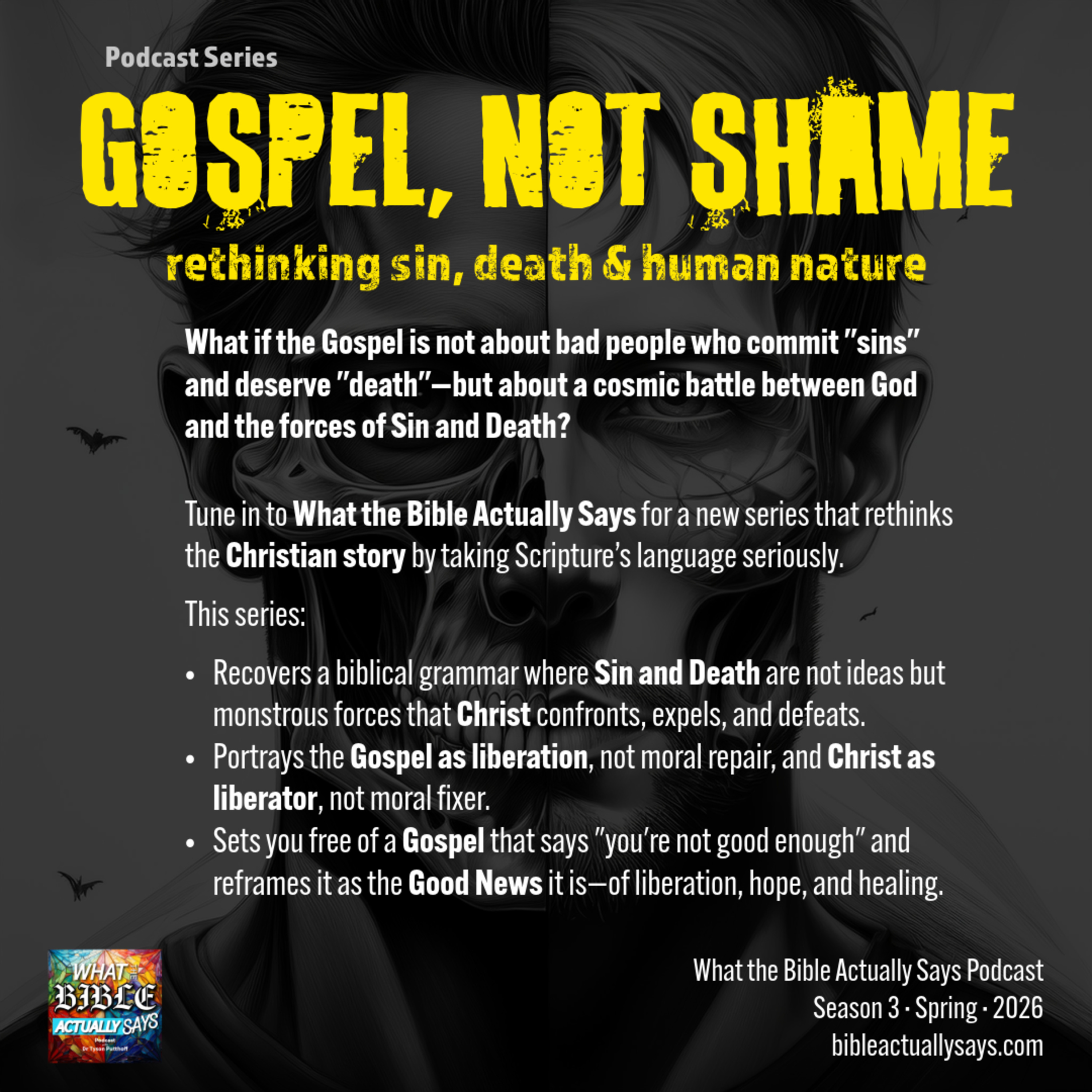
Human Body as Sacred Space: Making Better Sense of the "Image of God" in Genesis 1–2 episode artwork

EPISODE · Apr 16, 2026 · 36 MIN

Human Body as Sacred Space: Making Better Sense of the "Image of God" in Genesis 1–2

from What the Bible Actually Says · host Dr Tyson Putthoff

What if the Bible’s understanding of human nature is far stranger—and far more profound—than most of us realize?In this episode of Gospel, Not Shame, Tyson Putthoff explores one of Scripture’s most overlooked claims: that human beings are not described in the Bible as sealed, self-contained individuals, but as living sacred space—created to host divine presence.Drawing on Genesis 1–2, temple theology, ancient Near Eastern statue practices, and key Old Testament passages about God’s dwelling presence, this episode rethinks what it means to be made in the “image of God.” Rather than a vague metaphor about rationality or morality, the biblical language points toward something much more concrete: humanity as God’s living embodied presence on earth.Along the way, this episode explores:• Why modern Western ideas of the “closed self” do not match biblical anthropology• How ancient temple and idol practices illuminate Genesis’ creation language• Why the Hebrew word ṣelem (“image”) means more than resemblance—it means embodied representation• How God’s presence in Scripture is spatial, locatable, and inhabiting• Why humans are portrayed as sacred, inhabitable “statue-space” for divine indwelling• What it means to say that God chose the human body as His dwelling placeIf humans are designed as sacred space, then indwelling is not strange—it is expected.And that raises the next major question in this series: if we are inhabitable, what exactly seeks to inhabit us?This episode continues the theological framework developed in Tyson Putthoff’s groundbreaking book:I, Monster: A New Model for Understanding Sin, Death, and Human Nature (Hekhal, 2026)Available wherever books are sold.

What if the Bible’s understanding of human nature is far stranger—and far more profound—than most of us realize?In this episode of Gospel, Not Shame, Tyson Putthoff explores one of Scripture’s most overlooked claims: that human beings are not described in the Bible as sealed, self-contained individuals, but as living sacred space—created to host divine presence.Drawing on Genesis 1–2, temple theology, ancient Near Eastern statue practices, and key Old Testament passages about God’s dwelling presence, this episode rethinks what it means to be made in the “image of God.” Rather than a vague metaphor about rationality or morality, the biblical language points toward something much more concrete: humanity as God’s living embodied presence on earth.Along the way, this episode explores:• Why modern Western ideas of the “closed self” do not match biblical anthropology• How ancient temple and idol practices illuminate Genesis’ creation language• Why the Hebrew word ṣelem (“image”) means more than resemblance—it means embodied representation• How God’s presence in Scripture is spatial, locatable, and inhabiting• Why humans are portrayed as sacred, inhabitable “statue-space” for divine indwelling• What it means to say that God chose the human body as His dwelling placeIf humans are designed as sacred space, then indwelling is not strange—it is expected.And that raises the next major question in this series: if we are inhabitable, what exactly seeks to inhabit us?This episode continues the theological framework developed in Tyson Putthoff’s groundbreaking book:I, Monster: A New Model for Understanding Sin, Death, and Human Nature (Hekhal, 2026)Available wherever books are sold.

NOW PLAYING

Human Body as Sacred Space: Making Better Sense of the "Image of God" in Genesis 1–2

0:00 36:10

No transcript for this episode yet

We transcribe on demand. Request one and we'll notify you when it's ready — usually under 10 minutes.

Frequently Asked Questions

How long is this episode of What the Bible Actually Says?

This episode is 36 minutes long.

When was this What the Bible Actually Says episode published?

This episode was published on April 16, 2026.

What is this episode about?

What if the Bible’s understanding of human nature is far stranger—and far more profound—than most of us realize?In this episode of Gospel, Not Shame, Tyson Putthoff explores one of Scripture’s most overlooked claims: that human beings are not...

Can I download this What the Bible Actually Says episode?

Yes, you can download this episode by clicking the download button on the episode player, or subscribe to the podcast in your preferred podcast app for automatic downloads.
URL copied to clipboard!