Human Nature
from Gnostic Reformation, Clear and Simple Hosted by Cyd Ropp
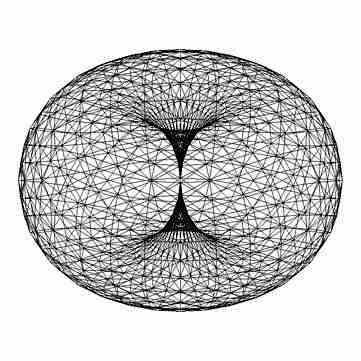
Gnostic Psychology: Human Nature, part 1 Cyd Ropp, Ph. D. Copyright 2022; all rights reserved Today’s episode of Gnostic Insights begins a chapter about the nature of humans. What is our psychology? Am I defined by my Ego? Or am I a spiritual Self independent of Ego? Am I a God? Am I an animal? Am I really conscious or am I random electrical fluctuations? Who am I? Do I have a soul and how is that different than a spirit? Is there a mind involved? What exactly is the Ego and how does it relate to my body and my spirit? This is material is complicated, as we humans are complicated creatures. Therefore, I will be spreading this topic of human nature out over the next couple of weeks. If there were a university course called “Gnostic Psychology,” this would it. By now in this series that we are calling A Simple Explanation of the Gnostic Gospel, we have encountered a number of terms from my book, A Simple Explanation of Absolutely Everything. In this episode, we will again be discussing memes, fractals, units of consciousness, the Simple Golden Rule, and the shape of the torus. I will explain these concepts as we go along but, if this is your first time listening to the Gnostic Insights podcast, it would be helpful for you to back up and listen to the current series from the beginning. You can find it at gnostic insights dot com under the tab labelled “A Simple Explanation of the Gnostic Gospel.” This episode is the 14th in the current series of talks that are forming the chapters of my next book. For most people, the answer to “who am I?” is that I am awareness of myself encased in this body of mine. Yes, we are that. But we are also the things we love and the things we hate along with the ideas and memories we cling to, which I call our meme bundle. Plus, we are the record of our actions in this world, which is called our karma, and that karma is wrapped around our unit of consciousness along with our meme bundle. And finally, our personalities also reflect the original personalities and talents of the Aeons that make up the Fullness of God. Even our use of the simple pronoun “I” requires examination. Freud identified the human as having three distinct realms of thought. He called these the id, the ego, and the super-ego. The id controls our base instincts. The ego is our presenting personality and self-identity. The super-ego is our higher aspirations and noble thoughts. Not a bad start, but we are much more than those three simple concepts. My reading of the Gnostic Gospels has led to a further refinement of human personalities and psychology that I would like to share with you today. First, let me identify the id, ego, and super-ego in Gnostic terms. I will then go on to explain and expand upon their functions. The Simple Explanation would liken the id to the thoughts and actions of the units of consciousness that make up our bodies. Each of the body’s units of consciousness are fractals of the Fullness, just as we are fractals of the Fullness at a higher level. The body’s units of consciousness each lead their own lives at their own level, position, and rank. Their duties are particular to their level and position. For example, the life of a cell is about as complex as any of our lives. The machinery within a cell is extremely complicated and interactive, and it operates according to the Simple Golden Rule of sharing information, assistance, and love for the betterment of all—in this case, our bodies. There is a marvelous animation on YouTube called “The Inner Life of a Cell.” (8) Inner Life Of A Cell – Full Version.mkv – YouTube The “Inner Life of a Cell” video illustrates the incredible complexity and apparent awareness of cells. You just gotta love those motor proteins! Watch the video and you will see what I mean. Our bodies are an entire galaxy of units of consciousness at smaller fractal scales. Their activities and their karma aggregate upward in the higher the fewer manner, as they level up to eventually form my body’s karmic record of health and disease. They operate in a parallel world of smaller lives, inside of our bodies. As their messages aggregate upwards to the organ level, we begin to notice their communication and demands for food, sex, and other macro-scale activities. Again, this constellation of smaller fractals make up the portion of our personalities that Freud identified as the id. The id is the body’s talk and demands. Going on to Freud’s idea of the super-ego, we Gnostics would identify that with our big S Self. The Self is the fractal representation of the One Self we all share at the transpersonal level. The Self is a fractal representation of the image of the Son. We have spoken about the Self in previous episodes, particularly the episode called “Neverending War,” posted on September 3rd, 2022. We’ll tease apart the Self from the Ego as we move through this episode. My Ego is not the totality of me, even though that’s who I usually think I am. We usually mistake our Egos for ourselves, but this is the delusion. We are much more than that. Other people refer to this Ego as one’s soul or mind. Yes, the Ego reflects our personalities, but I am much more than my personality. Nor am I my mind. My mind is like a tuning device that scans for information and locks onto data that fits into my meme bundle. The Ego feeds on the memes tuned in by my mind. My mind is drawn toward its preferred memes by my karmic record. Ego is not a conscious entity; Ego is a location within my personality that identifies with my memes bundle and interacts with others. Again, we spoke about Ego in the previous episode, “Embrace Virtue.” Ego is like a garment that we wear. Ego is a garment that is cast over our Selves. Ego is like a vessel that contains a shadow outlining my Self’s unit of consciousness. Underneath this garment of “me” resides a perfect fractal of the originating units of consciousness, and that is known as my Self–Self with a capital S. Other people often call this Self the Spirit. I am a unit of consciousness that is identical to the universal unit of consciousness, which in Gnosticism we would call the Son and the Pleroma of the Son. These are the archetypal patterns held by the mind of God, so to speak, and I hold one of these fractals of that perfect originating consciousness within myself. In terms of the model that I’ve constructed based upon the Tripartite Tractate, the Pleroma of the Son, usually referred to as the Fullness of God, appears in my illustrations like a pyramid of stacked golden cannon balls. It looks that way because it’s a hierarchy, and a hierarchy means “the higher the fewer.” A hierarchy looks like a pyramid. There are more objects at the bottom and there are fewer and fewer as you climb up toward the top. At the very tip top, just above this hierarchy of the Fullness, is the Son of God, or the Son of the Father, and the Son is a perfect fractal of the Father. If I think of my own Self, I have one of these pyramidal structures within my mental construct. That pyramid is my Self, and it is a fractal of the Fullness of God. Within my Self I have access to the entire Fullness of God. You could say I have access to all of the Aeons of the Hierarchy at both the mental and the physical level, as the body’s aggregated units of consciousness also reflect the Hierarchy of the Fullness. In the Simple Explanation model, instead of picturing a golden pyramid, the Self unit of consciousness is described as looking like a donut—a geometric shape called a torus. I have resisted bringing the torus into the gnostic model because it does not appear in the ancient scriptures, unless it is identified as the “wheels within a wheel” we sometimes come across. However, the torus is such a good concept that it’s difficult not to include it. So, we can also think of the Self as an energetic bubble that’s shaped like a donut. This donut shape has a very, very tiny center, small… This is a public episode. If you'd like to discuss this with other subscribers or get access to bonus episodes, visit cydropp.substack.com/subscribe
Embed this episode
No transcript yet.