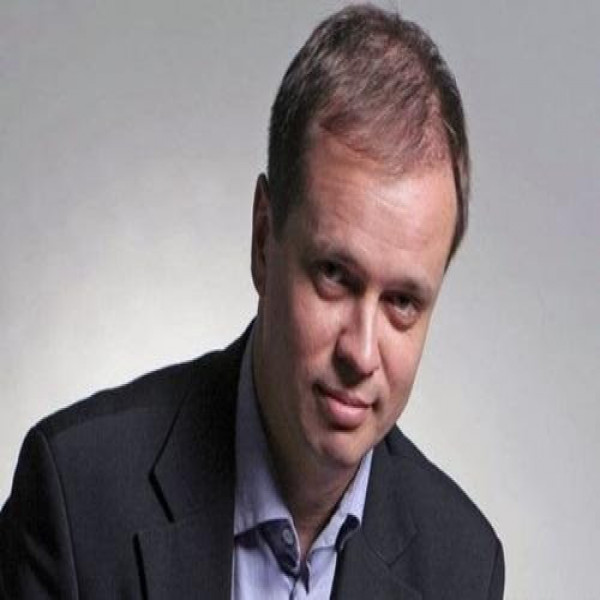
Human Rights in Russia week-ending 17 December 2021 - with Ivan Pavlov episode artwork

EPISODE · Dec 21, 2021 · 41 MIN

Human Rights in Russia week-ending 17 December 2021 - with Ivan Pavlov

from Rights in Russia · host Rights in Russia

<span style="font-size:12.0pt;font-family:&quot;Times New Roman&quot;,serif; mso-fareast-font-family:&quot;Times New Roman&quot;;color:black;letter-spacing:.3pt; mso-fareast-language:EN-GB">This week our guest on the podcast is Ivan Pavlov, a human rights lawyer specializing in freedom of information and treason cases. For many years, Ivan Pavlov headed the civil society group Team 29, which also worked to promote freedom of information in Russia. <span style="font-size:12.0pt;font-family:&quot;Times New Roman&quot;,serif; mso-fareast-font-family:&quot;Times New Roman&quot;;color:black;letter-spacing:.3pt; mso-fareast-language:EN-GB">The topics of our conversation today are the persecution of lawyers in Russia, the rule of law, what reforms are needed, the history of Team 29, the right of association and the future of human rights in Russia. <span style="font-size:12.0pt;font-family:&quot;Times New Roman&quot;,serif; mso-fareast-font-family:&quot;Times New Roman&quot;;color:black;letter-spacing:.3pt; mso-fareast-language:EN-GB">The questions we discuss include: <span style="font-size:12.0pt;font-family:&quot;Times New Roman&quot;,serif; mso-fareast-font-family:&quot;Times New Roman&quot;;color:black;letter-spacing:.3pt; mso-fareast-language:EN-GB">1. You are one of Ivan Safronov's lawyers. Both you and Evgeny Smirnov, another of Safronov’s lawyers, are forced to live outside Russia. Question: why exactly are these measures being taken against lawyers now? <span style="font-size:12.0pt;font-family:&quot;Times New Roman&quot;,serif; mso-fareast-font-family:&quot;Times New Roman&quot;;color:black;letter-spacing:.3pt; mso-fareast-language:EN-GB">2. Is the legal professional community able to stand up for itself? <span style="font-size:12.0pt;font-family:&quot;Times New Roman&quot;,serif; mso-fareast-font-family:&quot;Times New Roman&quot;;color:black;letter-spacing:.3pt; mso-fareast-language:EN-GB">3. Has Russia ever been a country where the rule of law existed? <span style="font-size:12.0pt;font-family:&quot;Times New Roman&quot;,serif; mso-fareast-font-family:&quot;Times New Roman&quot;;color:black;letter-spacing:.3pt; mso-fareast-language:EN-GB">4. What needs to be done to bring the country closer to the rule of law? What are the main steps that need to be taken to achieve this? <span style="font-size:12.0pt;font-family:&quot;Times New Roman&quot;,serif; mso-fareast-font-family:&quot;Times New Roman&quot;;color:black;letter-spacing:.3pt; mso-fareast-language:EN-GB">5. Can you tell us something about the history of Team 29? When was it created? What did it accomplish? Why was it shut down? <span style="font-size:12.0pt;font-family:&quot;Times New Roman&quot;,serif; mso-fareast-font-family:&quot;Times New Roman&quot;;color:black;letter-spacing:.3pt; mso-fareast-language:EN-GB">6. We are all following the Memorial case. One gets the impression the Russian authorities today do not want any independent civil society organizations to exist. What are the consequences of this policy for Russia? What is a country without civil society? <span style="font-size:12.0pt;font-family:&quot;Times New Roman&quot;,serif; mso-fareast-font-family:&quot;Times New Roman&quot;;color:black;letter-spacing:.3pt; mso-fareast-language:EN-GB">7. Realistically speaking, what are the prospects for fair trial in the Russian Federation? <span style="font-size:12.0pt;font-family:&quot;Times New Roman&quot;,serif; mso-fareast-font-family:&quot;Times New Roman&quot;;color:black;letter-spacing:.3pt; mso-fareast-language:EN-GB">8. What prospects are there for human rights in general? Are you an optimist or a pessimist? <span style="font-size:12.0pt;font-family:&quot;Times New Roman&quot;,serif; mso-fareast-font-family:&quot;Times New Roman&quot;;color:black;letter-spacing:.3pt; mso-fareast-language:EN-GB">This podcast is in Russian. You can also listen to the podcast on our&nbsp;website&nbsp;or on&nbsp;SoundCloud,&nbsp;Podcasts.com,&nbsp;Spotify,&nbsp;iTunes&nbsp;and&nbsp;Anchor.&nbsp; The music, from Stravinsky’s Elegy for Solo Viola, is performed for us by Karolina Herrera. <span style="font-size:12.0pt;font-family:&quot;Times New Roman&quot;,serif; mso-fareast-font-family:&quot;Times New Roman&quot;;color:black;letter-spacing:.3pt; mso-fareast-language:EN-GB">Sergei Nikitin&nbsp;writes on&nbsp;Facebook:&nbsp;"I remember well the 1990s when we crossed a certain threshold, everyone more or less attained a degree of material well-being and began to think about having some rights, about restoring democratic values in the country. I saw that the judicial system was developing, there were some hopes. This trend lasted until about 2004 or 2005, but then developments took a rather different direction. Every person looks for some stability in their life, something on which to base their decisions. In a society governed by the rule of law, that stable basis is the law. A state where there is the rule of law is considered the most stable. But if the law is not stable, and the only ‘stability’ is that a single person has been in power for a long time, it becomes easier for people to look for the signals that come from that one person rather than to the law, which is one thing today and another tomorrow. Officials today are not guided by the law, but by signals that come from that one person. The ability to change by democratic means those in power ensures the quality of life in a democracy." This is what the human rights lawyer Ivan Pavlov, who specializes in freedom of information and treason cases, told us. For several years, Ivan was the head of Team 29, an informal association of lawyers and journalists that fought the growing lack of transparency of the state in Russia. I vividly remember that in Soviet times, wherever I went to apply for a job, the hiring process necessarily included a visit to the First Department, a room with an iron door, where - as a rule - some retired man with a crazy look was sitting. These First Departments actually embodied the closed nature of the state, the total control over everything: why the hell do you need the First Department in the offices of a building restoration organisation where I worked in my youth? Ivan Pavlov in our conversation mentioned his team's new project, which he called the First Department. On Monday, he told a wider audience: "The First Department of the state bodies was engaged in the classification of documents and protection of state secrets. Often what was going on behind closed doors in the First Departments had little to do with the law and was simply arbitrary. Our First Department will fight to ensure that employees of all first departments throughout the country comply with the law, so that they do not violate your rights." Listen to our conversation with Ivan Pavlov, who temporarily left Russia but continues to do his fantastic work.<span style="color:black;mso-color-alt: windowtext"> <span lang="RU" style="font-size:12.0pt;font-family:&quot;Times New Roman&quot;,serif; mso-fareast-font-family:&quot;Times New Roman&quot;;color:black;letter-spacing:.3pt; mso-ansi-language:RU;mso-fareast-language:EN-GB"> <span style="font-size:12.0pt;font-family:&quot;Times New Roman&quot;,serif; mso-fareast-font-family:&quot;Times New Roman&quot;;color:black;letter-spacing:.3pt; mso-fareast-language:EN-GB">Simon Cosgrove&nbsp;adds: ‘For further information about the past week in Russia, visit our website&nbsp;here.’

This week our guest on the podcast is Ivan Pavlov, a human rights lawyer specializing in freedom of information and treason cases. For many years, Ivan Pavlov headed the civil society group Team 29, which also worked to promote freedom of information in Russia. The topics of our conversation today are the persecution of lawyers in Russia, the rule of law, what reforms are needed, the history of Team 29, the right of association and the future of human rights in Russia. The questions we discuss include: 1. You are one of Ivan Safronov's lawyers. Both you and Evgeny Smirnov, another of Safronov’s lawyers, are forced to live outside Russia. Question: why exactly are these measures being taken against lawyers now? 2. Is the legal professional community able to stand up for itself? 3. Has Russia ever been a country where the rule of law existed? 4. What needs to be done to bring the country closer to the rule of law? What are the main steps that need to be taken to achieve this? 5. Can you tell us something about the history of Team 29? When was it created? What did it accomplish? Why was it shut down? 6. We are all following the Memorial case. One gets the impression the Russian authorities today do not want any independent civil society organizations to exist. What are the consequences of this policy for Russia? What is a country without civil society? 7. Realistically speaking, what are the prospects for fair trial in the Russian Federation? 8. What prospects are there for human rights in general? Are you an optimist or a pessimist? This podcast is in Russian. You can also listen to the podcast on our website or on SoundCloud, Podcasts.com, Spotify, iTunes and Anchor.  The music, from Stravinsky’s Elegy for Solo Viola, is performed for us by Karolina Herrera. Sergei Nikitin writes on Facebook: "I remember well the 1990s when we crossed a certain threshold, everyone more or less attained a degree of material well-being and began to think about having some rights, about restoring democratic values in the country. I saw that the judicial system was developing, there were some hopes. This trend lasted until about 2004 or 2005, but then developments took a rather different direction. Every person looks for some stability in their life, something on which to base their decisions. In a society governed by the rule of law, that stable basis is the law. A state where there is the rule of law is considered the most stable. But if the law is not stable, and the only ‘stability’ is that a single person has been in power for a long time, it becomes easier for people to look for the signals that come from that one person rather than to the law, which is one thing today and another tomorrow. Officials today are not guided by the law, but by signals that come from that one person. The ability to change by democratic means those in power ensures the quality of life in a democracy." This is what the human rights lawyer Ivan Pavlov, who specializes in freedom of information and treason cases, told us. For several years, Ivan was the head of Team 29, an informal association of lawyers and journalists that fought the growing lack of transparency of the state in Russia. I vividly remember that in Soviet times, wherever I went to apply for a job, the hiring process necessarily included a visit to the First Department, a room with an iron door, where - as a rule - some retired man with a crazy look was sitting. These First Departments actually embodied the closed nature of the state, the total control over everything: why the hell do you need the First Department in the offices of a building restoration organisation where I worked in my youth? Ivan Pavlov in our conversation mentioned his team's new project, which he called the First Department. On Monday, he told a wider audience: "The First Department of the state bodies was engaged in the classification of documents and protection of state secrets. Often what was going on behind closed doors in the First Departments had little to do with the law and was simply arbitrary. Our First Department will fight to ensure that employees of all first departments throughout the country comply with the law, so that they do not violate your rights." Listen to our conversation with Ivan Pavlov, who temporarily left Russia but continues to do his fantastic work. Simon Cosgrove adds: ‘For further information about the past week in Russia, visit our website here.’

NOW PLAYING

Human Rights in Russia week-ending 17 December 2021 - with Ivan Pavlov

0:00 41:23

No transcript for this episode yet

We transcribe on demand. Request one and we'll notify you when it's ready — usually under 10 minutes.

MG Show MG Show The MG Show, hosted by Jeffrey Pedersen and Shannon Townsend, is a leading alternative media platform dedicated to uncovering the truth behind today’s most pressing political issues. Launched in 2019, the show has grown exponentially, offering unfiltered insights, comprehensive research, and real-time analysis. With a commitment to independent journalism and factual integrity, the MG Show empowers its audience with knowledge and encourages active participation in the political discourse. Breaking News Show | eTurboNews Juergen Thomas Steinmetz News is relevant to the global travel and tourism industry, human rights and global issues.Breaking news when it happens and only from the source. Eat to Live Jenna Fuhrman, Dr. Fuhrman Our health is our most precious gift and smart nutrition can change your life. Each month, join Dr. Fuhrman and his daughter, Jenna Fuhrman as they discuss important topics in the world of nutrition. Eat to Live will change the way you eat and think about food. French Your Way Jessica: Native French teacher founder of French Your Way Boost your French listening skills and test your comprehension with this one of a kind series of podcasts. Get the chance to listen to a real conversation between native speakers talking at normal speed AND customise your learning experience through carefully designed sets of questions (2 levels of difficulty) available for download at www.frenchvoicespodcast.com. All interviews also come with the transcript. French teacher Jessica interviews native speakers of French from around the world who share a bit of their life and passion. Where else would you meet in one same place a French yoga teacher based in Melbourne, a soap manufacturer from Provence, or a couple cycling around the world?

Frequently Asked Questions

How long is this episode of Rights in Russia?

This episode is 41 minutes long.

When was this Rights in Russia episode published?

This episode was published on December 21, 2021.

What is this episode about?

This week our guest on the podcast is Ivan Pavlov, a human rights lawyer specializing in freedom of information and treason cases. For many years, Ivan Pavlov headed the civil society group Team 29, which also worked to promote freedom of...

Can I download this Rights in Russia episode?

Yes, you can download this episode by clicking the download button on the episode player, or subscribe to the podcast in your preferred podcast app for automatic downloads.
URL copied to clipboard!