
EPISODE · May 12, 2026 · 3 MIN
Hwang Gyutae at 88: Defying the frame through experimental photography
from Korea JoongAng Daily - Daily News from Korea
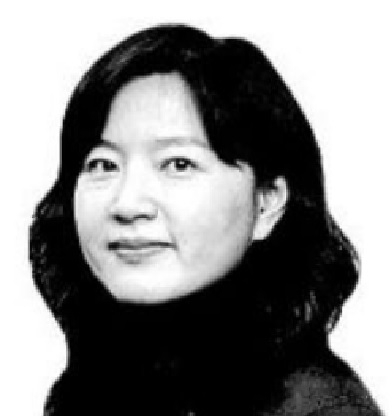
Lee Eun-joo The author is a senior reporter on culture at the JoongAng Ilbo. People encountering the works of Gyutae Hwang, the 88-year-old pioneer of experimental photography in Korea, are usually surprised at least twice. First, they are startled to learn that the vibrant rhythms and colors before them are not paintings but photographs. Then they are surprised again to discover that the artist, who has been working with digital images since the late 1990s, is an octogenarian. In front of Hwang, fixed notions about genre — or age — lose much of their meaning. "I suffer from curiosity," he once said. "Curiosity led me to peer through a loupe, and that brought me all the way here." Hwang made the remark in a 2019 interview with this paper, when his solo exhibition "Pixel" was held at Arario Gallery in Samcheong-dong, central Seoul. Standing before works that radiated powerful energy through geometric patterns and vivid colors, he said he began simply because he was curious and kept going because it was fun. This time, Hwang is holding a solo exhibition, "Beyond The Frame," at UNAW Gallery in Seocho-dong, southern Seoul, through June 13. Born in Yesan, South Chungcheong, in 1938, Hwang studied political science at Dongguk University and joined the Kyunghyang Daily in 1963, briefly working as a photojournalist. His experiments began after he moved to the United States in 1965. Working as a darkroom technician at a color photo lab, he challenged the traditional methods of photography by burning film, combining images and using double exposure. His later expansion into digital imagery showed that photography could "deconstruct" and "select" images to create a new reality. Looking back, all of Hwang's experiments were questions in themselves. He persistently asked how far the medium of photography could go. His "Pixel" series, created by radically enlarging existing photographs and working with pixels, the smallest units of an image, stands at the height of that inquiry. In his own language, Hwang revealed that what we have long been looking at is, in fact, an accumulation of countless fragments of data. There is also an intriguing twist to this journey. While the questions he poses are endlessly philosophical, the works themselves are sensuous and playful. "The variations of geometric patterns are infused with visual rhythm," art critic Moon Hye-jin has written, while machine critic Lee Young-jun has noted Hwang's "highly refined sense of color and light." "Even now, many people do not see my work as photography. I do not mind," Hwang has said. "What matters is imagining freely and satisfying my curiosity." For Gyutae Hwang, experimentation has been both a serious inquiry and an enjoyable form of play. His work reminds us that art, at its highest level, is both the ultimate pursuit and the ultimate game. This article was originally written in Korean and translated by a bilingual reporter with the help of generative AI tools. It was then edited by a native English-speaking editor. All AI-assisted translations are reviewed and refined by our newsroom.
Embed this episode
NOW PLAYING
Hwang Gyutae at 88: Defying the frame through experimental photography
No transcript for this episode yet
Similar Episodes
No similar episodes found.
Similar Podcasts
No similar podcasts found.