
EPISODE · Apr 4, 2026 · 14 MIN
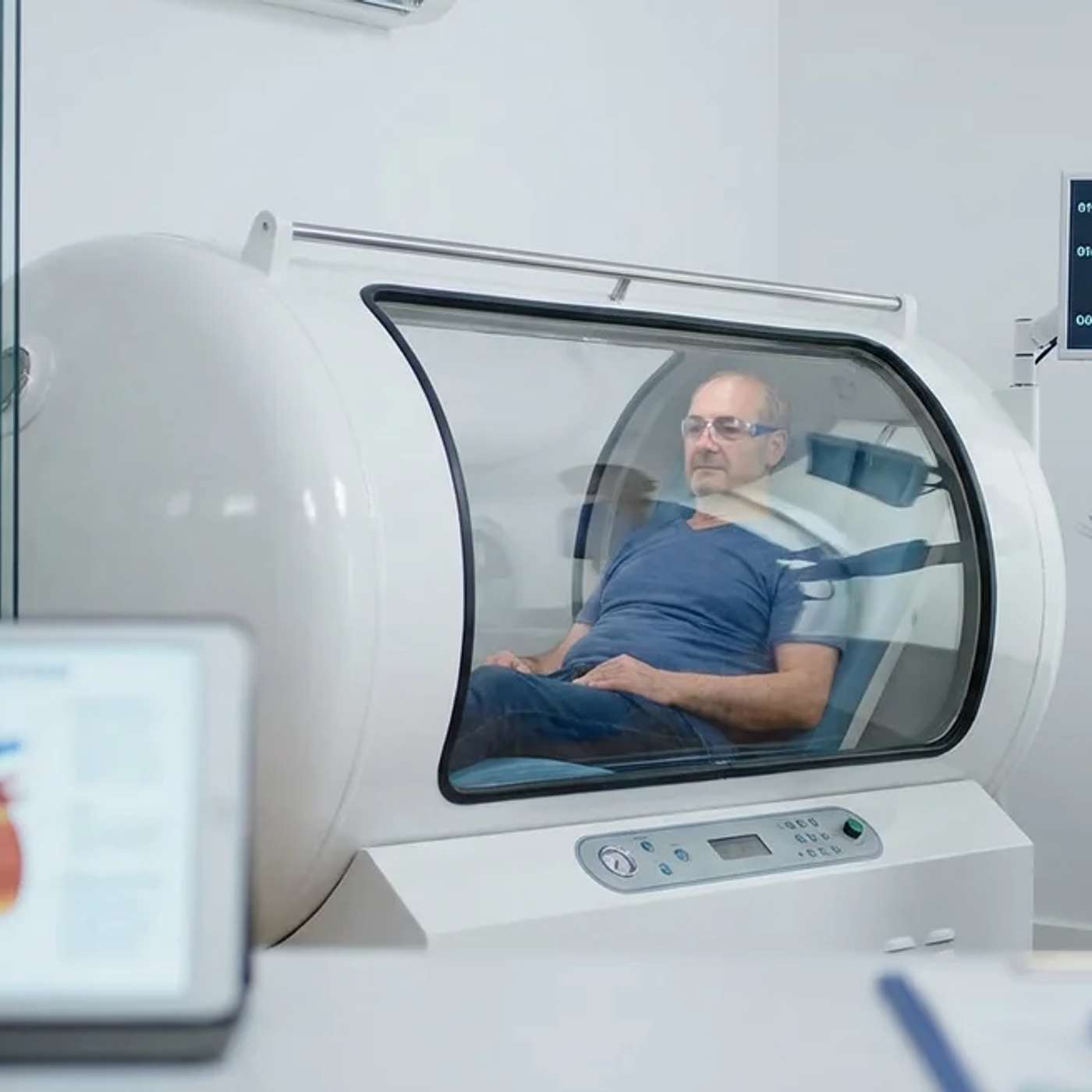
Hyperbaric Oxygen Therapy and Glaucoma: Mechanistic Rationale and Biological Plausibility
from Glaucoma, Vision & Longevity: Supplements & Science · host Visual Field Test
This audio article is from VisualFieldTest.com.Read the full article here: https://visualfieldtest.com/en/hyperbaric-oxygen-therapy-and-glaucoma-mechanistic-rationale-and-biological-plausibilityTest your visual field online: https://visualfieldtest.comSupport the show so new episodes keep coming: https://www.buzzsprout.com/2563091/supportExcerpt:Introduction Hyperbaric oxygen therapy (HBOT) is a medical treatment in which a person breathes nearly 100% oxygen inside a pressurized chamber (usually 1.5–3 times normal atmospheric pressure). This increases the amount of dissolved oxygen in the blood and tissues () (). HBOT has approved uses (like treating carbon monoxide poisoning or wound healing) and experimental uses in eye diseases, but its effects on glaucoma (a disease of the optic nerve) are not well established. Glaucoma involves progressive loss of retinal ganglion cells (the nerve cells in the back of the eye) and their axons, often associated with high eye pressure or poor blood flow (). In theory, raising oxygen levels in the retina and optic nerve head could help cells survive stress, but excess oxygen can also cause harm. This article explores how HBOT changes eye oxygen levels, blood flow, and cellular metabolism, and what that might mean for glaucoma – weighing the potential benefits and risks. HBOT and Oxygen in the Eye The retina (nerve layer lining the back of the eye) is extremely active metabolically and needs a lot of oxygen () (). Under normal conditions, the inner retina (including ganglion cells) gets oxygen from the small retinal arteries, while the outer retina (photoreceptors) gets it from the choroid (a dense layer of blood vessels beneath the retina). When someone undergoes HBOT, the air they breathe has very high oxygen partial pressure. This dramatically increases the oxygen carried by the blood and dissolved in the eye’s fluids (). For example, HBOT can saturate the vitreous gel (inside the eye) and even replace nitrogen with oxygen, so that oxygen levels in the eye remain elevated for hours (). One review notes that “tissue oxygen level has been observed to remain high for up to 4 hours after therapy” (). In effect, the eye has an unusually large oxygen reserve. For glaucoma, higher oxygen in the optic nerve head and retina might influence cell survival. In an oxygen-rich environment, cells may make more energy (ATP) via their mitochondria and resist low-oxygen damage. In animal models, HBOT has been shown to protect injured retinal neurons from programmed cell death (). By enhancing the diffusion of oxygen from the choroid into the deep retina, HBOT could especially help regions suffering poor blood flow (). However, these ideas are theoretical for glaucoma. The typical goal is that extra oxygen might “rescue” stressed ganglion cells. That said, oxygen also reacts in tissues: high oxygen can generate reactive oxygen species (ROS), which can damage cells if overwhelming. Thus, HBOT in the eye is a balance – it may relieve hypoxia, but also carries a risk of oxidative injury () (). Retinal Ganglion Cell Bioenergetics and Hyperoxia Retinal ganglion cells (RGCs) are highly energy-demanding neurons. They rely on their mitochondria to perform oxidative phosphorylation (using oxygen to make ATP). During normal oxygen levels, mitochondria in RGCs generate most of the needed cellular energy. If oxygen is low (hypoxia), cells must switch to less efficient processes (glycolysis) and may starve for energy (). In glaucoma, one factor leading to RGC damage is thought to be poor oxygen supply (due to high eye pressure or vascular dysregulation), causing chronic low-oxygen stress () (). StudieSupport the show
Embed this episode
What this episode covers
This audio article is from VisualFieldTest.com. Read the full article here: https://visualfieldtest.com/en/hyperbaric-oxygen-therapy-and-glaucoma-mechanistic-rationale-and-biological-plausibility Test your visual field online: https://visualfieldtest.com Support the show so new episodes keep coming: https://www.buzzsprout.com/2563091/support Excerpt: Introduction Hyperbaric oxygen therapy (HBOT) is a medical treatment in which a person breathes nearly 100% oxygen inside a pressurized chambe...
Ready to play
Hyperbaric Oxygen Therapy and Glaucoma: Mechanistic Rationale and Biological Plausibility
No transcript for this episode yet
Similar Episodes
No similar episodes found.
Similar Podcasts
No similar podcasts found.