
EPISODE · May 21, 2026 · 3 MIN
Hyundai Motor Group jumps into growing military vehicle market
from Korea JoongAng Daily - Daily News from Korea · host KO SUK-HYUN
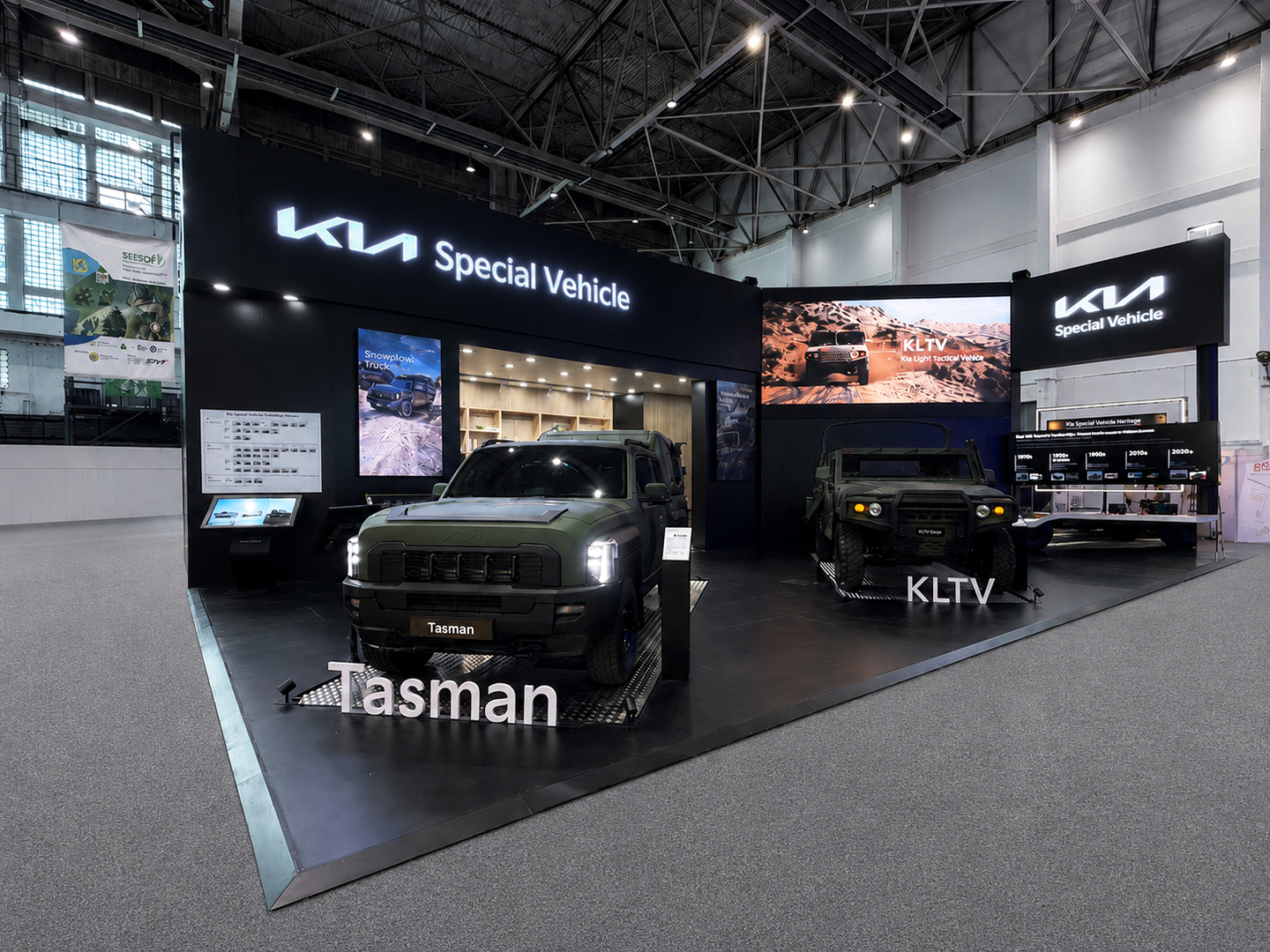
This article is by Ko Suk-hyun and read by an artificial voice. Defense is becoming the auto industry's newest battleground — and Hyundai Motor is entering with hydrogen in hand. Automakers facing a slowdown in their traditional businesses are increasingly eyeing the defense sector, where they can readily leverage their existing manufacturing infrastructure. Hyundai Motor Group is also broadening its military vehicle lineup through its smaller affiliate Kia. At the recent defense exhibition — Black Sea Defense & Aerospace 2026 — in Romania, Kia unveiled a military command vehicle based on its midsize pickup truck, the Tasman. The Korean auto group is attempting to develop a hydrogen fuel cell-powered all-terrain vehicle by combining the corporate hydrogen technology with defense applications. CEO of Mercedes-Benz, Ola Källenius, said the German automaker would be willing to expand its defense profile and production as long as it makes "business sense" in his recent interview with the Wall Street Journal. "What car companies do extraordinarily well — and we're good at it — is to build high-quality precision machines in higher volumes," Källenius said. While noting that defense-related business would account for "a minor share" of the automaker's entire portfolio, Källenius said it "could be a growing niche" that could contribute to business results. The remarks from Källenius appear to signal the possibility of expanding the company's business portfolio beyond automobiles into broader defense production. Germany's Volkswagen is reportedly in talks with Israeli defense contractor Rafael Advanced Defense Systems about producing components for missile defense systems, including Iron Dome. Detroit-based General Motors and Japanese automakers Toyota Motor Corporation and Mitsubishi Motors Corporation are likewise expanding the development of military vehicle platforms. Automakers are aiming to apply decades of accumulated automotive technology to the defense sector while supplying standardized components such as platforms, vehicle bodies, power systems and wiring systems. The growing adoption of EV technology, hydrogen fuel cells and autonomous driving systems in military equipment also presents a new opportunity, as it blurs the traditional boundary between the automotive and defense industries. "The automotive industry can relatively easily convert its manufacturing base for arms production, as seen during World War I (1914-1918) and World War II (1939-45)," said Kim Pil-soo, a professor of automotive engineering at Daelim University. "It is a desperate measure for survival among automakers as the manufacturing industry weakens," Kim said. The defense industry also presents an opportunity, as it remains largely untouched by the influx of Chinese automakers. "As Chinese automakers flood into global markets, established manufacturers are becoming increasingly interested in high-value-added businesses," said Lee Ho-geun, automotive engineering professor at Daeduk University. "One advantage of the defense sector is that technological superiority tends to command much greater added value," Lee added. This article was originally written in Korean and translated by a bilingual reporter with the help of generative AI tools. It was then edited by a native English-speaking editor. All AI-assisted translations are reviewed and refined by our newsroom.
Embed this episode
NOW PLAYING
Hyundai Motor Group jumps into growing military vehicle market
No transcript for this episode yet
Similar Episodes
No similar episodes found.
Similar Podcasts
No similar podcasts found.