
EPISODE · May 13, 2026 · 2 MIN
Hyundai refreshes the Grandeur with a Tesla-like screen — but with real buttons
from Korea JoongAng Daily - Daily News from Korea · host SARAH CHEA
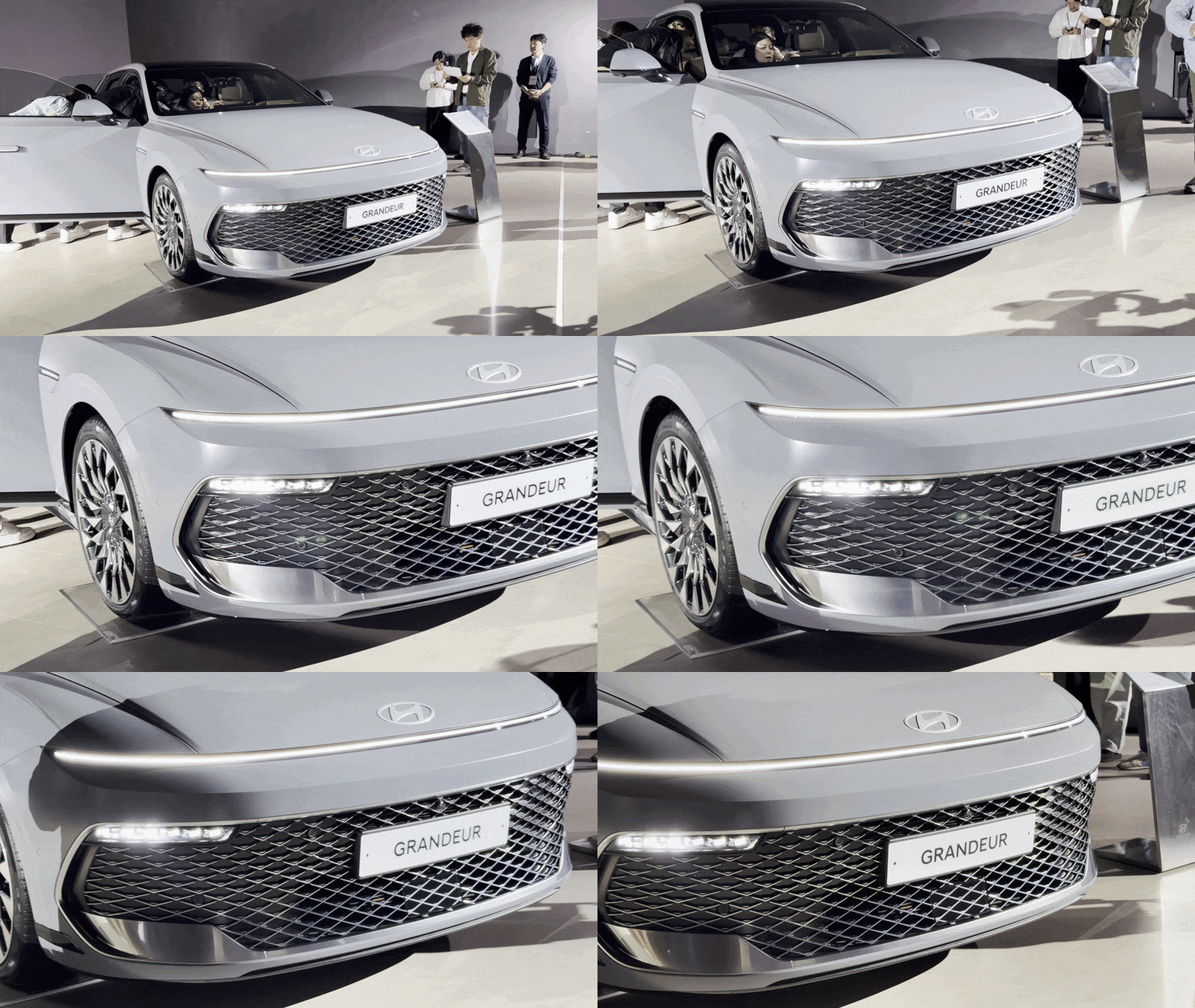
This article is by Sarah Chea and read by an artificial voice. Hyundai Motor unveiled a face-lifted Grandeur sedan on Thursday, featuring a large, newly developed Tesla-like screen. It marks the model's first partial revamp in three and a half years and now offers a hybrid variant. The most striking change is a softened front fascia, adopting what Hyundai calls a "shark nose" design, paired with a thinner, elongated seamless horizon lamp and sleeker headlamps. Along the sides, Hyundai has replaced the conventional shark-fin antenna with a hidden-type unit for the first time on a sedan, eliminating any external protrusion to achieve a cleaner, more refined silhouette. The central display is divided into two primary zones. The information panel on the left functions like a traditional instrument cluster, showing speed, warnings and efficiency data at all times. It also renders surrounding vehicles, objects and pedestrians in 3-D to enhance situational awareness while driving or parking. The panel on the right handles navigation, media and other vehicle settings. Drivers can run two apps side by side or expand one to fill the screen. At the bottom of the screen, Hyundai has reinstated physical buttons to improve safety and usability on the move, addressing widespread customer complaints about the shift toward fully touch-based controls. The Grandeur is primarily tailored to the Korean market rather than to overseas markets. In the United States and Europe, Hyundai's Pleos system is expected to reach customers through the Ioniq 3, slated for release in the second half of the year. The sedan also became Hyundai's first model to feature a "Smart Vision Roof," which replaces mechanical blinds with a polymer-dispersed liquid crystal film, allowing drivers and passengers to freely adjust the roof's transparency across six independently controlled zones. Its Pedal Misapplication Safety Assist system detects unintended accelerator input, such as when the driver mistakenly presses the throttle instead of the brake while stationary or at low speeds, and intervenes by limiting power output and applying braking force to help prevent collisions. A hybrid variant is also planned, though it is still undergoing government certification for fuel efficiency. Pricing starts at 41.9 million won ($28,110), with the hybrid version priced from 48.6 million won.
Embed this episode
NOW PLAYING
Hyundai refreshes the Grandeur with a Tesla-like screen — but with real buttons
No transcript for this episode yet
Similar Episodes
No similar episodes found.
Similar Podcasts
No similar podcasts found.