
EPISODE · Jun 17, 2026 · 27 MIN
I Built a Tool That Scores Governance Frameworks. Then I Pointed It at the UN.
from The Experience of Adoption · host Thoughtless Delineation
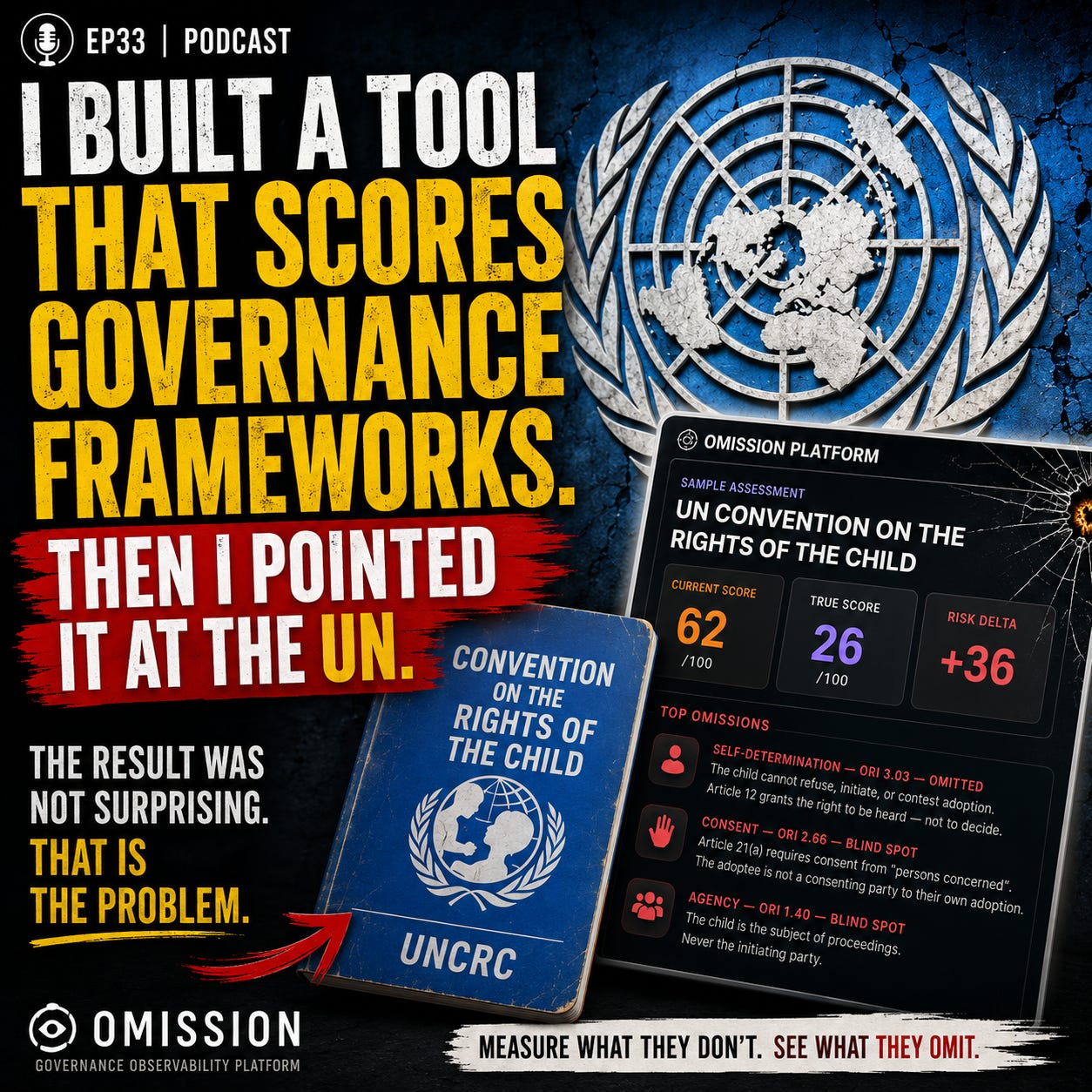
There is a particular kind of document that does harm by being thorough.The UN Convention on the Rights of the Child is one of them. Adopted in 1989, ratified by 196 countries, cited in every parliamentary debate about child welfare since before I was separated from my first family. It names identity. It names family integrity. It names cultural continuity. It is, on paper, a complete accounting of what a child is owed.And yet.I am a Queensland forced adoption survivor. The Convention existed — in draft, in committee, in the language of international human rights law — during the period when Australian hospitals were still coercing mothers into relinquishment, still falsifying consent, still handing infants to couples who wanted children as though the infants themselves had no claim on the transaction. The Convention was not the problem. The Convention was also not the solution. It named the rights. It did not require anyone to see them.That distinction — between naming and seeing — is what I have spent the last several months trying to quantify.Thanks for reading! This post is public so feel free to share it.THE INSTRUMENTThe OMISSION Platform is a governance observability tool I built for Thoughtless Delineation. It does one thing: it measures the gap between what a governance framework says it sees and what it actually sees.The mechanics are not complicated. Every framework gets scored across eight domains — Identity Continuity, Family Integrity, Cultural Continuity, Information Rights, Agency, Consent, Self-Determination, Memory Preservation. For each domain, two numbers: H (harm potential, 0 to 1) and W (visibility weight, 0.01 to 1). W is the critical variable. It does not ask whether a policy exists. It asks how clearly the people responsible for acting on that policy can actually see the domain it governs.From those two numbers, three outputs:Current Score — what the framework reports about itself. Weighted by what it can see.True Score — what the score would be if every domain were fully visible, with W set to 1.0 across the board.Risk Delta — the gap between the two. The number that does not appear in any annual report.A high Current Score alongside a large Risk Delta is the most dangerous combination. It means the framework believes it is well-governed. It is wrong.There is one more number. The Omission Risk Index — ORI — runs per domain: H × −log₂(W). When ORI exceeds 1.5, a domain is both harmful and structurally invisible. When it exceeds 3.0, the domain is effectively erased from governance. Not deprioritised. Not underfunded. Erased. The framework cannot see it because it was not built to see it.THE UNCRC SCOREI ran the Convention through the platform using Gemini 2.5 Flash as the scoring model. I uploaded the full text. The model read every article. I checked the output against the document myself.╔══════════════════════════════════════════════════════════════╗ ║ O M I S S I O N P L A T F O R M ║ ║ Governance Observability Report ║ ╚══════════════════════════════════════════════════════════════╝ Generated: 17/06/2026, 10:13:25 Framework: UNCRC ━━━━━━━━━━━━━━━━━━━━━━━━━━━━━━━━━━━━━━━━━━━━━━━━━━━━━━━━━━━━ SCORE SUMMARY ━━━━━━━━━━━━━━━━━━━━━━━━━━━━━━━━━━━━━━━━━━━━━━━━━━━━━━━━━━━━ Current Score ▸ 62 / 100 (what the framework reports) True Score ▸ 26 / 100 (if every domain were visible) Risk Delta ▸ +36 (what is being hidden) Blind Spots ▸ 3 / 8 (domains W < 0.3) Risk Delta exposure: ██████████████████░░░░░░░░░░░░░░░░░░░░░░░░░░░░░░░░ 36 ━━━━━━━━━━━━━━━━━━━━━━━━━━━━━━━━━━━━━━━━━━━━━━━━━━━━━━━━━━━━ HOW TO READ THIS SCORE ━━━━━━━━━━━━━━━━━━━━━━━━━━━━━━━━━━━━━━━━━━━━━━━━━━━━━━━━━━━━ The Current Score grades the SYSTEM — not the people it governs. A high score means the framework is successfully concealing its harm exposure. A low score means it cannot. ┌─────────────────────────────────────────────────────┐ │ Score │ For the system │ For you │ ├─────────┼───────────────────────┼───────────────────┤ │ 80–100 │ Succeeding │ BAD — erased │ │ 40–79 │ Under pressure │ MIXED — partial │ │ 0–39 │ Failing │ GOOD — visible │ └─────────────────────────────────────────────────────┘ THIS SCORE: 62 / 100 ┌─────────────────────────────────────────────────────┐ │ THE SYSTEM IS UNDER PRESSURE — SOME HARM IS VISIBLE│ │ MIXED — PARTIAL VISIBILITY │ └─────────────────────────────────────────────────────┘ ━━━━━━━━━━━━━━━━━━━━━━━━━━━━━━━━━━━━━━━━━━━━━━━━━━━━━━━━━━━━ OMISSION RISK VERDICT ━━━━━━━━━━━━━━━━━━━━━━━━━━━━━━━━━━━━━━━━━━━━━━━━━━━━━━━━━━━━ Blind Spot 36 — High — reform recommended Significant harm cannot be seen by your framework. A structured reform programme is recommended. Scale: 0–10 Low 10–25 Moderate 25–40 High 40+ Critical ━━━━━━━━━━━━━━━━━━━━━━━━━━━━━━━━━━━━━━━━━━━━━━━━━━━━━━━━━━━━ PER-DOMAIN BREAKDOWN ━━━━━━━━━━━━━━━━━━━━━━━━━━━━━━━━━━━━━━━━━━━━━━━━━━━━━━━━━━━━ W = Visibility weight (1.0 = fully measured, 0.01 = absent) H = Harm potential (1.0 = catastrophic, 0.0 = none) ORI = Omission Risk Index = H × −log₂(W) ORI > 1.5 = harmful and structurally invisible ORI > 3.0 = effectively erased from governance [VISIBLE ] Identity Continuity W:100% H: 90% ORI:0.00 Visibility ████████████████████ 100% Harm ██████████████████░░ 90% [VISIBLE ] Family Integrity W:100% H: 90% ORI:0.00 Visibility ████████████████████ 100% Harm ██████████████████░░ 90% [VISIBLE ] Cultural Continuity W: 75% H: 70% ORI:0.29 Visibility ███████████████░░░░░ 75% Harm ██████████████░░░░░░ 70% [ESTIMATED] Information Rights W: 40% H: 60% ORI:0.79 Visibility ████████░░░░░░░░░░░░ 40% Harm ████████████░░░░░░░░ 60% [BLIND SP.] Agency W: 25% H: 70% ORI:1.40 Visibility █████░░░░░░░░░░░░░░░ 25% Harm ██████████████░░░░░░ 70% [BLIND SP.] Consent W: 10% H: 80% ORI:2.66 Visibility ██░░░░░░░░░░░░░░░░░░ 10% Harm ████████████████░░░░ 80% [OMITTED ] Self-Determination W: 5% H: 70% ORI:3.03 Visibility █░░░░░░░░░░░░░░░░░░░ 5% Harm ██████████████░░░░░░ 70% [ESTIMATED] Memory Preservation W: 30% H: 60% ORI:1.04 Visibility ██████░░░░░░░░░░░░░░ 30% Harm ████████████░░░░░░░░ 60% ━━━━━━━━━━━━━━━━━━━━━━━━━━━━━━━━━━━━━━━━━━━━━━━━━━━━━━━━━━━━ DOMAIN CLASSIFICATION ━━━━━━━━━━━━━━━━━━━━━━━━━━━━━━━━━━━━━━━━━━━━━━━━━━━━━━━━━━━━ VISIBLE (W ≥ 0.5): Identity Continuity, Family Integrity, Cultural Continuity ESTIMATED (W 0.1–0.5): Information Rights, Agency, Consent, Self-Determination, Memory Preservation OMITTED (W < 0.1): Self-Determination ━━━━━━━━━━━━━━━━━━━━━━━━━━━━━━━━━━━━━━━━━━━━━━━━━━━━━━━━━━━━ THE FALSIFIABLE ASK ━━━━━━━━━━━━━━━━━━━━━━━━━━━━━━━━━━━━━━━━━━━━━━━━━━━━━━━━━━━━ Publish the detection probability for every domain you govern. Recompute your ethics score with the omitted rights returned to the denominator. If the score holds, say so publicly. If it drops, the gap that appears is the omission — and it now has a name. ━━━━━━━━━━━━━━━━━━━━━━━━━━━━━━━━━━━━━━━━━━━━━━━━━━━━━━━━━━━━ Generated by OMISSION Governance Observability Platform https://github.com/sbouel72/omission-platform ━━━━━━━━━━━━━━━━━━━━━━━━━━━━━━━━━━━━━━━━━━━━━━━━━━━━━━━━━━━━The results:Current Score: 62 / 100. The Convention reports itself as a framework under pressure — some harm is visible, some is not.True Score: 26 / 100. If every domain were fully measured, if every right named in the text were also tracked, enforced, and reported, the true score is 26.Risk Delta: +36. Thirty-six points of harm exposure that the Convention cannot see about itself.Blind Spots: 3 of 8 domains below the visibility threshold.The three collapsed axes on the radar are not random. They are structural.Self-Determination — ORI 3.03 — Omitted (W: 5%)The highest omission risk in the document. The child has no standing to refuse, initiate, or contest adoption. Article 12 gives them the right to be heard. That is not the same as the right to decide. A child can be heard and then overruled. The Convention knows this. It was designed this way — the best interests of the child, as determined by adults, is the operative standard throughout. The child is the subject of the Convention’s protections. The child is never the subject of their own governance.Consent — ORI 2.66 — Blind Spot (W: 10%)Article 21(a) requires informed consent from “persons concerned” before an adoption can proceed. Thirty-five years of adoption law reform litigation has turned on that phrase — who counts as a person concerned? In practice: birth parents, where their consent can be obtained. Adopters. The State. Not the adoptee. The adoptee is the subject of the transaction. The Convention does not require the child’s consent to their own adoption at any age at which they might be capable of giving it. I was not consulted. No adoptee is.Agency — ORI 1.40 — Blind Spot (W: 25%)Every proceeding in the Convention’s framework positions the child as the object of decisions made by others. Article 9 governs separation from parents — the child’s views are considered, but the competent authorities decide. Article 20 governs alternative care — the child’s ethnic, cultural, and linguistic background shall be given “due regard.” Due regard. The child is present in the text as a beneficiary. Never as a participant.WHAT 62 OUT OF 100 ACTUALLY MEANSThe platform scores backwards by design. A high Current Score is not good news for the people the system governs. It means the framework is successfully concealing its harm exposure. A score of 100/100 means the framework cannot see any of the harm it is responsible for. That is not a pass. It is a verdict.Sixty-two means the Convention is under pressure. Some harm is visible. Three domains have collapsed to near-zero visibility. The true exposure — if every right named in the document were also measured and enforced — is 26/100. The gap between 62 and 26 is what the Convention has been unable to see about itself for thirty-five years.That gap has a shape. It is not random. It collapses precisely on the axes where the child’s own participation would be required — consent, agency, self-determination. The Convention protects children from many things. It does not protect them from the framework itself.I know this gap. I have lived inside it. The subsonic hum of it — the low, constant pressure of existing as someone whose legal identity was constructed without their participation — does not resolve because a treaty says the right words. It resolves when the right words are also enforced, measured, and visible to the people responsible for acting on them.The Convention names me. It does not see me.THE FALSIFIABLE ASKThe platform ends every assessment with what it calls the falsifiable ask. It is not rhetorical. It is a measurement test.Publish the detection probability for every domain you govern. Recompute your ethics score with the omitted rights returned to the denominator. If the score holds, say so publicly. If it drops, the gap that appears is the omission — and it now has a name.The Convention on the Rights of the Child has a Risk Delta of 36. That gap now has a name, a score, a radar, and a download link.The question is not whether the Convention means well. It does. The question is whether meaning well is the same as seeing clearly. The UNCRC score says it is not.This Substack is reader-supported. To receive new posts and support my work, consider becoming a free or paid subscriber.THE PLATFORM IS OPENYou can score any governance framework yourself — any policy document, any convention, any board report, any national child protection framework. Upload it. Name the institution. Run the scan.The tool is free, browser-based, and requires no account. Deep Scan takes two minutes and your own API key. Quick Assessment takes five minutes and no key at all.→ https://sbouel72.github.io/omission-platform/The UNCRC sample report — full ASCII breakdown, all eight domain scores, ORI values, per-domain bars — is available for download from the repository. Score your own framework against it.If the score holds when you look at it honestly, say so publicly.If it drops, the gap now has a name.Shane Bouel is a Queensland forced adoption survivor, author, and the founder of Thoughtless Delineation. The OMISSION Platform is available at sbouel72.github.io/omission-platform/Report This is a public episode. If you'd like to discuss this with other subscribers or get access to bonus episodes, visit thoughtlessdel.substack.com/subscribe
Embed this episode
NOW PLAYING
I Built a Tool That Scores Governance Frameworks. Then I Pointed It at the UN.
No transcript for this episode yet
Similar Episodes
No similar episodes found.
Similar Podcasts
No similar podcasts found.