
EPISODE · Nov 26, 2025 · 52 MIN
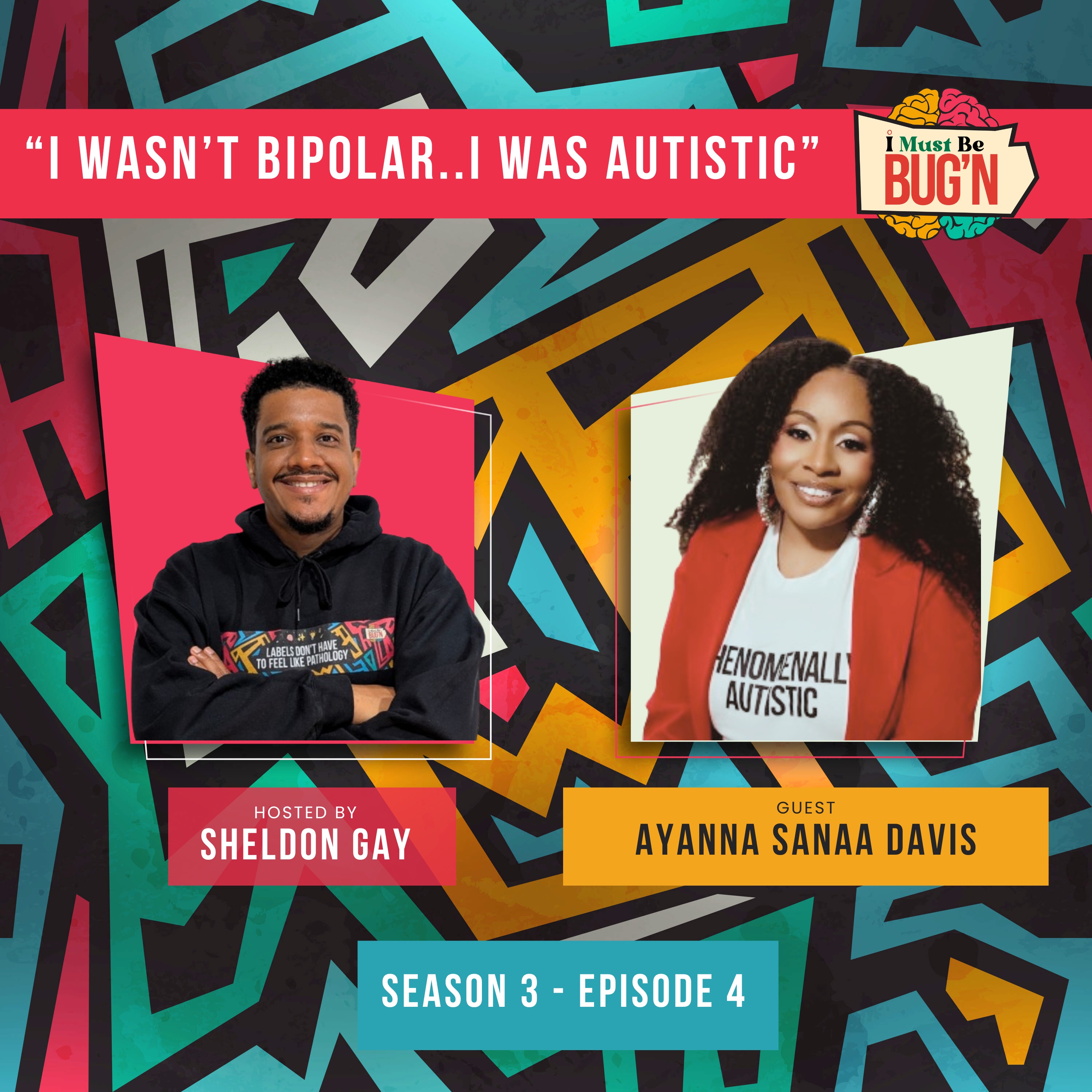
I Wasn't Bipolar...I Was Autistic
from I Must Be BUG'N
Episode Transcript (provided by Acast - forgive any errors): https://docs.google.com/document/d/1ujE9yulu1kvNze2q99xDQO4qvt_pUdr0ISkiX_xhPtI/edit?usp=sharingFollow I Must Be BUGN on IG @sheldongayisbugnSummary:In this episode, we speak with Ayanna Sanaa Davis, an award-winning autism advocate, discussing her unique journey as a Black autistic woman. She shares about her misdiagnosis where she was erroneously institutionalized as well as how art has given her a voice, even when she hasn't wanted to verbalize. She even shares about the time she experienced physical violence in the classroom because someone lacked compassion for her neurodivergence. We explore the importance of representation, the journey to diagnosis, the impact of race on autism, and the cultural aspects of neurodivergence. The conversation emphasizes the need for empathy and understanding in a world that often overlooks the unique experiences of neurodivergent individuals.Key Points:Neurodivergent advocacy is evolving beyond just accommodations.Art is a beautiful outlet for expressing emotions and thoughts.Representation is crucial for Black autistic individuals, especially young ones.Being undiagnosed can lead to a lifelong search for identity.Cultural aspects significantly influence the experience of autism.Autistic burnout is distinct and can have lasting effects.Community support is essential for neurodivergent individuals.Empathy is needed to understand the challenges faced by neurodivergent people.Race plays a critical role in the experiences of autistic individuals.Education on neurodivergence should include cultural competence.Helpful Links:Follow Ayanna across ALL social platforms at @phenomenallyautisticConnect with Ayanna and all her projects: https://linktr.ee/PhenomenallyautisticHire me to speak or as your personal coach! sheldongayisbugn.comFree GroupMe Community for Talented and Gifted adults: https://groupme.com/join_group/108040800/igLaxqNGND Connect - Online community for neurodivergent people: ndconnect.appUmbrella ND - Non-profit focused on neurodivergent advocacy: https://umbrellaopensdoors.org/Submit your Questions or Misunderstood Insights: https://docs.google.com/forms/d/e/1FAIpQLSelanG1R71TcGjzHIyVW1f8fkE7MaWx-D2j7OtHsIGrdQhi_Q/viewform?usp=sf_linkKeywords: neurodivergence, autism, representation, black community, art, healing, social justice, advocacy, mental health, cultural aspects, bipolarIntro and Outro music provided by byrdversion1 - "Understand" from the album Nevermore Hosted on Acast. See acast.com/privacy for more information.
Embed this episode
Ready to play
I Wasn't Bipolar...I Was Autistic
No transcript for this episode yet
Similar Episodes
No similar episodes found.
Similar Podcasts
No similar podcasts found.