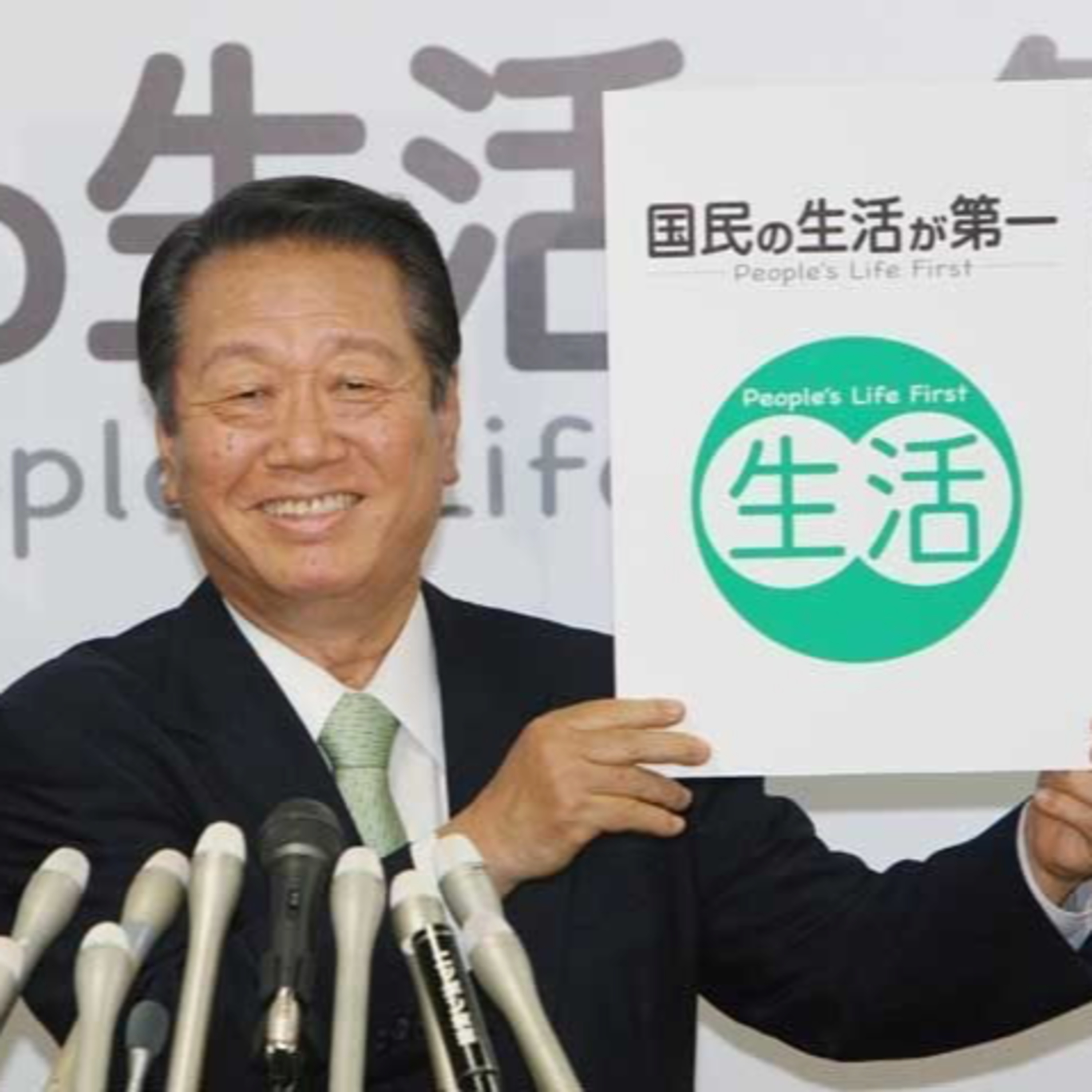
Ichiro Ozawa and the Failed DPJ Revolution
from Democratic Party Channel (DPC) Hosted by Yu-ai Research Center
The historic 2009 regime change in Japan, marked by the Democratic Party of Japan’s landslide victory, represented a monumental shift in the country's post-war political landscape. On August 30, 2009, the DPJ captured 308 seats in the House of Representatives, decisively ending 54 years of near-continuous dominance by the Liberal Democratic Party. Academic observers famously characterized this democratic upheaval as a revolution by disciplined people, highlighting how ordinary voters systematically used the ballot box to demand a total overhaul of the entrenched status quo. At the very core of the DPJ’s campaign was the revolutionary philosophy of political leadership, a concept designed to dismantle the traditional bureaucratic leadership model where elite, unelected career civil servants held the true power over state-steering and policy formulation. The DPJ envisioned a Westminster-inspired system that would firmly place supreme decision-making authority back into the hands of elected representatives. Despite the immense public hope surrounding this experiment, the DPJ’s governance model collapsed within a mere eight months due to catastrophic institutional design flaws. In a zealous bid to assert dominance over the bureaucracy, the new administration immediately abolished the weekly administrative vice ministers' meeting. This body had historically functioned as the essential clearinghouse where top civil servants resolved interministerial conflicts and thoroughly vetted legislation before it reached the cabinet. Without this vital apparatus, and entirely lacking the institutional memory needed to run the administrative state, the DPJ paralyzed the legislative process, causing government operations to grind to a halt while politicians became overwhelmed by administrative details. This structural failure was compounded by deep policy contradictions within their campaign platform. While pushing the populist slogan of moving from concrete to people to redirect state funds into direct household subsidies like child allowances, they simultaneously promised to abolish highway tolls. This toll policy directly subsidized the transport and concrete industries they had vowed to defund, exposing their manifesto as an electoral tool to win votes rather than a functional economic strategy. The final blow to their operational credibility came with the Futenma base crisis, where Prime Minister Yukio Hatoyama unilaterally promised to relocate the U.S. Marine Corps Air Station out of Okinawa. Bypassing career diplomats who understood the geopolitical realities, Hatoyama secured no viable alternative location and failed to get buy-in from Washington, leading to a humiliating public retreat that shattered his administration and forced his resignation in June 2010.
Embed this episode
No transcript yet.