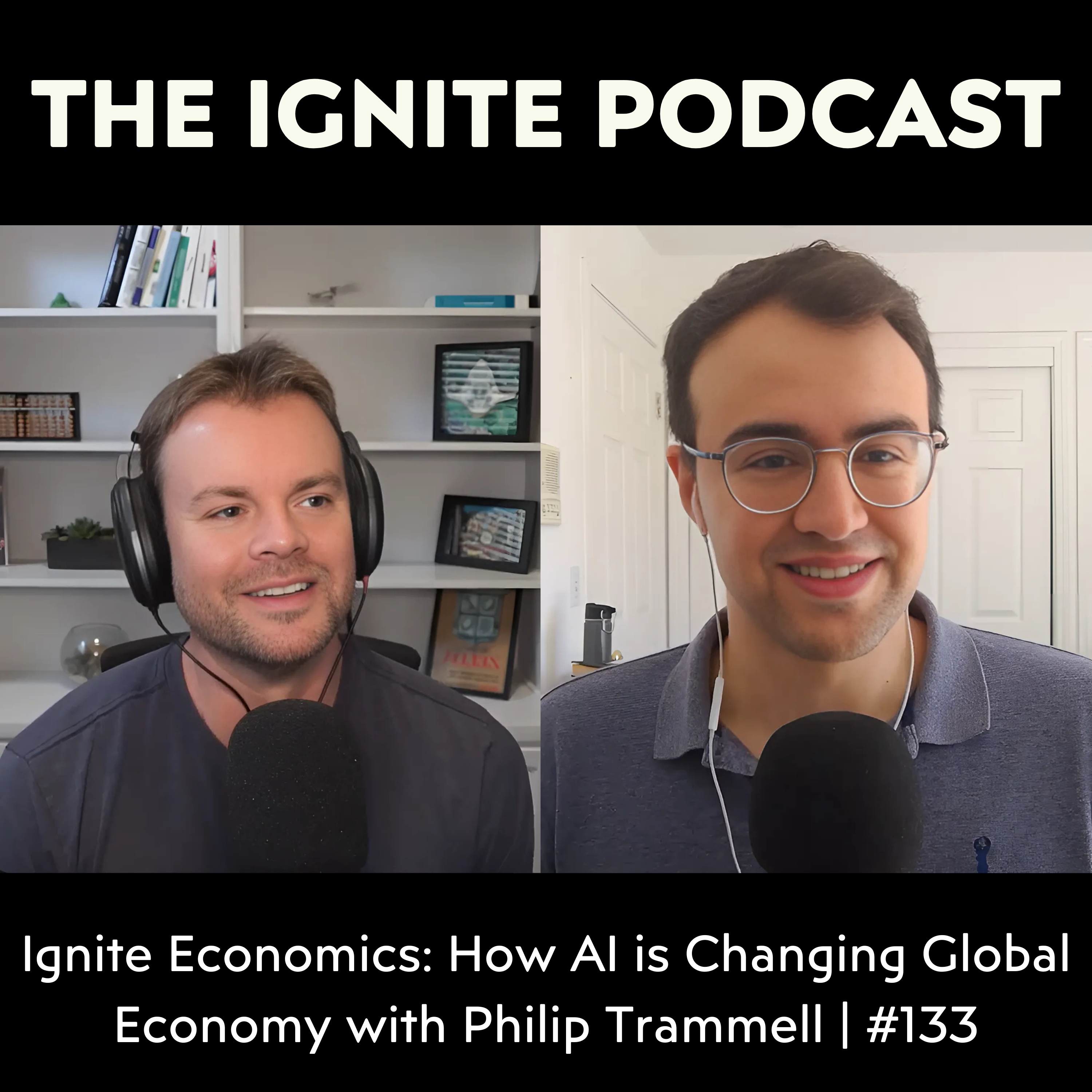
Ignite Economics: How AI is Changing Global Economy with Philip Trammell | #133 episode artwork

EPISODE · Feb 12, 2025 · 1H 5M

Ignite Economics: How AI is Changing Global Economy with Philip Trammell | #133

from Ignite: Conversations on Startups, Venture Capital, Tech, Future, and Society · host Brian Bell

In this episode of the Ignite Podcast, host Brian Bell welcomes Philip Trammell, a postdoctoral researcher at Stanford's Digital Economy Lab, to discuss the transformative impact of artificial intelligence on economic growth, labor markets, and income distribution. Trammell shares his journey into AI economics, which was initially sparked by an interest in philanthropy and effective altruism. He outlines how automation and capital accumulation have historically driven exponential economic growth, but AI presents the potential for an even more accelerated, self-reinforcing growth cycle. The discussion delves into the mechanisms of AI-driven automation, including recursive self-improvement and capital self-replication, which could lead to a paradigm shift in economic models.Brian and Philip explore historical analogies, such as the industrial revolution and the automation of agriculture, to understand how labor markets might respond to increasing AI-driven job displacement. They discuss whether AI will lead to a "tipping point" where human labor is no longer necessary for most economic activities or whether it will create new categories of work. They debate scenarios ranging from super-exponential economic growth to a possible slowdown due to bottlenecks in automation. Trammell highlights how AI could facilitate rapid retraining and adaptation, but also notes that economic structures may struggle to keep up with the pace of change.The conversation turns to the implications for labor and wealth distribution, with Brian questioning whether society is prepared for the potential widening of income inequality. Trammell explains that while past automation waves have typically led to new job creation, AI-driven capital accumulation could shift most economic value to those who own the capital—potentially leading to a significant reduction in wages. They discuss possible policy responses, including wealth redistribution, basic income, and innovative ways to give people equity in AI-driven economies.The episode concludes with a discussion on the societal perception of billionaires, taxation, and whether AI-driven economic change should be regulated or left to market forces. Brian and Philip debate the balance between fostering innovation and ensuring economic fairness, with Trammell emphasizing that while technological progress creates vast wealth, its distribution remains an open and pressing question. This thought-provoking discussion leaves listeners with a deeper understanding of the economic shifts AI may bring and the urgent need for proactive policy considerations.Chapters:00:01 - 02:18 Introduction02:19 - 05:54 Philip’s Journey Into AI and Economics05:55 - 10:51 The Economic Foundations of Growth & Automation10:52 - 15:25 Are We Approaching an AI Tipping Point?15:26 - 19:49 What AI Needs to Automate Everything19:50 - 24:26 Could AI Replace Most Jobs by 2030?24:27 - 30:00 AI’s Acceleration & Limits30:01 - 33:46 The Future of AI & Robotics: Specialized vs. Universal Systems33:47 - 38:15 What Work Looks Like in an AI-Dominated Future38:16 - 44:08 The Rising Wealth Gap: Will AI Concentrate Power?44:09 - 50:56 Are Billionaires Really the Problem?50:57 - 58:34 What Policymakers Should Do About AI-Driven Capitalism58:35 - 1:02:27 The Free Market vs. Regulation Debate1:02:28 - 1:05:28 Final Thoughts & Predictions

In this episode of the Ignite Podcast, host Brian Bell welcomes Philip Trammell, a postdoctoral researcher at Stanford's Digital Economy Lab, to discuss the transformative impact of artificial intelligence on economic growth, labor markets, and income distribution. Trammell shares his journey into AI economics, which was initially sparked by an interest in philanthropy and effective altruism. He outlines how automation and capital accumulation have historically driven exponential economic growth, but AI presents the potential for an even more accelerated, self-reinforcing growth cycle. The discussion delves into the mechanisms of AI-driven automation, including recursive self-improvement and capital self-replication, which could lead to a paradigm shift in economic models.Brian and Philip explore historical analogies, such as the industrial revolution and the automation of agriculture, to understand how labor markets might respond to increasing AI-driven job displacement. They discuss whether AI will lead to a "tipping point" where human labor is no longer necessary for most economic activities or whether it will create new categories of work. They debate scenarios ranging from super-exponential economic growth to a possible slowdown due to bottlenecks in automation. Trammell highlights how AI could facilitate rapid retraining and adaptation, but also notes that economic structures may struggle to keep up with the pace of change.The conversation turns to the implications for labor and wealth distribution, with Brian questioning whether society is prepared for the potential widening of income inequality. Trammell explains that while past automation waves have typically led to new job creation, AI-driven capital accumulation could shift most economic value to those who own the capital—potentially leading to a significant reduction in wages. They discuss possible policy responses, including wealth redistribution, basic income, and innovative ways to give people equity in AI-driven economies.The episode concludes with a discussion on the societal perception of billionaires, taxation, and whether AI-driven economic change should be regulated or left to market forces. Brian and Philip debate the balance between fostering innovation and ensuring economic fairness, with Trammell emphasizing that while technological progress creates vast wealth, its distribution remains an open and pressing question. This thought-provoking discussion leaves listeners with a deeper understanding of the economic shifts AI may bring and the urgent need for proactive policy considerations.Chapters:00:01 - 02:18 Introduction02:19 - 05:54 Philip’s Journey Into AI and Economics05:55 - 10:51 The Economic Foundations of Growth & Automation10:52 - 15:25 Are We Approaching an AI Tipping Point?15:26 - 19:49 What AI Needs to Automate Everything19:50 - 24:26 Could AI Replace Most Jobs by 2030?24:27 - 30:00 AI’s Acceleration & Limits30:01 - 33:46 The Future of AI & Robotics: Specialized vs. Universal Systems33:47 - 38:15 What Work Looks Like in an AI-Dominated Future38:16 - 44:08 The Rising Wealth Gap: Will AI Concentrate Power?44:09 - 50:56 Are Billionaires Really the Problem?50:57 - 58:34 What Policymakers Should Do About AI-Driven Capitalism58:35 - 1:02:27 The Free Market vs. Regulation Debate1:02:28 - 1:05:28 Final Thoughts & Predictions

NOW PLAYING

Ignite Economics: How AI is Changing Global Economy with Philip Trammell | #133

0:00 1:05:27

No transcript for this episode yet

We transcribe on demand. Request one and we'll notify you when it's ready — usually under 10 minutes.

MG Show MG Show The MG Show, hosted by Jeffrey Pedersen and Shannon Townsend, is a leading alternative media platform dedicated to uncovering the truth behind today’s most pressing political issues. Launched in 2019, the show has grown exponentially, offering unfiltered insights, comprehensive research, and real-time analysis. With a commitment to independent journalism and factual integrity, the MG Show empowers its audience with knowledge and encourages active participation in the political discourse. Breaking News Show | eTurboNews Juergen Thomas Steinmetz News is relevant to the global travel and tourism industry, human rights and global issues.Breaking news when it happens and only from the source. Eat to Live Jenna Fuhrman, Dr. Fuhrman Our health is our most precious gift and smart nutrition can change your life. Each month, join Dr. Fuhrman and his daughter, Jenna Fuhrman as they discuss important topics in the world of nutrition. Eat to Live will change the way you eat and think about food. French Your Way Jessica: Native French teacher founder of French Your Way Boost your French listening skills and test your comprehension with this one of a kind series of podcasts. Get the chance to listen to a real conversation between native speakers talking at normal speed AND customise your learning experience through carefully designed sets of questions (2 levels of difficulty) available for download at www.frenchvoicespodcast.com. All interviews also come with the transcript. French teacher Jessica interviews native speakers of French from around the world who share a bit of their life and passion. Where else would you meet in one same place a French yoga teacher based in Melbourne, a soap manufacturer from Provence, or a couple cycling around the world?

Frequently Asked Questions

How long is this episode of Ignite: Conversations on Startups, Venture Capital, Tech, Future, and Society?

This episode is 1 hour and 5 minutes long.

When was this Ignite: Conversations on Startups, Venture Capital, Tech, Future, and Society episode published?

This episode was published on February 12, 2025.

What is this episode about?

In this episode of the Ignite Podcast, host Brian Bell welcomes Philip Trammell, a postdoctoral researcher at Stanford's Digital Economy Lab, to discuss the transformative impact of artificial intelligence on economic growth, labor markets, and...

Can I download this Ignite: Conversations on Startups, Venture Capital, Tech, Future, and Society episode?

Yes, you can download this episode by clicking the download button on the episode player, or subscribe to the podcast in your preferred podcast app for automatic downloads.
URL copied to clipboard!