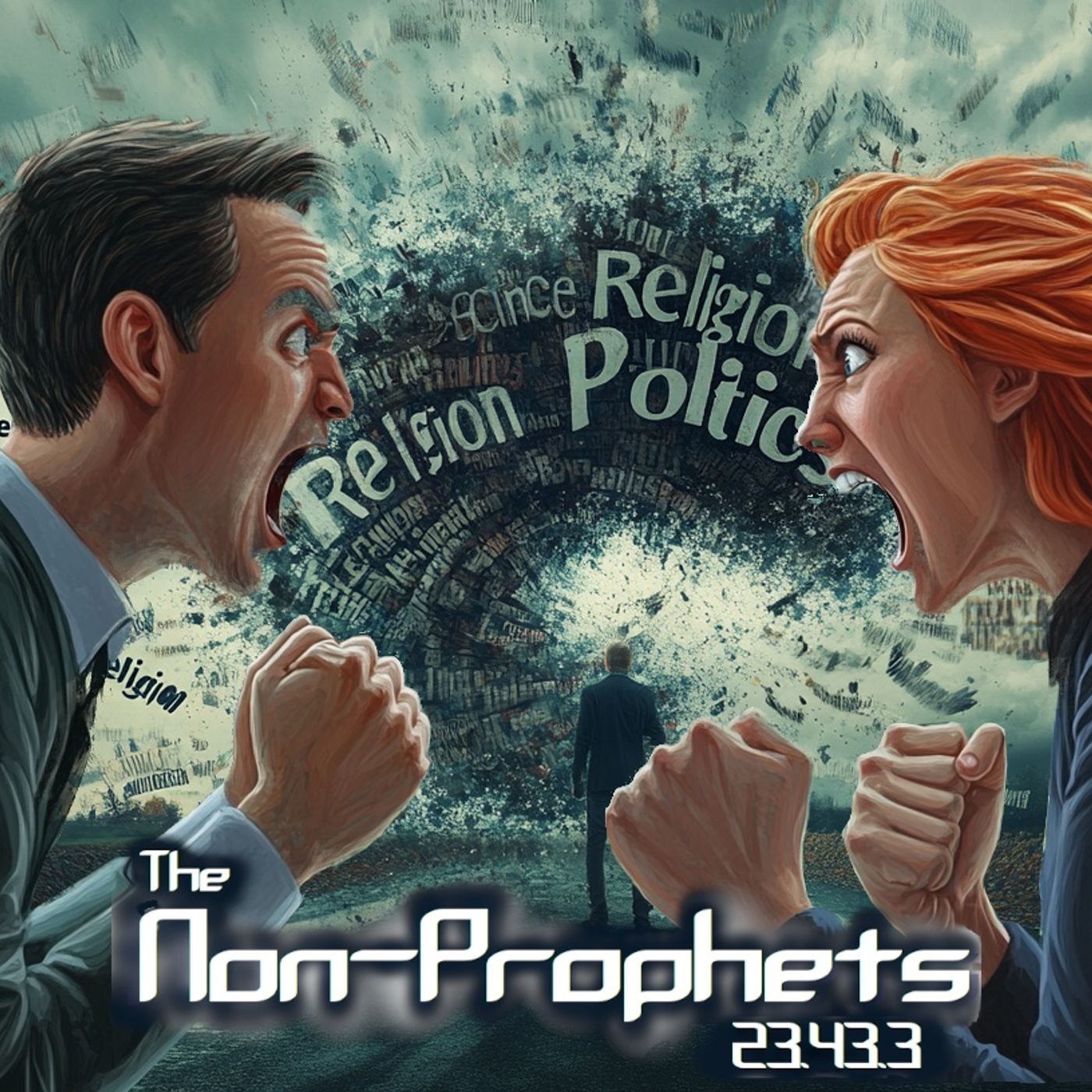
I'm Right! Science said! episode artwork

EPISODE · Nov 1, 2024 · 16 MIN

I'm Right! Science said!

from The Non-Prophets · host Atheist Community of Austin

Why people always think they’re right, according to scienceFortune, By Ani Freedman, on October 9, 2024The conversation starts with a humorous introduction about always being right, but quickly shifts to a discussion about a recent study on the "illusion of information adequacy." This study found that when given incomplete facts, people often believe they have enough information to make informed decisions. However, when presented with the full picture, they tend to change their opinions. This leads to optimism that people are more open to changing their minds than previously thought, encouraging curiosity for deeper and more honest conversations.The discussion evolves into a broader examination of stubbornness in human nature, highlighting how echo chambers and preconceived notions may prevent individuals from altering their views, especially in real-world scenarios outside of controlled environments. AJ and the group reflect on how small misunderstandings, like how someone does laundry, could be addressed with curiosity, setting the stage for handling larger, more contentious issues such as politics and religion.Kara notes that while curiosity and empathetic communication can help in many cases, there are situations where some people remain entrenched in their beliefs for reasons beyond logic or evidence, such as religious motivations. The conversation touches on the "backfire effect," which suggests that people sometimes dig their heels in when presented with contradicting information, although recent studies show that this is not always the case. The key, the group agrees, is how information is delivered—kindness, empathy, and compassion are more likely to lead to open-mindedness than rudeness and condescension.The discussion transitions into a review of the Dunning-Kruger effect, explaining how people with limited knowledge tend to overestimate their abilities, while experts may underestimate their expertise. The group emphasizes the importance of being self-aware and acknowledging when one doesn't know enough. The ability to admit ignorance and stay open to learning is seen as a crucial tool in avoiding falling for conspiracy theories or getting trapped in misinformation.The conversation concludes with a reflection on the importance of self-awareness, humility, and being comfortable with nuance, uncertainty, and the possibility of not having all the answers—especially in complex areas like politics or science. The group acknowledges that while it's uncomfortable to admit a lack of knowledge, it is a necessary step toward better understanding and more meaningful conversations.The Non-Prophets, Episode 23.43.3 featuring  Kara Griffin, AJ and Infidel64 Become a supporter of this podcast: https://www.spreaker.com/podcast/the-non-prophets--3254964/support.

Episode metadata supplied by the publisher feed · Published Nov 1, 2024

Why people always think they’re right, according to scienceFortune, By Ani Freedman, on October 9, 2024The conversation starts with a humorous introduction about always being right, but quickly shifts to a discussion about a recent study on the "illusion of information adequacy." This study found that when given incomplete facts, people often believe they have enough information to make informed decisions. However, when presented with the full picture, they tend to change their opinions. This leads to optimism that people are more open to changing their minds than previously thought, encouraging curiosity for deeper and more honest conversations.The discussion evolves into a broader examination of stubbornness in human nature, highlighting how echo chambers and preconceived notions may prevent individuals from altering their views, especially in real-world scenarios outside of controlled environments. AJ and the group reflect on how small misunderstandings, like how someone does laundry, could be addressed with curiosity, setting the stage for handling larger, more contentious issues such as politics and religion.Kara notes that while curiosity and empathetic communication can help in many cases, there are situations where some people remain entrenched in their beliefs for reasons beyond logic or evidence, such as religious motivations. The conversation touches on the "backfire effect," which suggests that people sometimes dig their heels in when presented with contradicting information, although recent studies show that this is not always the case. The key, the group agrees, is how information is delivered—kindness, empathy, and compassion are more likely to lead to open-mindedness than rudeness and condescension.The discussion transitions into a review of the Dunning-Kruger effect, explaining how people with limited knowledge tend to overestimate their abilities, while experts may underestimate their expertise. The group emphasizes the importance of being self-aware and acknowledging when one doesn't know enough. The ability to admit ignorance and stay open to learning is seen as a crucial tool in avoiding falling for conspiracy theories or getting trapped in misinformation.The conversation concludes with a reflection on the importance of self-awareness, humility, and being comfortable with nuance, uncertainty, and the possibility of not having all the answers—especially in complex areas like politics or science. The group acknowledges that while it's uncomfortable to admit a lack of knowledge, it is a necessary step toward better understanding and more meaningful conversations.The Non-Prophets, Episode 23.43.3 featuring  Kara Griffin, AJ and Infidel64 Become a supporter of this podcast: https://www.spreaker.com/podcast/the-non-prophets--3254964/support.

PodParley-generated summary based on available episode metadata and transcript content.

NOW PLAYING

I'm Right! Science said!

0:00 16:11

No transcript for this episode yet

We transcribe on demand. Request one and we'll notify you when it's ready — usually under 10 minutes.

Big Old Life: Heather Blackbird interviews people on planet earth. Heather Blackbird loves asking questions. This podcast is a learning experience. Join me, Heather Blackbird, as I talk to people about their lives. Frequency of new episodes is a little all over the place and I'm learning as I go. Big Old Life is a small way of talking about the vastness of life, one person at a time. If you are reading this or found this podcast it's probably because someone you know gave you a link to it. :) Explicit Tales Of A Superstar DJ The Insomniac Spun seemingly out of nowhere from her complacent life in the corporate world, turned seemingly overnight from 16-Hour shift work and into the life of a literally starving artist and working musician, The Protagonist navigates her supposed rise to fame and superstardom on a journey through spiritual awakening, coming-of-age, and intimate self-realization--guided by an omnipresent force and equipped with the power of love, magic, and music. {Enter The Multiverse.} [The Festival Project] The Festival Project, Inc.™ is a multidimensional multimedia platform which encompasses exploratory and artistic social personifications and expressions on cosmic theory, spirituality, growth, health & wellness, philosophy and theoretic dynamics in entertainment such as music, design, film, television, radio, dance and festival culture, art, fashion, literature, and science. The Festival Project™ and its subsidiary Non-Profit, The Collective Complex © aims to challenge modern artistic and philosop Explicit Bitcoin Is Dead Trey Carson Welcome to Bitcoin is Dead, the ultimate Bitcoin variety show where host Trey takes you on a journey through the ever-evolving world of Bitcoin. Each episode brings new personalities, fascinating locations, and insightful conversations with politicians, educators, and innovators shaping the future of Bitcoin. Whether you're a seasoned Bitcoiner or just starting your journey, tune in for thought-provoking discussions, unique perspectives, and a deep dive into the ideas and people driving the Bitcoin revolution. Explicit The Sacred +Profane Podcast nephtaragrace The Sacred + Profane Podcast is a provocative conversation dedicated to cementing a better future for all. We specialize in unpacking the nuances of what is considered sacred and profane, particularly focusing on sex, death, and all that pertains to the circle of life. Our aim in focusing on such ”taboo” subject matter is to demystify what is unconscious, bring to light what has been known for centuries as ”the occult,” and empower the rapid transformation that is occurring on the Planet. Explicit

Frequently Asked Questions

How long is this episode of The Non-Prophets?

This episode is 16 minutes long.

When was this The Non-Prophets episode published?

This episode was published on November 1, 2024.

What is this episode about?

Why people always think they’re right, according to scienceFortune, By Ani Freedman, on October 9, 2024The conversation starts with a humorous introduction about always being right, but quickly shifts to a discussion about a recent study on the...

Is there a transcript available for this episode?

Yes, a full transcript is available for this episode. You can read the complete transcript on the episode page.

Can I download this The Non-Prophets episode?

Yes, you can download this episode by clicking the download button on the episode player, or subscribe to the podcast in your preferred podcast app for automatic downloads.
URL copied to clipboard!