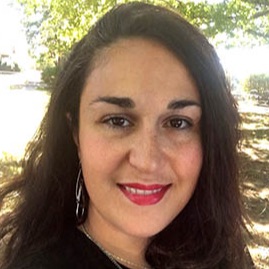
From a South American city to Tennessee pastures, one scientist's journey to increasing the sustainability of agriculture. This is AgCast, brought to you by the University of Tennessee Institute of Agriculture. I'm Ginger Rousey with the UT Institute of Agriculture. In each issue of our magazine, Tennessee Landlife and Science, we do a feature called In Profile.
It's one of my favorite parts of the magazine because I enjoy learning people's stories and finding out how they got to where they are today and what role agriculture played in getting them there. This issue's In Profile introduces us to Renata Navay-Oaks. She's an assistant professor in the Department of Plant Sciences who's working to improve the food fed to livestock. She's based at the Middle Tennessee Ag Research and Education Center, but of course her story doesn't begin there.
Here's our conversation. Renata, thanks for joining me by phone for this In Profile. I guess we'll just start at the beginning. You're a native of Brazil, which is, of course, an agricultural powerhouse.
Was farming a big part of your childhood? So, I have absolutely no farming background within my family. Really? Like, all my family, I see people there, São Paulo there, they don't, you know, didn't even know what forests were.
Okay. So, but my parents, I grew up outside of São Paulo, which is a city of, I would say, 100 miles from the big city. And there, where they have the most prestigious or most famous agricultural university in Brazil. And it also plays a place that people go there, and I'm too often to see animals and all that, and I always do that my whole life.
So, when I was looking at, you know, what am I going to do when I finished, you know, high school, I knew it would be a biological area, but I didn't know exactly what. And I always loved animals about plants. So, you know, and I kind of went there a lot, and I was like, I think I really like this. And I like agriculture.
I'm like, I'm here. I like being outside. So, that's kind of what really inspired me to look into agriculture. And then, once I started, I knew that's what I was meant to do, and I could not see myself doing anything else.
What did your parents think, you know, as city people? Oh, they were very supportive. I mean, I've never, for a second, told me to do something different. You know, they always, they knew that I should do whatever I was passionate about, and they didn't know a lot of what I would be doing, but they were supportive.
I was very happy that, you know, that doesn't matter. Were you surprised at the scope of agriculture, or was it, did your perception of agriculture change pretty quickly? Oh, yeah. I mean, I kind of, I knew I would be working with plants and with animals, but I didn't really know what I would do.
You know, I didn't know details about it. I mean, Brazil has a big agriculture sector, you know, and it's kind of what moves the country forward, if you think about. So Brazil has always been really strong in agriculture, and that, so I always know what's going on, but I, of course, I had no idea, you know, what it actually meant, you know, to help producers or to actually, you know, improve agriculture in general. I just thought it would be interesting to look at plants and animals, but I didn't know what that meant, you know?
Well, once you got into your field of study, what surprised you the most? Majored in agronomy, but like I said, I always liked animal science, too. So I knew that I would be working with something that kind of related to both, because I couldn't see myself just working with plants or just working with plants. So in Brazil, we have one of the biggest beef industries and beefs all around, and I would not say 95 to 99% of our beef production is great.
It's a great thing, because, you know, feeding is very expensive. Orchered is expensive. It's extremely expensive there. So I knew that the link between the two layers with forages, you know, that he's still not going to be working with plants, but two feed animals.
So I knew that I would have to know. And that's what is really surprising, I would say, or in the past, and even at the same time, because if a person asks me, you know, what do you do? What do you work with? And I say, grasses and forages that you're like, oh, okay, super specialized, you know, nobody else does that.
But at the same time, I feel that it's not, because forage, even most of everything, every single sector in agriculture, you have something to do with forages. So it's very connected to crop production, to soil quality, to water quality, to genetics, to animal science. So you have to kind of understand a little bit about everything to produce forages. So that's just kind of ties everything together for some reason.
So that's what is surprising at the same time. Well, sure. Now, you've been here since, you've been here at UTIA for four years, is that right? Yeah, 2013, yeah.
So I finished my fourth year in May. So yeah, a little over four years. And so since you've been here, what project would you say has been your top priority since doing? My goal, my ultimate goal with my research program is to minimize feeding and extend grazing.
You know, that's kind of one of my goals. And so I always look into a way and see something that could potentially do that, reduce costs of production to make producers to maybe remain viable because, you know, everything's getting so specialized that producers are kind of losing their spots and things. And so one of the things that I've become passionate about and I have started a smaller project that I really want to look further is integration of crop production and livestock production. Well, it's funny you mention that because I think there's a perception that food produced for livestock actually competes with food produced for human consumption.
I actually think that it's completely opposite. Those two go in hand. You know, if you can produce crops together, integrated with your animals, that would be a win-win for all sections. Especially in the sea where most of our produce operations or farmers are considered small-scale farms.
So basically, the first thing you think is that you're limiting space. So, and also, again, coming from a Brazilian background, I know that in Brazil they have been studying this for so long now. You know, the integration of crop and livestock production is very expensive to produce crops or to produce livestock. So if you're integrating trying to take advantage of your limited space, you're going to be more sustainable and you're going to be more profitable.
And all their research is showing the success that you can achieve with that. And I'm thinking, you know, here would be the perfect place to make this be true because we don't have enough space. So why not integrate the two and actually be profitable for both? And at the same time, you're going to be increasing your stability, you're going to be coping with environmental benefits and increasing soil quality, increasing water quality, and on the same time, processing from both sectors.
So that's kind of what I've been passionate about and what I really look forward to do more for the state in general. So practically, how does that look if you're on limited acreage? How do you raise cattle and grow corn? So for example, I actually have some studies on that.
So what do they do? You plant forages with the corn or in case it would be cover crops. You know, they're going to plant no matter what to increase water quality and all that. But if you're planting some crops that can actually be used as forages later on, once you harvest the corn, you can put your cattle in the same area and then you can harvest the corn residue and the cover crops or the forages that are remaining in the area.
So you can use that same space for two practices, you know. Is that what you mean I guess there's several different ways to be sustainable having a longer grazing season and that's for sure. I mean, the ultimate goal is to extend grazing season and that would be my ultimate goal if one producer does that, I would think I'd be successful because I feel that producers in general, not only here, they sometimes they're more worried about doing what their best generation have been doing than actually looking to research and, well, I should be doing something different to improve my operations. And one of the things I have noticed is that they sometimes, you know, there's a time of the year the temperature is getting cooler so it might as well see my mercado.
But if you have plenty of force that you could be taken advantage of, you know. And we also are in a location that's perfect for that for the reason that we produce a lot of good quality forages, a lot of cool season grasses and legings, a lot of warm season grasses and legings. We can grow annual forages all year long, you know, we can grow warm season annuals and your winter, cool season annuals and produce, you know, forages during the wintertime where they can see graze. So there's so many ways that we can extend grazing season or in my opinion have year-round grazing that that is definitely, you know, one way to be sustainable.
Or another, you know, again, you can integrate crop when you don't have enough forages or you can stockpile when you have a time when you have excessive forage, you stockpile for later in the season where you don't have enough and you can still extend. So there's so many ways to be more sustainable and I feel that not a lot of people take advantage of that, of that knowledge. Those type of studies that have been done in the 19th season is not nothing new, but I feel that it's not fully taking advantage of that knowledge. It's taking a lot of catch on, I guess.
Exactly. Well, something that is catching on is grass-band beef. I mean, that's really growing an interest. I know UT IAS had several conferences related to that.
Are you doing research 100% of what I do is grazing focus. You know, I don't see another way. And again, I would say that a lot, but we're in a background where all we do is grass-band beef because there's no other way. It would be too expensive if you're doing the other way.
So I don't see it. I guess why you're not going to use or are able to graze their own feet. I mean, it doesn't make total sense for me. I can't see any other way.
So yeah, and the fact that consumers are becoming more aware of what they're buying, they want to find ways to become healthier. Producers cannot run away from that any longer. They're going to have to find a common ground and there's a lot of misconception that some people, you know, it doesn't mean that, this grass-band is healthier. That has nothing to do with that.
But they are more aware of what they're taking and producers should take that into consideration if they want to remain viable. If they want to still be profitable and sustainable, they need to not ignore the, if you think that doesn't mean it's healthier or not, but they should take that into consideration if they want to remain in a system, you know. And I still think, you can see, most of our producers are grazing a lot more. Maybe they still feed hay while you still grass-band, you know.
So you definitely see some sustainability advantages. Absolutely. No, I mean, that would be the key just kind of in my opinion. You know, that would be definitely the key.
And not only that, for marketing perspective, you're going to, like you are increasing your product value when you are adapted to those things as well. Yeah. Well, I guess kind of along those lines, you know, where do you see production going in the next 30 years? I mean, particularly as it relates to human food consumption.
So yeah, I feel that in 30 years, there's no way that a producer that doesn't cope with those changes, they're going to still be viable because I don't see consumers turning back. You know, like I said, they want to be, they want to make sure that it's healthy and they have their standards now that there's no way that producers should ignore anymore. So they consider no way for them to remain viable. So if that is having an area within their farm that they're going to go towards organic production, they should look into that.
Do I think that conventional agriculture is done with an use? I don't. I mean, I think quite the opposite. But for a producer's perspective that should remain viable, they probably need to take that into consideration and look at different options to please the consumers because otherwise, you know, if you're going to have a prime for that product that you wouldn't if you didn't have that.
But I also think that it's very important and I feel that somewhere along those lines, communication has been lost and I feel that, like I said, there's a lot of misconceptions about what is conventional agriculture, what is organic agriculture. I mean, a lot of producers, a lot of customers actually think, well, I want to get it better for me and that is not true at all or I don't want conventional because that is going to, you know, I'm going to get cancer from it and it's also not true. So I feel that the communication should be strained there. So especially within the university, the researchers and the producers, I guess we should do a better job communicating and actually explaining what those things are because I actually feel that every time I talk to a person that has no agricultural background or even friends of mine where they say, I'm going to just feed my child with organic milk because they don't want them to go into puberty when they're, I don't know, and I'm like, well, that makes no sense because they don't know how to keep hormones to our cattle.
So there's a lot of these professions and I think communication should be a big part of it in order to, I guess, everybody to grow to get an understanding of what it is but producers also need to give those some of the chance and meet their standards if that's what they want. Otherwise, it would be hard for them, especially in 30 years, to remain viable. I have really enjoyed talking to you, you can read about Renata in our fall issue of Tennessee Land Life and Science where you can also catch up on many other great things taking place in our institute. Thanks again to Renata Nave Oakes from the UT Department of Plant Sciences.
I'm Ginger Rousey. Take care, everyone. For more real-life solutions provided by the UT Institute of Agriculture, go to our website at ag.tennessee.edu.