
EPISODE · Oct 18, 2026 · 6 MIN
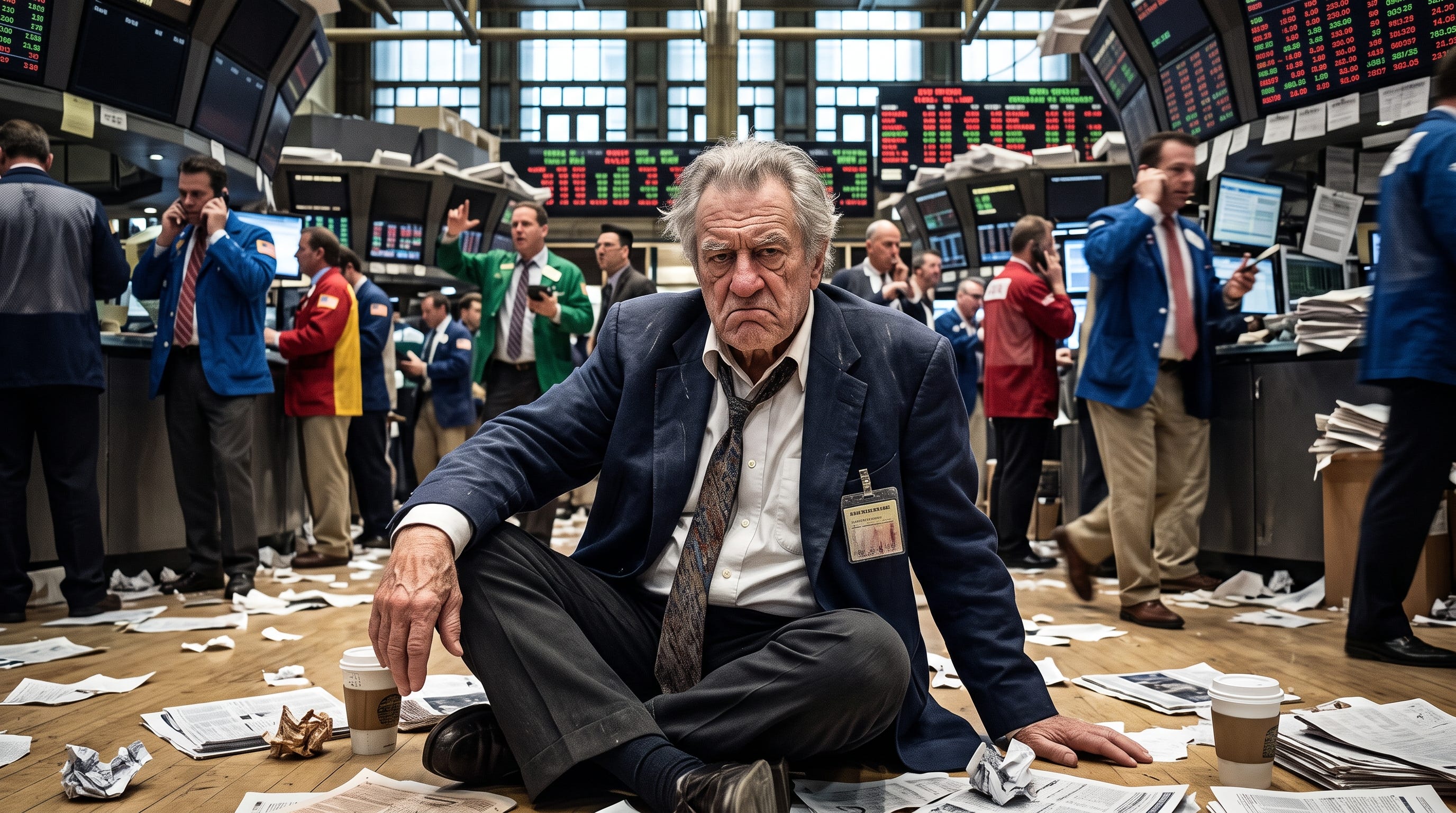
Increasingly Grumpy.
from ANGLES. · host Simon Brady CFP® CETF®
Deadly Houthi attacks in Saudi Arabia over the weekend and Trump clearly throwing his weight behind Putin by lifting some Russian energy sanctions and shutting down satellite access to the Ukrainian military pushed oil prices higher again as the eleventh bull market in stocks since the 1950s celebrated its fourth birthday (during which time the S&P 500 has risen by 117%) to start a week packed with Q3 earnings reports and critical inflation data. While bond traders took the day off for Columbus Day, energy price concerns offset broad earnings optimism when stocks opened on Monday and the indexes finished a quiet session moderately lower. The previous week’s scare caused by the Financial Times’ OpenAI revenue story was a warning shot across the bow of the whole Big Tech/AI ecosystem and emphasized just how vulnerable this corner of the stock market is to any perceived downturn in the fortunes of just a handful of companies. An alarming chip/semiconductor selloff in South Korea overnight on the back of potential Chinese competition generated more tech jitters in New York on Tuesday morning, but center stage was occupied by a flurry of pre-market earnings reports. Index heavyweights JP Morgan, Goldman Sachs and United Healthcare all initially jumped higher after announcing largely impressive results but Citibank, Wells Fargo and Johnson & Johnson sank after disappointing to varying degrees. The net effect on stocks of the slew of earnings reports, lightly easing interest rates and concerns surrounding geopolitics and Big Tech/AI leaned neutral-to-negative and the indexes closed fractionally in the red. Bank of America failed to meet expectations with its earnings on Wednesday morning and confirmed a $1.2 billion fine for money laundering and sanctions-busting. Morgan Stanley also failed to wow Wall Street and both stocks were punished by an increasingly grumpy stock market which is not in the mood to tolerate earnings misses. But the big news was the final CPI report before the midterms (early voting is already under way in seventeen states), which is also likely to anchor the conversation at the next Fed interest rate meeting on October 28th. It showed annualized US retail inflation accelerating to 3.7%, driven mainly by increased fuel costs. This was deemed to add a little weight to the recently-diminishing probability of an October increase in the Fed Funds Rate. Short/medium term interest rates shifted higher but the stock indexes got trashed, especially the NASDAQ with more of the tech stock carnage in South Korea spilling over into US markets. CoreWeave, a poster child for stretched valuation stocks with zero profitability and massive and increasingly costly debt, got totally hammered. Asian markets had another rough session and the tech wreck in the US continued into Thursday morning as money rotated out of Big Tech/AI stocks into more defensive names and into bonds which had a strongly moderating effect on interest rates. Things were’t helped by PPI data showing the biggest jump for years in annualized wholesale inflation, now up to 6.3%. Retail sales are gradually slowing, as the American consumer begins to finally show the first signs of spending fatigue. The pullback in interest rates, however, triggered something of a recovery in stocks as the session wore on and the indexes clawed their way back to finish flat for the day. As soon as US markets opened on Friday money continued to fly out of Big Tech/AI stocks and into other sectors like Financials and Healthcare but mainly into bonds and cash. It was announced that the US federal budget deficit widened to nearly $2 trillion for the 2026 fiscal year, a 12% increase on the $1.78 trillion gap recorded for last year. Federal government spending rose by about 6%, while tax receipts increased about 3%. The combination of the never-ending conflict in the Middle East and Ukraine’s resumption of strikes on Russian energy infrastructure sent the oil price screaming higher to top $110 for the first time since May. The result was another miserable day for the stock indexes which closed deep in the red, with the tech-heavy NASDAQ-100 getting battered amidst another bloodbath in the semi-conductor and memory universe ahead of tech earnings kicking off in the next few days. For the week, the S&P 500 and NASDAQ-100 large cap indexes, US small caps and international stocks all finished substantially lower. Some other things I’m thinking about .. * Tariffs, rising interest rates, persistent inflation and soaring fuel costs have driven the average price for a new vehicle to above $50k, according to a recent analysis by Kelley Blue Book. Another survey found that vehicle pricing was the most cited reason for customers walking away from a purchase at 66%. Financing costs came in as the second most frequent reason at 47%. The average price of gas at the pump has now been above $4.00/gallon for 160 days this year, breaking 2022’s all-time record. * It may not have always felt like it, but when the S&P 500 fell by 1.1% on Wednesday, it snapped a run of extraordinary stock market stability with 52 trading sessions having passed since a 1%+ down day in the index, the longest such streak on record. Anglia Advisors clients are now able to access customized model portfolios in managed investment accounts which exclusively use ETFs, many of which carry no management fee - contact me for more details. If you are not yet a financial planning or investment management client of Anglia Advisors and would like to explore becoming one, please feel free to reach out to arrange a complimentary no-obligation discovery call with me. ARTICLE OF THE WEEK: The ‘American Dream’ Now Costs More Than $5.3 million. .. AND I QUOTE: “A lot of investors have no clue what they are investing in. Most companies out there cannot find any bloody return on investment, I’m telling you. People are just wasting money spending tokens.” Hock Tan, CEO of Broadcom, one of the biggest winners of the AI boom. LAST WEEK BY THE NUMBERS: * SPY is a US Large Cap ETF that tracks the S&P 500 index, made up of 500 stocks from a universe of the largest US companies. * Down by 2.0% last week * Up by 0.1% over the past month * Up by 2.9% over the last three months * Up by 11.9% so far this year * QQQ is a US Large Cap ETF that tracks the NASDAQ-100 index, made up of the largest 100 non-financial companies listed on the tech-heavy NASDAQ exchange. * Down by 5.5% last week * Down by 1.0% over the last month * Up by 2.0% over the last three months * Up by 15.5% so far this year * IWM is a US Small Cap ETF that tracks the Russell 2000 index, made up of the bottom two-thirds in terms of company size of a universe of 3,000 of the largest US stocks. * Down by 3.0% last week * Down by 5.3% over the last month * Down by 7.5% over the last three months * Up by 9.9% so far this year * VXUS is an International Non-US ETF that tracks the MSCI ACWI Ex-US index, made up of over 8,500 of the largest names from a universe of stocks issued by companies from around the world excluding the United States, in both developed and emerging markets. * Down by 1.6% last week * Down by 3.6% over the past month * Up by 0.4% over the last three months * Up by 10.6% so far this year * BRENT CRUDE OIL .. $109.95 (up by 5.1% last week) * GOLD .. $4,187 (down by 0.1% last week) * BITCOIN .. $ 81,755 (down by 1.1% last week) Data courtesy of finviz.com as of Friday’s close. AVERAGE 30-YEAR FIXED MORTGAGE RATE: 7.37% Data courtesy of Mortgage News Daily which calculates a daily average 30-year fixed mortgage rate from several different sources including surveys from Mortgage News, Freddie Mac, the Mortgage Bankers Association and the Federal Housing Finance Agency. INTEREST RATES: * FED FUNDS RATE * 3.875% (3.875% a week ago) * PRIME RATE ** 7.00% (7.00% a week ago) * 3 MONTH TREASURY 4.26% (4.25% a week ago) * 2 YEAR TREASURY 4.74% (4.80% a week ago) * 5 YEAR TREASURY 4.90% (5.02% a week ago) * 10 YEAR TREASURY *** 5.10% (5.24% a week ago) * 30 YEAR TREASURY 5.44% (5.60% a week ago) Data courtesy of the Federal Reserve and the Department of the Treasury as of Friday’s market close. * Decided upon by the Federal Reserve Open Market Committee at periodic meetings 8x a year. Used as a basis for overnight interbank loans and for determining high yield savings interest rates. ** Wall Street Journal Prime Rate as of Friday’s close. Moving in lockstep with the Fed Funds interest rate, this measure is used as a basis for determining certain consumer loan interest rates such as credit cards, auto loans, personal loans, home equity loans/lines of credit and securities-based lending. *** Used as a basis for determining mortgages. INTEREST RATE EXPECTATIONS: Where will the Fed Funds interest rate be after the next rate-setting meeting on October 28th? * 0.25% higher than now .. 17% probability (17% a week ago) * Unchanged from now .. 83% probability (83% a week ago) * 0.25% lower than now .. 0% probability (0% a week ago) What is the most commonly-expected number of 0.25% Fed Funds interest rate changes over the next twelve months? * 3 increases, 37% probability (a week ago: 3 increases, 34% probability) Data courtesy of the CME FedWatch Tool and is derived from futures market pricing as of Friday’s market close based on the current Fed Funds interest rate of 3.875%. FEAR & GREED INDEX: “Be fearful when others are greedy and be greedy when others are fearful.” Warren Buffett. Data courtesy of CNN Business as of Friday’s market close. The Fear & Greed Index from CNN Business can be used as an attempt to gauge whether or not stocks are fairly priced and to determine the mood of the market. It is a compilation of seven of the most important indicators that measure different aspects of stock market behavior. They are: market momentum, stock price strength, stock price breadth, put and call option ratio, junk bond demand, market volatility and safe haven demand. Extreme Fear readings can lead to potential opportunities as investors may have driven prices “too low” from a possibly excessive risk-off negative sentiment. Extreme Greed readings can be associated with possibly too-frothy prices and a sense of “FOMO” with investors chasing rallies in an excessively risk-on environment . This overcrowded positioning leaves the market potentially vulnerable to a sharp downward reversal. WWW.ANGLIAADVISORS.COM | [email protected] | CALL OR TEXT: (646) 286 0290 | FOLLOW ANGLIA ADVISORS ON INSTAGRAM This material represents a highly opinionated, speculative assessment of the financial market environment based on assumptions and prevailing information and data at a specific point in time and is always subject to change at any time. Although the content is believed to be correct at the time of publication, no warranty of its accuracy or completeness is ever given. It is never to be interpreted as an attempt to forecast any future events, nor does it offer any kind of guarantee whatsoever of future results, circumstances or outcomes. The material contained herein is not necessarily complete and is also wholly insufficient to be relied upon as research or investment advice or as a sole basis for any financial determinations, including investment decisions or making any kind of consumer choices, without further consultation with Anglia Advisors or other qualified Registered Investment Advisor. The user assumes the entire risk of any decisions made or actions taken based in whole or in part on any of the information provided in this or any other content published by Anglia Advisors. Under no circumstances is any such content ever intended to constitute tax, legal or medical advice and should never be taken as such. Neither the information contained nor any opinion expressed herein constitutes a solicitation for the purchase of any security or asset class. No formal client advice may be rendered by Anglia Advisors unless and until a properly-executed client engagement agreement is in place. Posts may contain links or references to third party websites or may post data or graphics from them for the convenience and interest of readers. While Anglia Advisors might have reason to believe in the quality of the content provided on these sites, the firm has no control over, and is not in any way responsible for, the accuracy of such content nor for the security or privacy protocols that external sites may or may not employ. By making use of such links, the user assumes, in its entirety, any kind of risk associated with accessing them or making use of any information provided therein. Those associated with Anglia Advisors, including clients with managed or advised investments, may maintain positions in securities and/or asset classes mentioned in this post. Anglia Advisors has updated its Privacy Policy. You can view the latest version here. If you enjoyed this post, why not share it with someone? This is a public episode. If you would like to discuss this with other subscribers or get access to bonus episodes, visit simonbrady.substack.com
Embed this episode
Ready to play
Increasingly Grumpy.
No transcript for this episode yet
Similar Episodes
No similar episodes found.