
EPISODE · Oct 27, 2025 · 31 MIN
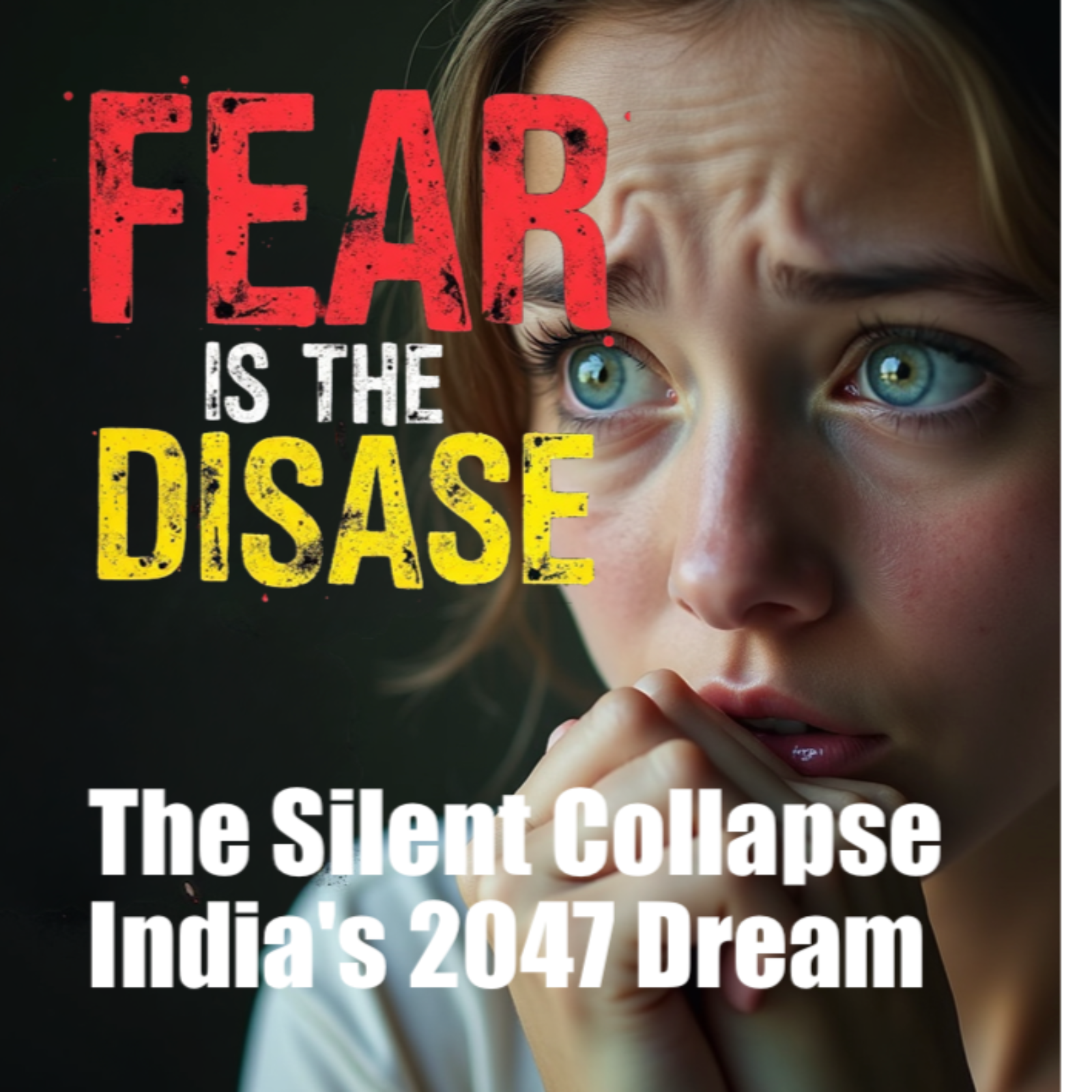
India's 2047 Dream vs. The Silent Collapse: How Financial Greed Fuels a Public Health Catastrophe and the Rise of Superbugs
from Fear Kills more People than Disease and Infections
The aspiration for Viksit Bharat 2047—India's vision of becoming a developed nation by its centenary of independence—is fundamentally predicated on the health and productivity of its vast population. Yet, this ambitious goal is being silently undermined by a public health catastrophe:India's public health system operates on a foundation of chronic underfunding, with government health expenditure hovering around an abysmal 1.2% of GDP. This contrasts sharply with the investment required for long-term developmental goals.This financial gap is pushing approximately 39 million Indians into poverty each year. Financial Greed: The Commercialisation of Medical CareersMedical training, once a path of service, has primarily become a business venture.Exorbitant Fees: Tuition fees in top private medical colleges have soared to over ₹1 crore (₹10 million) for an MBBS degree. The Profit Motive: Medical institutions, including those established by caste groups and corporate entities, generate substantial revenue from high fees and "capitation" (donation) fees. Debt-Driven Practice: Families often mortgage property or take large loans to afford private seats.Corporate hospitals function explicitly as profit-driven industries designed to maximise returns on investment.Massive Capex: The capital expenditure (capex) required to build high-end facilities—such as ₹1,000 crores for a 500-bed hospital—is typically funded through debt. Unethical Incentives: The high-cost model leads directly to perverse incentives, including unhealthy competitionIrresponsible Prescribing: This profit-driven environment encourages doctors to over-prescribe antibiotics, either for prophylactic measures or to meet patient expectations.Threat of "Superbugs" AMR is one of the world’s biggest killers, associated with nearly 10 million deaths globally per year.India’s Burden: In 2019, AMR contributed to 297,000 direct deaths in India. IEconomic Consequences: Unchecked AMR is projected to cost the global economy 3.8% of GDP by 2050. Threat to Medicine: The rise of superbugs, such as the New Delhi metallo-beta-lactamase (NDM-1),The Nexus of Greed and OveruseIndia ranks first globally in the total consumption of antimicrobial drugs for human use. This overuse is a direct consequence of lax regulation and commercial demand:Easy Access and Self-Medication: Profit-Driven Prescribing: III. Breeding Grounds and Broken SystemsThe failure of the public system to invest in basic infrastructure and regulation ensures that superbugs, once created by misuse, are continuously recycled and spread globally.Hospitals as Hotspots: Hospitals and healthcare institutions are identified as the primary breeding grounds for highly resistant superbugs. Environmental Contamination: India’s extensive pharmaceutical industry contributes significantly to environmental contamination. Sanitation Crisis: Approximately 700 million Indians lack adequate sanitation.Conclusion: The Road to 2047 Requires Systemic Change.
Embed this episode
NOW PLAYING
India's 2047 Dream vs. The Silent Collapse: How Financial Greed Fuels a Public Health Catastrophe and the Rise of Superbugs
No transcript for this episode yet
Similar Episodes
No similar episodes found.
Similar Podcasts
No similar podcasts found.