
EPISODE · Feb 14, 2026 · 1 MIN
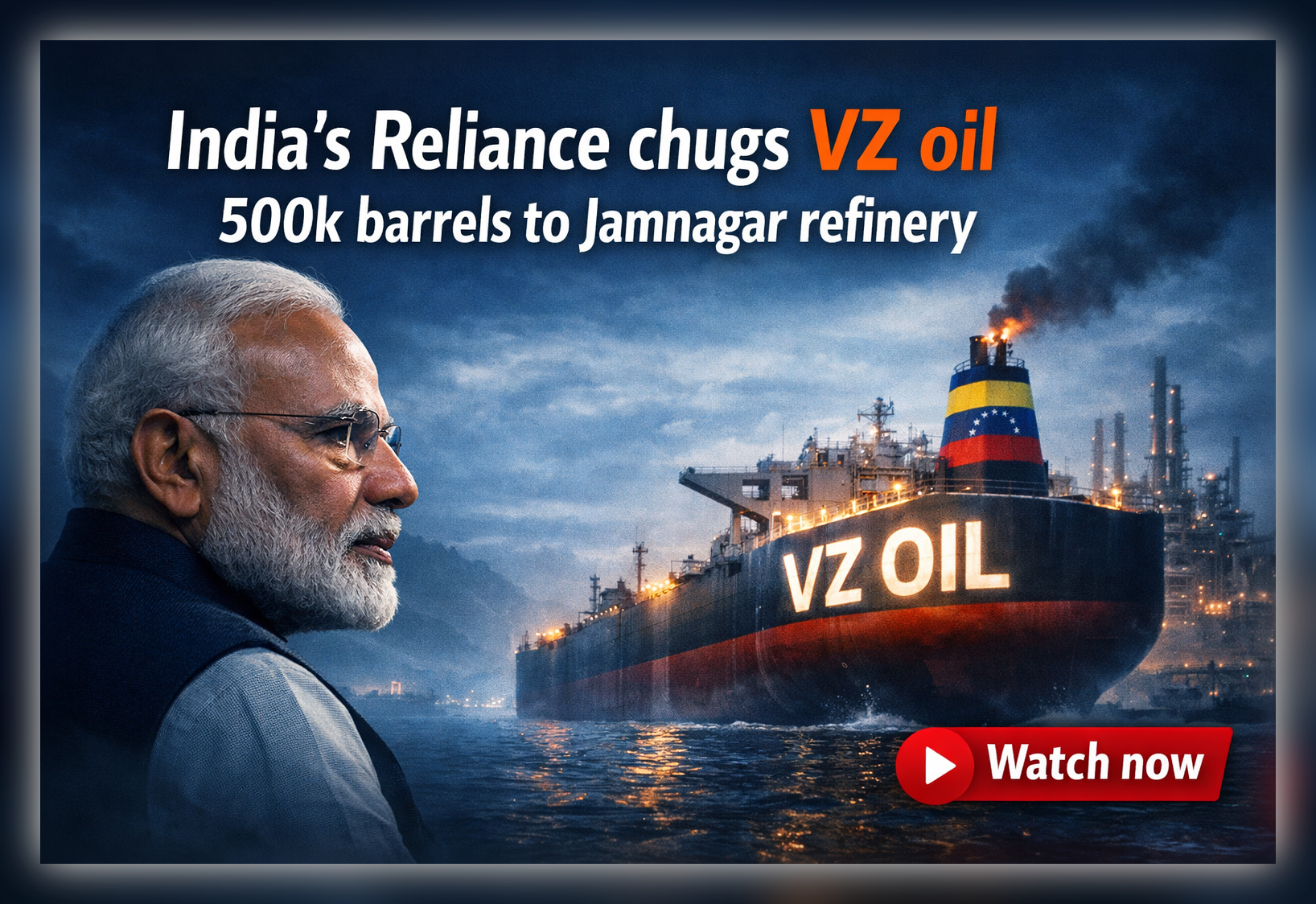
India’s Reliance chugs VZ oil 500k barrels to Jamnagar refinery—Rapid Read 14 Feb 2026
from Geopolitics Unplugged · host GeopoliticsUnplugged
Shock LineSanctions carve-outs channel Venezuelan crude to Asian refiners.What Changed (Last 24 Hours)* US grants license for direct Venezuelan oil imports to Indian conglomerate.* Trump administration revokes federal vehicle emission standards.* OPEC+ confirms plan to resume monthly production increases from April.* Europe accelerates debate on independent nuclear deterrent amid US umbrella doubts.* US endorses Hungarian leader’s reelection, bolstering anti-EU alignment.* Peruvian Congress schedules vote to oust interim president over foreign meetings.Why This Matters (The System)Sanctions-Constrained Energy Trade Regime* Control wins over diversification* Access beats notions of reciprocity* Infrastructure trumps bilateral pactsThis is about rerouting directional flows.Hard anchor: Venezuelan heavy crude volumes at 500,000 bpd locked to Jamnagar refinery.What Breaks Next (Forward Risk)* If Iranian regime holds, Brent-Urals spread compresses below $7 as sanctioned barrels reroute.* Optionality loss for Russian exporters if Indian buyers secure Venezuelan slots via tanker fleets.* First-mover advantage locks Indian refiners into discounted grades, pressuring European diesel margins.* If European nuclear push advances, defense budgets crowd energy infrastructure upgrades.* If Hungarian endorsement sways election, EU Ukraine aid timelines extend beyond Q2.* If Peruvian ouster passes, copper export contracts face 60-day renegotiation halts.Signal vs. NoiseSignal: Venezuelan license grant; emission standards revocation; OPEC+ output signal.Noise: Inflation dip; quantum-AI speculation; Balkan protest rhetoric.The Line to RememberSanctions channel flows, they do not block them.Community Notes:We are very happy to announce that we have a new YouTube page.PLEASE go to www.YouTube.com/@GeopoliticsUnpluggedRapidRead and SUBSCRIBE.Below the paywall is the real actionWe leave the paywall open over the weekend so you can see the value of paid membership. Check it out.Market Snapshot as of publication time noted above (not to be relied on for trading purposes):Detailed News Summaries:Europe Rethinks Nuclear Weapons After US Reality Checkhttps://www.bloomberg.com/news/videos/2026-02-13/europe-rethinks-nuclear-weapons-after-us-reality-check-videoEurope is increasingly contemplating the development of its own nuclear deterrent due to waning confidence in the United States’ nuclear protection amid rising threats from Russia. Experts highlight the complexities involved in establishing an independent European nuclear capability, noting that alternatives to the American umbrella are not easily achievable. The discussion emphasizes the geopolitical shifts prompting this reevaluation, including broader defense self-sufficiency needs. Ultimately, the video concludes that while the push for autonomy grows, the path forward remains uncertain and fraught with challenges.Reliance wins US licence for Venezuelan oil, sources sayhttps://energy.economictimes.indiatimes.com/news/oil-and-gas/reliance-wins-us-licence-for-venezuelan-oil-sources-say/128301066Reliance Industries Ltd has secured a U.S. general license allowing direct imports of Venezuelan crude oil, enabling the company to bypass intermediaries and access discounted heavy crude suitable for its Jamnagar refinery. This development follows U.S. sanctions relief and aligns with a bilateral trade agreement between the U.S. and India, where India commits to reducing Russian oil imports in exchange for tariff reductions on Indian goods. Prior to sanctions in 2019, Reliance regularly sourced Venezuelan oil, and recent limited purchases through traders like Vitol have resumed. The move enhances India’s energy security by diversifying crude sources and optimizing refining efficiency for diesel, kerosene, and petrochemical production.Market Positioning Itself for Period of Higher Geopolitical Riskhttps://www.rigzone.com/news/market_positioning_itself_for_period_of_higher_geopolitical_risk-13-feb-2026-182977-article/?rss=trueThe oil market is adapting to elevated geopolitical risks, with Brent crude prices rising and volatility increasing due to U.S.-Iran tensions and other global factors. Analysts from Standard Chartered and BMI note upward adjustments in forward curves and call skews comparable to past crises, driven by threats of military action against Iran and robust physical demand from harsh weather. Supply-glut concerns are diminishing as demand forecasts improve for later in 2026, leading to revised price projections around $62-67 per barrel annually. Overall, the market anticipates sustained volatility and potential price gains if disruptions occur.Can Quantum Computing Power the AI Boom?https://www.bloomberg.com/news/videos/2026-02-13/can-quantum-computing-power-the-ai-boom-videoThe video explores whether quantum computing can drive the ongoing AI surge by providing superior processing capabilities amid global competition for technological dominance. Discussions focus on potential breakthroughs in quantum technology that could meet the high demands of AI applications, though challenges in realization persist. Experts analyze future developments and the race for quantum supremacy, emphasizing the uncertainties in fulfilling these promises. The content underscores the transformative potential of quantum advancements for AI, but highlights that viable integration remains an open question requiring further innovation.Italy’s former aircraft carrier Giuseppe Garibaldi could join Indonesian Navy by October 2026https://armyrecognition.com/news/navy-news/2026/italys-former-aircraft-carrier-giuseppe-garibaldi-could-join-indonesian-navy-by-october-2026Indonesia’s Navy Chief announced that the retired Italian aircraft carrier Giuseppe Garibaldi is slated to join the Indonesian fleet by October 2026, with ongoing negotiations involving Fincantieri and the Italian Navy potentially structured as a government grant. The vessel, commissioned in 1985 and modernized multiple times, features a 10,100-ton displacement, gas turbine propulsion exceeding 30 knots, and capacity for up to 18 aircraft, including defensive systems like missiles and radars. This acquisition supports Indonesia’s maritime modernization, funded by foreign loans, and includes adaptations for helicopters and locally produced drones. The carrier’s history includes NATO operations, enhancing Indonesia’s defense capabilities amid regional ties with Italy.Annual inflation rate fell to 2.4 percent in January, below expectationshttps://thehill.com/business/5736294-january-2026-inflation-report-cpi/The January 2026 Consumer Price Index report indicates that annual inflation decreased to 2.4 percent from 2.7 percent in December, with monthly inflation at 0.2 percent, falling short of the expected 0.3 percent. Energy prices declined by 1.5 percent, countering a 0.2 percent rise in food costs, contributing to the overall moderation. Experts note balanced growth in services and goods, providing potential relief for households amid political scrutiny of economic performance. This data offers a positive signal for President Trump and Republicans, as public sentiment on the economy shows mixed approval ratings in recent polls.OPEC+ Considers April Output Hike After Its Winter Pausehttps://oilprice.com/Energy/Energy-General/OPEC-Considers-April-Output-Hike-After-Its-Winter-Pause.htmlOPEC+ is planning to resume monthly oil production increases starting in April following a first-quarter pause aligned with seasonal weak demand and geopolitical tensions supporting prices. Key members like Saudi Arabia and Russia have confirmed this approach, with the group forecasting 1.4 million barrels per day demand growth in 2026, exceeding other estimates. Factors such as low global inventories, sanctions on Russian supplies, and U.S.-Iran issues underpin market stability. Aramco’s CEO dismisses oversupply fears, emphasizing that stored oil largely involves sanctioned volumes, setting the stage for balanced supply adjustments.Trump endorses Hungary’s Orbán in reelection bidhttps://thehill.com/homenews/administration/5737415-donald-trump-endorses-viktor-orban-hungary/President Trump endorsed Hungarian Prime Minister Viktor Orbán’s reelection via a Truth Social post, praising his leadership in protecting Hungary, economic growth, job creation, and immigration control. The endorsement highlights their shared nationalist priorities and past cooperation between the U.S. and Hungary. Orbán faces criticism for ties to Russia and opposition to EU Ukraine policies, with polls showing his party trailing the opposition. Trump previously supported Orbán in 2022, viewing him as a strong ally amid ongoing legal and political challenges.Trump Revokes Basis Of U.S. Climate Regulation, Ends Vehicle Emission Standardshttps://www.dobenergy.com/news/headlines/2026/02/13/trump-revokes-basis-of-us-climate-regulation-endsPresident Trump has revoked key foundations of U.S. climate regulations, including ending vehicle emission standards, as part of broader policy shifts prioritizing energy independence. This action aims to reduce regulatory burdens on the automotive and energy sectors, citing economic benefits and skepticism toward climate mandates. Environmental groups criticize the move for potentially increasing emissions and undermining global efforts, while supporters argue it boosts domestic production. The decision reflects ongoing debates on balancing environmental protection with industrial growth, with implications for future international agreements.US drillers cut three oil rigs, add three gas rigs, leaving weekly count unchanged, says Baker Hugheshttps://boereport.com/2026/02/13/us-drillers-cut-three-oil-rigs-add-three-gas-rigs-leaving-weekly-count-unchanged-says-baker-hughes/U.S. energy companies reduced oil rigs by three to 409 while adding three natural gas rigs to 133, maintaining the total rig count at 551 for the week ending February 13, according to Baker Hughes data. This stability follows recent increases but reflects an overall 6 percent decline year-over-year, driven by lower oil prices prompting focus on returns rather than expansion. The Energy Information Administration projects steady crude output at 13.6 million barrels per day in 2026, with natural gas production rising to 110 billion cubic feet per day. These trends indicate cautious industry strategies amid fluctuating market conditions.Orban Puts ‘Peace vs. War’ to the Vote as Hungary Faces Pivotal EU Choicehttps://moderndiplomacy.eu/2026/02/13/orban-puts-peace-vs-war-to-the-vote-as-hungary-faces-pivotal-eu-choice/Hungarian Prime Minister Viktor Orban frames the April 2026 election as a choice between peace and war, positioning his Fidesz party against opponents supportive of EU aid to Ukraine. Through campaigns and media, Orban portrays rivals as escalating conflict, amid strained EU relations over blocked funds and pro-Moscow stances. Opposition leader Peter Magyar’s Tisza party leads polls and advocates restoring EU ties, including referendums on Ukraine issues. Economic pressures from inflation influence voter priorities, potentially leading to Orban’s ouster after 16 years or continued anti-EU policies.Trump Says Regime Change in Iran ‘Best Thing That Could Happen’https://www.bloomberg.com/news/articles/2026-02-13/trump-says-regime-change-in-iran-best-thing-that-could-happenPresident Trump declared that regime change in Iran would be the optimal outcome during ongoing nuclear negotiations and heightened U.S. military presence in the region. He made the statement to reporters following an event at Fort Bragg, emphasizing its potential benefits without specifying successors. The comment reflects escalating tensions and U.S. pressure on Iran’s nuclear program. International reactions remain varied, with implications for Middle East stability and global diplomacy potentially intensifying conflicts or prompting diplomatic shifts.Peru’s Congress Schedules Vote on Motions to Oust Presidenthttps://www.bloomberg.com/news/articles/2026-02-13/peru-s-congress-schedules-vote-on-motions-to-oust-presidentPeru’s Congress has set a vote for next week on motions to remove interim President Jose Jeri, who assumed office just four months ago amid the country’s chronic political instability. The nation has seen eight presidents in the past decade, highlighting frequent leadership changes. Allegations involve irregularities in Jeri’s meetings with Chinese businessmen, as investigated by a congressional committee. If successful, the ouster could deepen Peru’s governance crisis, affecting economic policies and international relations.China sets price guidelines to curb cutthroat EV competitionhttps://www.digitimes.com/news/a20260213PD235/china-ev-price-competition-byd.htmlChina has introduced price guidelines to mitigate intense competition in the electric vehicle market, aiming to prevent unsustainable price wars among manufacturers like BYD. The measures seek to stabilize the industry by setting minimum pricing thresholds and encouraging fair practices. Key impacts include potential margin improvements for companies and reduced consumer confusion from aggressive discounting. Overall, this policy reflects efforts to foster sustainable growth in China’s dominant EV sector amid global expansion ambitions.UK By-Election Exposes Green-Reform Squeeze on Starmer’s Labourhttps://www.bloomberg.com/news/features/2026-02-14/gorton-and-denton-by-election-exposes-green-reform-squeeze-on-uk-s-labour-partyThe upcoming by-election in Gorton and Denton highlights challenges for Keir Starmer’s Labour Party in a traditional stronghold, as the Green Party and Reform UK gain traction in a three-way race. Campaign visuals show competing banners, signaling voter shifts from Labour amid populist appeals on left and right. This contest underscores Labour’s declining popularity and the fragmentation of British politics. Potential outcomes could further erode Labour’s base, influencing national strategies ahead of future elections.What’s next for Cuba? Trump turns the screws as the island runs out of jet fuelhttps://www.cnbc.com/2026/02/14/cuba-fuel-shortage-trump-tariffs.htmlCuba is grappling with a severe fuel crisis exacerbated by President Trump’s sanctions, which severed Venezuelan oil supplies following a U.S. operation in January 2026 that resulted in Cuban casualties. Measures include fuel rationing, site closures, and shortened schedules, severely impacting tourism and daily life. Economic fallout risks humanitarian collapse, with limited international aid and internal unrest possible. The regime aims to endure until U.S. political shifts, relying on inadequate renewables amid broader sovereignty threats.U.S. Navy Achieves First F-35B Fighter Jet Landing on Amphibious Assault Ship USS Kearsargehttps://armyrecognition.com/news/navy-news/2026/u-s-navy-achieves-first-f-35b-fighter-jet-landing-on-amphibious-assault-ship-uss-kearsargeThe U.S. Navy marked a milestone on February 10, 2026, with the first F-35B Lightning II vertical landing on the USS Kearsarge, validating the ship’s systems for fifth-generation aircraft operations in the Atlantic. The F-35B features advanced thrust capabilities, sensor fusion, and stealth armament for multi-role missions. This enhances amphibious forces’ combat projection, supporting sea control and littoral operations against threats like Russian naval activity. Future upgrades will integrate the platform into distributed maritime strategies across global theaters.Rubio Says US-Europe Alliance ‘Has to Change’https://www.bloomberg.com/news/videos/2026-02-14/rubio-says-us-europe-alliance-has-to-change-videoU.S. Secretary of State Marco Rubio asserts that the US-Europe alliance must evolve to confront modern challenges, emphasizing its foundation in shared civilizational values beyond military and commercial ties. In discussions at the Munich Security Conference, he highlights the need for adaptation in a changed global landscape. The alliance’s transformation is essential for effectiveness against contemporary threats. This perspective underscores ongoing efforts to strengthen transatlantic partnerships amid shifting geopolitical dynamics.The Deeper Meaning of Balkan Protestshttps://geopoliticalfutures.com/the-deeper-meaning-of-balkan-protests-2/Balkan protests reflect underlying tensions from economic disparities, corruption, and ethnic divisions, rooted in the region’s complex post-Yugoslav history. Demonstrations often stem from government mismanagement and EU integration frustrations, amplifying calls for reform. Geopolitically, these unrests influence stability in Southeast Europe, potentially drawing in external powers like Russia and the EU. Analysis suggests that resolving deep-seated issues requires addressing historical grievances to prevent escalation into broader conflicts.Substack Articles of Note (not necessarily news but thought provoking articles):Xi’s Purge: End of Collective Military RuleXi Jinping’s anti-corruption purge has targeted top PLA generals, including Vice Chairman Zhang Youxia, dismantling Deng-era collective leadership and enforcing the Chairman Responsibility System for centralized control. This shift consolidates Xi’s authority over military decisions, reducing autonomy and streamlining command structures. Historically, reforms under previous leaders promoted shared power to prevent dominance, but Xi’s changes prioritize loyalty and rapid response. Implications include strengthened domestic control and bolder foreign policies, potentially affecting regional tensions.Iran PreparesIran is intensifying preparations amid escalating geopolitical tensions, focusing on military readiness and alliances to counter potential threats from the U.S. and Israel. The analysis explores Iran’s strategic positioning, including nuclear advancements and proxy involvements in regional conflicts. Potential escalations could lead to broader Middle East instability, affecting global energy markets. The author emphasizes the need for diplomatic engagement to mitigate risks of confrontation.Lebanon: The coming UNIFIL withdrawalThe UNIFIL force in Lebanon, established in 1978, faces withdrawal in 2027, driven by Israel’s push to remove monitoring constraints, with U.S. support. The Lebanese Army, potentially fragmented due to Shi’a composition, is dismantling Hezbollah networks, risking clashes and external interventions. Security vacuums could heighten Sunni-Shi’a tensions and radicalism, involving Syria and Iran. Regionally, this alters Mediterranean dynamics, with France seeking continued presence amid broader instability.China 5: PLA Purge, Debt Peak, Gold Crash & Robot OverloadXi Jinping’s PLA purge dismisses senior officers, ending collective rule and centralizing power under his authority, risking operational inefficiencies. China’s debt has peaked at 302 percent of GDP, with government borrowing sustaining stagnation amid deleveraging by households and firms. Gold imports plummeted due to high prices and economic uncertainty, while humanoid robot overproduction from subsidies threatens bubbles. These issues highlight deepening control alongside economic vulnerabilities in markets and industries.Thanks for reading GeopoliticsUnplugged Substack! This post is public so feel free to share it.Additional value added behind the paywall:Behind the paywall, Our Take cuts through today’s noise to isolate what actually matters right now. We separate real catalysts from distractions, lay out what is most likely to happen over the next 7–30 days, and explain where market and diplomatic reactions are early, late, or wrong. Subscribers also get a concise contrarian view that challenges the dominant narrative without drifting outside mainstream analysis, a brief geopolitics-linked market note, and the Geopolitical Risk Scoreboard, ranking each major flashpoint by risk level, the single trigger to watch, and the outcome that matters if it breaks. Readers consistently tell us this is the section they reference in conversations, investment discussions, and policy debates. Upgrade to access the full, unfiltered read.GeopoliticsUnplugged Substack is a reader-supported publication. To receive new posts and support my work, consider becoming a free or paid subscriber.Our Take:Today’s geopolitical landscape is shaped by a confluence of energy trade realignments, transatlantic security shifts, and regional political instabilities that underscore the persistence of sanctions as rerouting mechanisms rather than absolute barriers. The U.S. granting a license for direct Venezuelan oil imports to India’s Reliance Industries marks a pivotal carve-out in sanctions policy, facilitating the flow of approximately 500,000 barrels per day of heavy crude to the Jamnagar refinery, which optimizes diesel and petrochemical output. This development, coupled with OPEC+’s confirmation of resuming monthly production increases from April amid low global inventories and robust demand forecasts, signals a stabilization of supply dynamics in a sanctions-constrained regime where control and access trump diversification efforts. Meanwhile, the Trump administration’s revocation of federal vehicle emission standards prioritizes domestic energy independence, potentially easing regulatory burdens on U.S. drillers who maintained a stable rig count this week despite year-over-year declines. These energy-focused moves warrant close monitoring as they could compress spreads like Brent-Urals below $7 if Iranian stability holds, reducing optionality for Russian exporters as Indian buyers lock into Venezuelan slots via tanker fleets, thereby pressuring European diesel margins and crowding out infrastructure upgrades in favor of defense spending. Policymakers in Europe are increasingly boxed in by doubts over the U.S. nuclear umbrella, accelerating debates on an independent deterrent that could shift alliances toward greater Franco-German coordination but at the cost of fiscal strain on energy transitions.A non-energy development of geopolitical significance is Trump’s endorsement of Hungarian Prime Minister Viktor Orban’s reelection bid, which bolsters anti-EU alignments and could extend EU Ukraine aid timelines beyond Q2 if it sways the April election. This move highlights Washington’s selective engagement with nationalist leaders, potentially eroding EU cohesion at a time when transatlantic relations are under strain from calls for alliance evolution, as articulated by Secretary of State Rubio. Such endorsements risk second-order effects like heightened Balkan tensions, where protests over corruption and EU integration frustrations could draw in external influences from Russia or the EU, further fragmenting regional stability. In Peru, the scheduled congressional vote to oust interim President Jose Jeri over alleged irregularities in foreign meetings exemplifies chronic governance volatility, with plausible cascading impacts including 60-day halts on copper export contracts that could disrupt global supply chains reliant on Peruvian output.WHAT MATTERS THE MOSTThe confluence of these geopolitical flashpoints, ranging from energy trade realignments to transatlantic security reevaluations and regional political upheavals, systematically erodes strategic optionality for key actors, creating cascading constraints that could reshape global alliances, supply chains, and economic priorities in the near term. For sanctioned producers like Venezuela and Russia, the U.S. license granting direct oil imports to India’s Reliance Industries exemplifies how sanctions serve as channeling mechanisms rather than outright blockades, rerouting heavy crude flows toward Asian refiners and diminishing export flexibility. Venezuelan producers, already locked into discounted volumes of around 500,000 barrels per day for the Jamnagar complex, face reduced bargaining power as these barrels displace potential Russian Urals crude in Indian markets, potentially compressing the Brent-Urals spread below $7 if Iranian regime stability persists and enables similar rerouting. Russian exporters, in turn, lose first-mover advantages in tanker fleets and buyer negotiations, as Indian refiners prioritize these carve-outs for optimizing diesel and petrochemical yields, which could lead to second-order effects such as heightened competition for European diesel margins and forced diversification into less favorable outlets. This loss of optionality extends to broader energy dynamics, where OPEC+’s planned April production hikes, amid low inventories and upwardly revised demand forecasts of 1.4 million barrels per day for 2026, might stabilize prices but box in non-OPEC producers like U.S. drillers, who maintained a flat rig count at 551 this week despite year-over-year declines, potentially signaling cautious capital allocation until post-emission revocation ramps become evident.On the European front, EU leaders are increasingly boxed in by eroding confidence in the U.S. nuclear umbrella, as highlighted by accelerating debates on an independent deterrent amid Russian threats and U.S. calls for alliance evolution from figures like Secretary of State Rubio. This forces a zero-sum tradeoff between defense autonomy, potentially strengthening Franco-German coordination, and economic solidarity, where rising defense budgets could crowd out critical energy infrastructure upgrades, exacerbating vulnerabilities in transitioning from Russian supplies. Second-order effects might include delayed EU Ukraine aid beyond Q2 if Trump endorsements of figures like Hungary’s Viktor Orban sway the April election toward anti-EU alignments, further fragmenting cohesion and prolonging timelines for collective support.A non-energy flashpoint of comparable significance is Peru’s scheduled congressional vote to oust interim President Jose Jeri over alleged irregularities in meetings with Chinese businessmen, emblematic of Latin America’s chronic governance instability with eight presidents in a decade; this could trigger 60-day halts on copper export contracts, disrupting global supply chains for electrification and electronics, and reducing optionality for mining firms reliant on stable Peruvian output amid broader investor flight risks.To navigate these uncertainties, stakeholders should monitor specific indicators over the next 7-30 days that could signal escalation or de-escalation trajectories.* In the U.S.-Iran context, watch for negotiation breakthroughs or breakdowns during ongoing nuclear talks, alongside military posturing such as troop movements at Fort Bragg or heightened regional presence, which might presage regime change escalations and resultant oil supply shocks.* For energy supply stability, OPEC+ compliance statements on the April hikes, particularly from Saudi Arabia and Russia, will serve as de-escalation cues if they affirm balanced increases without quota breaches, potentially easing volatility in forward curves.* EU summits, including potential Munich Security Conference follow-ups, could reveal alliance shifts through decisions on nuclear deterrent frameworks, indicating whether fiscal reallocations prioritize defense over energy resilience.* Hungarian election polls and Orban’s campaign rhetoric framing the vote as “peace vs. war” will gauge risks to EU Ukraine aid, with opposition leads from figures like Peter Magyar potentially restoring ties and accelerating disbursements.* In Peru, the vote outcome next week and ensuing contract reviews will be critical for commodity disruptions, as ouster success could deepen crises and prompt renegotiations affecting copper prices and downstream industries.* Finally, U.S. rig count data from Baker Hughes, post the Trump administration’s revocation of vehicle emission standards, may signal production ramps if oil rigs rise above 409 or gas rigs beyond 133, reflecting deregulatory boosts to domestic output and broader market confidence in energy independence.These markers, if tracked closely, provide actionable foresight into how policymakers’ constrained positions might evolve, offering readers a framework to anticipate economic ripple effects from alliance realignments to commodity price swings.Geopolitical Risk BoardContrarian Point of ViewWhile consensus views the U.S. Venezuelan oil license as a mere diversification win for India, it may instead entrench dependency on discounted sanctioned barrels, limiting long-term refining flexibility amid volatile geopolitics. The OPEC+ output hike is often seen as bearish for prices, yet robust physical demand from weather events and inventory draws could sustain upward pressure, countering oversupply fears. Europe’s nuclear deterrent push is framed as a bold autonomy move, but fiscal constraints and internal divisions might render it more symbolic than substantive, preserving U.S. leverage. Trump’s Orban endorsement is criticized as undermining EU unity, though it could pragmatically stabilize Central European energy routes by aligning with nationalist priorities. Peruvian instability is dismissed as routine, but targeted ouster votes signal deepening foreign influence risks in resource-rich nations, potentially accelerating investor exits beyond copper.Market summary:Energy commodities exhibited muted movements today, viewed through the lens of sanctions rerouting and policy shifts that favor supply stability over restriction. Henry Hub natural gas edged up to $3.24 per MMBtu from $3.22, reflecting cautious U.S. drilling adjustments amid the revocation of emission standards, which could encourage higher domestic output without regulatory hurdles, though geopolitical calm in key producing regions like the Permian kept gains modest. WTI crude rose slightly to $62.89 per barrel, supported by OPEC+’s April hike signals and Venezuelan license enabling Asian flows that indirectly ease global heavy crude tightness, while WCS climbed to $47.06, narrowing its discount to WTI amid improved pipeline access and sanctions carve-outs channeling similar grades elsewhere. Urals crude dipped to $55.69, widening its discount to Brent as rerouted Venezuelan barrels compete for Indian refinery slots, potentially compressing Russian export premiums if U.S.-Iran tensions de-escalate without disruptions.Broader equity indices showed mixed responses tied to geopolitical undercurrents, with the DJIA up 0.10% to 49,500.93 and S&P 500 edging 0.05% higher to 6,836.17, buoyed by energy sector resilience from OPEC+ plans and U.S. policy deregulation, though NASDAQ slipped 0.22% to 22,546.67 amid tech sensitivities to global risk spikes like European nuclear debates. European indices like the DAX (+0.25% to 24,914.88) and FTSE (+0.42% to 10,446.35) gained on alliance evolution talks, signaling investor bets on defense-driven growth, while Asian markets weakened—NIFTY 50 down 1.30% to 25,471.10 amid Venezuelan oil shifts favoring Indian refiners but pressuring Russian ties, and Nikkei (-1.21% to 56,941.97) reflecting broader commodity volatility. Gold held steady at $5,043.11 amid U.S.-Iran rhetoric as a safe-haven play, silver unchanged at $77.43 per ounce, and copper fell to $12,719.00, weighed by Peruvian political risks threatening export halts that could cascade into supply chain strains for electrification efforts. This is a public episode. If you'd like to discuss this with other subscribers or get access to bonus episodes, visit geopoliticsunplugged.substack.com/subscribe
Embed this episode
NOW PLAYING
India’s Reliance chugs VZ oil 500k barrels to Jamnagar refinery—Rapid Read 14 Feb 2026
No transcript for this episode yet
Similar Episodes
No similar episodes found.